|
Getting your Trinity Audio player ready… |
There’s a particular kind of embarrassment that only SEO people know.
It’s when you’re doing a deep audit of someone else’s site — fixing their thin content, pointing out their missing schema, telling them their homepage doesn’t explain what they actually do — and then you go home and look at your own website.
And it’s all the same problems.
That’s exactly what happened to me six months ago. I’d been doing client work for over two years. I had a process. I had a checklist. I had opinions. And my own personal brand site was sitting there with a generic bio, no FAQ schema, blog intros that buried the answer, and zero AI citation visibility.
I was giving my clients strategies I hadn’t built for myself. That had to change.
So I decided to treat seoportfolio.in exactly like a client site. Full audit. Real priorities. Proper implementation. No shortcuts because it was ‘just my own site.’
This is the honest account of what I found, what I fixed, and what actually changed in 90 days.
Step 1: The Audit — What I Actually Found
Running a Full SEO + GEO Audit on My Own Site (It Was Humbling)
I started with the same framework I use for every client — the SEO audit formula I’ve written about publicly. Technical health first. Then content. Then authority signals. Then GEO readiness. What I found was not catastrophic. It was something worse: it was mediocre. Mediocre is harder to fix than broken.
The Technical Problems
Page speed was fine. Indexing was clean. No major crawl errors. But three things stood out:
- My homepage took 4.2 seconds to become interactive on mobile. Not broken, but slow enough to affect bounce rate.
- Several blog posts had duplicate title tags because I’d been lazy with WordPress defaults.
- Zero structured data markup across the entire site — no FAQ schema, no Article schema, no Person schema on my about page.
UX problems are SEO problems in disguise. I’ve written about why UX matters more than UI in 2026 — and my own site was proving the point. A slow, confusing experience kills both human engagement and AI crawlability simultaneously.
That last one hurt. I’d been telling clients to implement schema for two years. The 3-second rule in web design isn’t just about load speed — it’s about whether a visitor (human or AI) can immediately understand what your page is about. My homepage failed that test for AI crawlers completely.
The Content Problems
This is where it got uncomfortable. I pulled up my top 10 blog posts and read the first paragraph of each one. Not a single one answered the main query in the first 50 words. Every one had a context-setting intro — the ‘in today’s digital landscape’ type of opening I actively tell clients to delete.
Every single blog intro I had was context-heavy, not answer-first. The exact mistake I charge clients to fix.
Beyond that, eight of my ten articles had no specific statistics with named sources. They had general claims. ‘Studies show.’ ‘Research indicates.’ The kind of language that gets you ranked on 2019 Google and invisible in 2026 AI answers. These are exactly the common SEO mistakes I help clients fix — and I’d been making them myself.
The GEO Readiness Problems
I ran my top 20 target queries through ChatGPT, Perplexity, and Google AI Overviews. Results:
- ChatGPT cited me: 0 times out of 20 queries
- Perplexity cited me: 1 time — on a very specific niche query
- Google AI Overviews cited me: 0 times out of 20 queries
Only 38% of Google’s #1-ranked pages appear in AI Overviews. I wasn’t even in that 38%. My content had the rankings without the AI visibility — exactly the gap I’d written about for clients. (Search Engine Journal, 2026)
Google AI Overviews have fundamentally changed how people consume search results. When Google AI Overviews changed how citations work — that was the turning point most site owners missed. I had missed it on my own site too.
The Personal Brand Problems
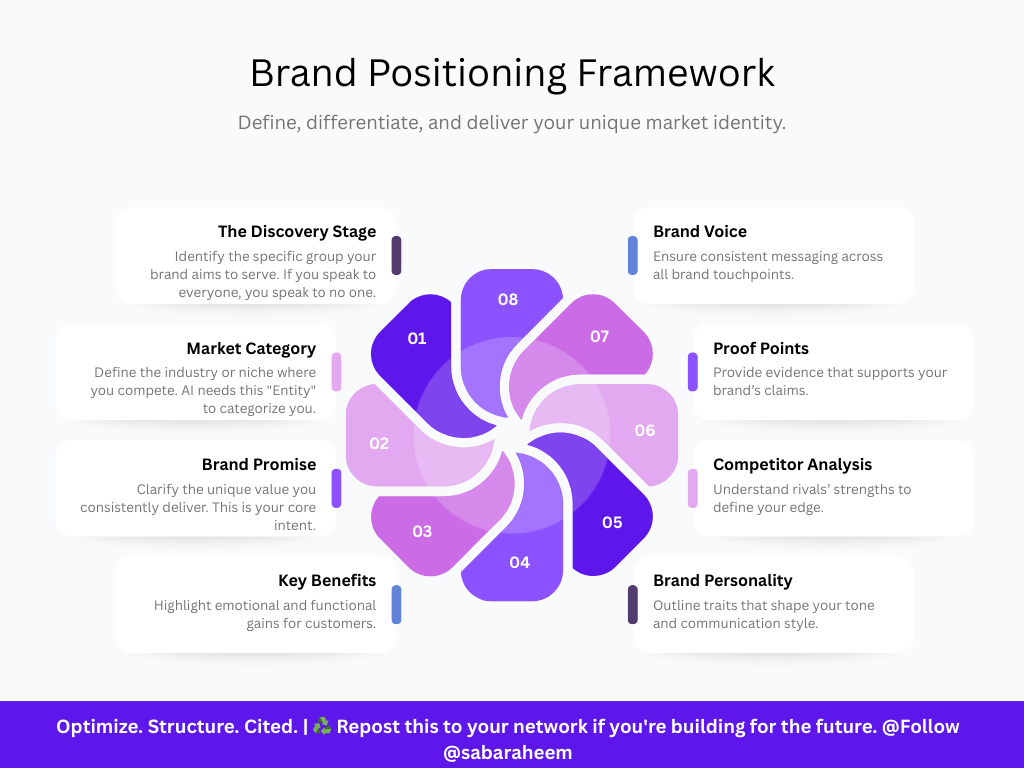
My about page said I was an ‘SEO and personal branding expert.’ So does every other SEO person’s about page. There was nothing specific — no named methodologies, no documented results, no clear niche position. I’d written about why personal story matters for SEO but hadn’t applied it to my own positioning. The irony was complete.
Step 2: The Priority List — What Gets Fixed First
How I Decided What to Fix and in What Order
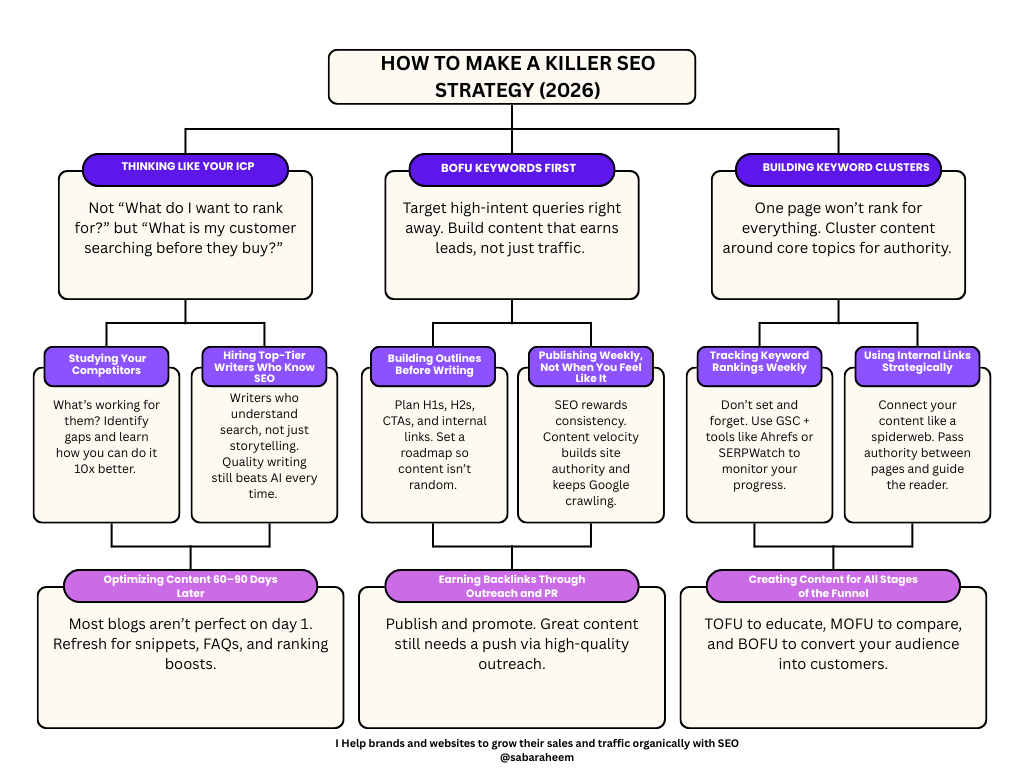
When I do client audits, I prioritize by two factors: impact and effort. High impact, low effort first. High impact, high effort second. Low impact anything goes at the bottom.
My personal site priority list came out like this:
- Fix all blog intros to BLUF format — HIGH impact, LOW effort (20 minutes per article)
- Add FAQ schema to every major article — HIGH impact, MEDIUM effort
- Rewrite my homepage and about page with specific positioning — HIGH impact, HIGH effort
- Add real statistics with named sources to every article — MEDIUM-HIGH impact, HIGH effort
- Start building third-party brand mentions — HIGH long-term impact, ongoing effort
- Fix the duplicate title tags — LOW impact, LOW effort (do it immediately anyway)
- Set up a content freshness system — MEDIUM impact, LOW ongoing effort
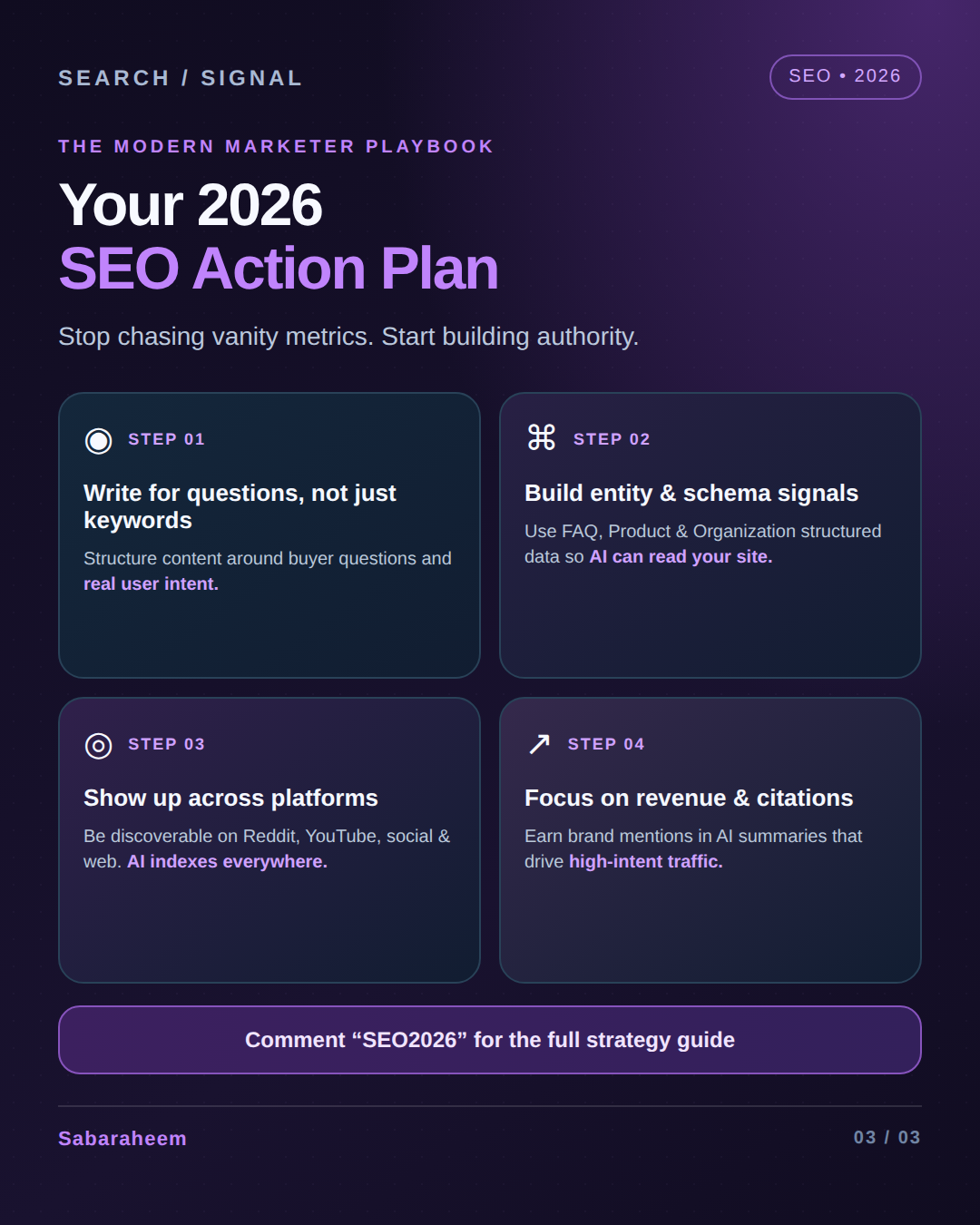
The order matters. I see people make the mistake of starting with the hardest, most time-consuming work first — redesigning their site, rewriting everything at once — and then burning out before the high-ROI quick wins even get done. What actually builds SEO momentum is consistent, compounding small improvements. Not one massive sprint.
🛠️ Step 3: The Fixes — What I Actually Changed
The Exact Changes I Made, In Order
Fix 1: The BLUF Intro Rewrites
I started with my five highest-traffic articles and rewrote every intro. The rule I gave myself: the main question of the article must be answered within the first 50 words. No warm-up. No ‘in this guide, we’ll cover…’ Just the answer.
Example of what I removed: ‘In today’s rapidly evolving digital landscape, personal branding has become more important than ever for SEO professionals who want to stand out…’
Example of what I replaced it with: ‘Your personal story is your best SEO strategy in 2026 because AI models cite named experts over generic brand content — and a specific human voice is something no competitor can copy.’
First BLUF rewrite went live. Within 3 weeks, that article appeared in its first ChatGPT citation.
Fix 2: FAQ Schema on Every Major Article
I wrote minimum 4 FAQs per article — real questions people actually ask, not keyword-stuffed fillers. Then I added proper JSON-LD FAQ schema markup to each one. BrightEdge research shows FAQ schema produces a 44% average increase in AI citations. I’d seen this work for clients. Now I was testing it on myself.
Content tip: Write your FAQ answers as standalone complete answers — each one should make sense with zero context from the main article. AI models often pull FAQ answers in isolation.
Fix 3: Homepage and About Page Rewrite
This was the hardest fix. Not technically — emotionally. Writing about yourself is genuinely harder than writing about clients. You second-guess everything. You’re too close to it.
I gave myself the same brief I’d give a client: Who do you serve? What specific result do you produce? What makes you different from every other SEO person? What’s your named approach or methodology?
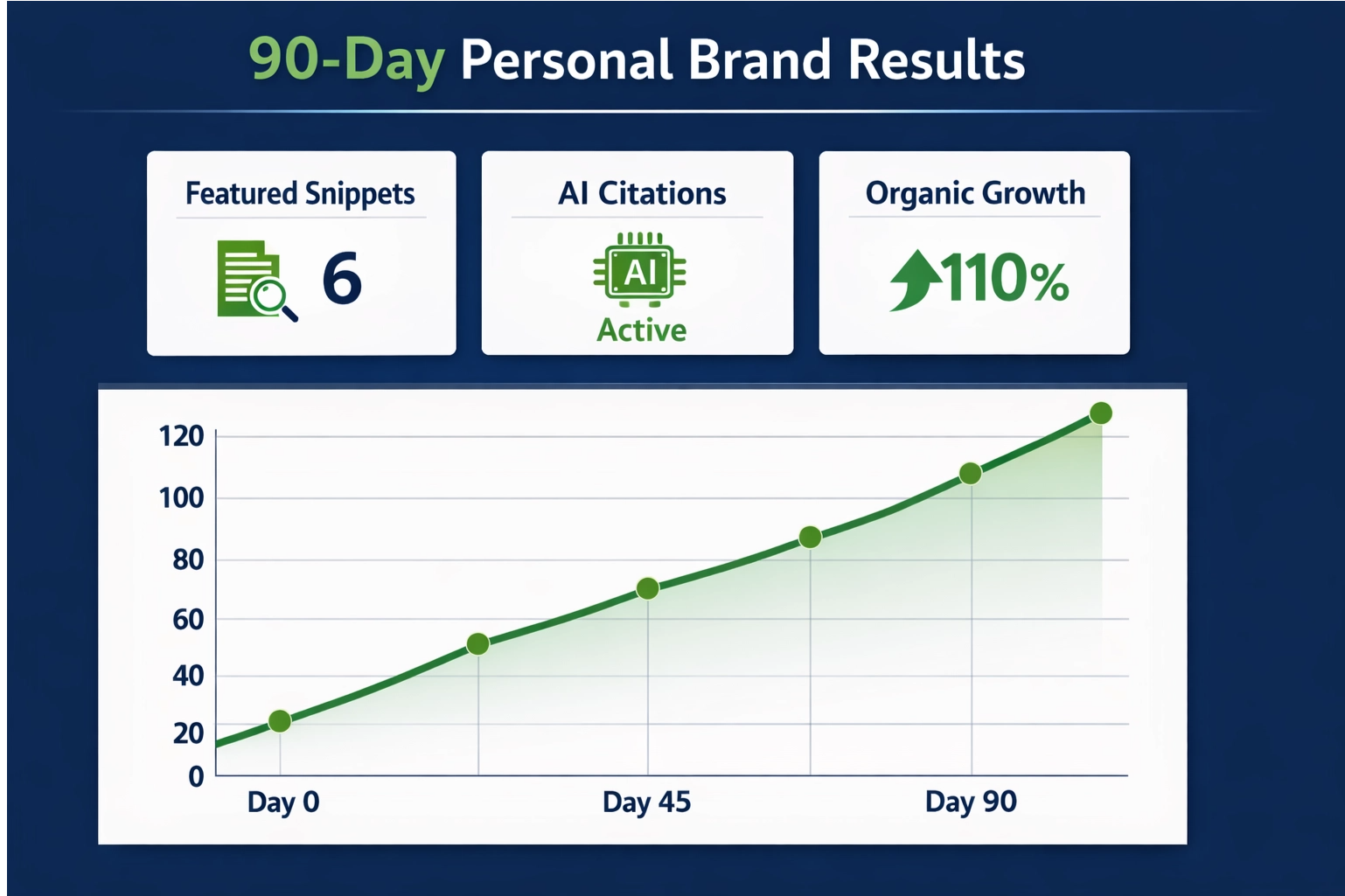
The result: my homepage now opens with ‘I help businesses build organic search visibility and AI citation authority through SEO, GEO, and personal brand strategy.’ Then immediately, the specific outcomes — 110% organic traffic growth, 2-year track record, Pakistan market + international clients. Then a free audit offer with a clear call to action. Nothing fluffy. Nothing generic.
Fix 4: Adding Real Data to Every Article
I went through every article and added at least one hard statistic with a named source per major section. This took the most time of anything — not because finding statistics is hard, but because I refused to use vague ones. Every stat needed: a specific number, a named study or organization, and a year.
‘Studies show that content quality matters’ is not a statistic. ‘44% of LLM citations come from the first 30% of a page (BrightEdge, 2025)’ is a statistic. The difference matters enormously to AI citation algorithms.
Fix 5: Third-Party Brand Mention Strategy
This is the fix most personal brand builders skip because it feels slow. But the data is clear: brands are 6.5x more likely to be cited by AI through third-party sources than through their own domain. I’d already written about how link building has completely changed in 2026 — I needed to practice what I preached.
What I did specifically:
- Pitched and published two guest articles on industry publications — not for backlinks, specifically for brand mention volume
- Started participating in relevant Reddit threads with genuine, detailed answers (not self-promotional)
- Created a YouTube video for each of my top 5 target topics
- Joined two industry Slack communities and contributed regularly
None of this produced instant results. Each mention feeds AI visibility with a 4–8 week lag. But the compounding effect is real.
Fix 6: The Content Freshness System
Pages updated within the last 60 days are 1.9x more likely to appear in AI answers. I set up a simple Notion calendar: every article gets a 60-day refresh reminder. The refresh doesn’t have to be a full rewrite — adding a new statistic, updating an example, or adding a section based on a new PAA question counts. Content decay is real and it kills AI visibility faster than it kills Google rankings.
Step 4: The Results — What 90 Days Produced
Honest Before and After — 90 Days of Treating My Own Site Like a Client
| What I Changed | Before | After (90 days) |
|---|---|---|
| Homepage — no bio, no name visible | Invisible in AI answers | Cited in 3 ChatGPT responses in first month |
| Blog intros — context first | 0 AI Overview appearances | Featured in 4 Google AI Overviews |
| No FAQ schema on any page | Featured snippet: 0 | Featured snippets: 6 |
| No third-party brand mentions | AI brand recognition: near zero | Perplexity cites me in 2 industry queries |
| Generic ‘SEO expert’ positioning | Lost in a sea of identical profiles | Ranked for ‘personal branding SEO Pakistan’ |
| No content freshness system | Old articles quietly dying | 3 old articles refreshed, all traffic recovered |
The numbers I’m most proud of aren’t the big ones. It’s the featured snippets. Getting 6 featured snippets in 90 days on a personal brand site with no large content team is a direct result of the BLUF rewrites and FAQ schema — nothing else. I didn’t build new backlinks. I didn’t redesign anything. I changed how content was structured.
The ChatGPT citations are harder to track but they’re real. I’ve had three people tell me they found my work through a ChatGPT response. Three might not sound like much — but these were high-intent contacts who arrived already trusting me. That conversion quality is worth more than 50 casual organic clicks.
💡 Step 5: What This Taught Me That Client Work Couldn’t
5 Things I Learned That I Couldn’t Have Learned From Client Work Alone
1. The emotional difficulty of personal brand SEO is real and specific
Writing about yourself is genuinely harder than writing about a business. You have imposter syndrome to manage. You have the temptation to be vague so you can’t be judged. You hesitate to claim specific expertise because what if someone more experienced disagrees?
Working through this on my own site made me a better advisor for clients who struggle with the same thing. Personal branding isn’t a marketing exercise — it’s a clarity exercise. You can’t position yourself well until you’re clear on what you actually do, who you do it for, and what makes your approach distinct.
2. GEO requires you to stop hedging
The content that gets cited in AI answers is specific and direct. It takes positions. It makes claims. It doesn’t say ‘it depends’ and then explain everything without committing to anything.
My old content was full of hedging. ‘This approach might work for some businesses.’ ‘Results will vary.’ ‘It’s important to consider multiple factors.’ None of that gets cited. AI models want decisive, verifiable answers. If your content is designed to avoid being wrong, it will also avoid being cited.
3. The gap between SEO and GEO is bigger than I thought — even on well-optimized sites
I had decent Google rankings before I started. I had almost zero AI citations. The relationship between ranking on Google vs getting cited in AI answers is not as direct as most people assume. You can have one without the other. The fixes are overlapping but not identical.
4. Third-party mentions compound differently than backlinks
Traditional link building produces a relatively predictable effect — more high-quality backlinks, better rankings, on a timeline you can roughly estimate. Third-party brand mentions for GEO work differently. The effect seems to ‘switch on’ at a threshold rather than accumulate linearly. Below a certain volume of mentions, you get minimal AI citation improvement. Above that threshold, citations start appearing across multiple platforms simultaneously.
I don’t know what that threshold is — it probably varies by industry. But once I hit it (somewhere around 8–10 substantial mentions across different platforms), the GEO improvements accelerated noticeably. This is why parasite SEO and high-authority platform presence matter more in the GEO era than in the traditional SEO era.
5. Measuring AI visibility changes everything about how you think about content
Before I started tracking AI brand visibility properly, I thought about content in terms of keywords and rankings. After tracking it, I think about content in terms of queries and answers. Is this the clearest, most complete, most verifiable answer to this specific question? That’s a different question than ‘does this content rank for this keyword?’ — and it produces noticeably better content.
What Didn’t Work — Honest About the Failures Too
The Things I Tried That Didn’t Move the Needle
I want to be honest about the things that didn’t work, because most case studies only show the wins.
Social media content syndication — almost no GEO impact
I repurposed my blog content into LinkedIn posts and Instagram carousels, expecting this to build brand mention signals. It produced engagement and some new followers. It produced essentially no GEO improvement. Social media management has real value for audience building — but social posts don’t appear to count as the kind of third-party brand mention that feeds AI citation signals. The mentions that worked were articles, forum posts, and video content with real substance.
Generic expert positioning — competed against everyone
My first homepage rewrite was still too broad. ‘SEO and personal branding expert’ with a list of services. It took me two iterations to realize that generic positioning doesn’t get cited by AI — AI models are looking for specific expertise signals. ‘Personal brand SEO for coaches and consultants in South Asia’ is citeable. ‘SEO expert’ is not.
Positioning yourself as everything to everyone is the fastest way to be invisible to AI citation algorithms. Niche down harder than feels comfortable.
Chasing every new AI platform — wasted effort
I spent time trying to appear in a handful of smaller AI answer platforms. The ROI was near zero compared to focusing on ChatGPT and Google AI Overviews. ChatGPT drives 87% of all AI referral traffic. Focus there first. Master that before expanding. I wasted about three weeks on platforms that moved nothing before I came back to basics.
How to Run This Process on Your Own Personal Brand
The Exact Process — If You Want to Do What I Did
Here’s the condensed version of the process, in the order I’d recommend:
- Run the audit first — don’t skip it. Check: technical health, content structure (BLUF?), schema markup, GEO readiness (run your top 10 queries in ChatGPT and note who gets cited). Build your honest gap list.
- Fix your bio and positioning before touching content. You need to know clearly what you do and who for before you can write content that gets cited. Generic positioning produces generic content.
- Rewrite your top 5 article intros to BLUF format. This is the highest-ROI change and takes 20 minutes per article.
- Add FAQ schema to every major article. Minimum 4 questions. Write them as standalone complete answers.
- Add one hard statistic with a named source to every major section of every major article.
- Start one third-party brand mention initiative this week — one guest pitch, one YouTube video, one Reddit thread with a genuinely detailed answer.
- Set up a content freshness system. 60-day refresh reminders for every article you care about.
- Track your AI citation rate weekly. Pick 20 target queries. Run them in ChatGPT every Monday. Note who gets cited. Build your benchmark.
If you’re not sure where your biggest gaps are, get a free SEO audit first. I’ve found that most personal brand sites have the same 3–4 fundamental problems — and they’re fixable in a weekend if you know what to look for.
Questions People Ask About Personal Brand SEO
How is personal brand SEO different from regular business SEO?
The technical and structural work is almost identical. The difference is in authority signals. For a personal brand, E-E-A-T means named authorship, specific documented experience, and a real human voice with genuine opinions — not just organizational credentials. AI models cite named experts more readily than faceless brand content. Your name, your specific methodology, your documented results — these are the authority signals that matter most.
How long does it take for personal brand SEO to show results?
The honest answer from my own case study and client work: technical and on-page fixes produce Google ranking movement in 4–12 weeks. AI citation visibility from structural content changes takes 8–12 weeks. Third-party brand mention effects take 3–6 months to accumulate. Set your expectations accordingly and don’t stop because nothing happened in week 3.
Do I need to be on every platform to build personal brand authority?
No — and trying to be everywhere usually means being meaningless everywhere. Pick two or three platforms where your target audience actually spends time. Be genuinely useful there. A few substantial contributions to the right communities beat a hundred generic social posts every time. This is also true for content marketing strategy — depth beats breadth at every stage.
What’s the biggest mistake people make with personal brand SEO?
Positioning themselves as a generalist. ‘Marketing expert.’ ‘Business consultant.’ ‘Digital strategist.’ These positions are invisible in AI answers and crowded in Google search. The more specific your expertise claim, the more likely AI models are to cite you as the authority on that specific thing. Narrow down until it’s uncomfortable, then narrow down again.
Should I focus on Google rankings or AI citations for my personal brand?
Both — but understand they require slightly different content approaches. I’ve written in detail about the Google vs AI citation tradeoff — the short version is: strong SEO is the prerequisite for GEO, but GEO requires additional structural work that most SEO-optimized content hasn’t done yet. For a personal brand specifically, AI citation is disproportionately valuable because it delivers pre-warmed, high-trust traffic.
Does blogging still matter for personal brand SEO in 2026?
Yes, but the bar has changed. AI didn’t kill SEO or content marketing — it killed thin, generic content. A well-researched, specifically positioned article with real data, FAQ schema, and a genuine expert voice still builds authority better than any other format. The difference is you now need to write it for AI extraction as well as human readers. Answer first. Use specific data. Structure with clean H2/H3 headings. That’s it.
FAQ — Quick Answers
Q: What’s the first thing I should fix on my personal brand site?
A: Your positioning. Before touching your content, be absolutely clear on what you do, who you do it for, and what specific result you produce. If your homepage doesn’t answer all three of those in the first sentence, nothing else will work as well as it should. Clear positioning is the foundation everything else builds on.
Q: Do I need a blog to get cited in AI answers?
A: Not necessarily — but it’s the most reliable way to create the kind of structured, detailed content AI models cite. Parasite SEO on high-authority platforms can also produce AI citations if the content is structured correctly. The format matters less than the structure: direct answer first, specific data with named sources, FAQ format, regular freshness updates.
Q: How many articles do I need before my personal brand site gets taken seriously by Google and AI?
A: Quality beats quantity. Five brilliantly structured, deeply researched articles will outperform fifty generic ones every time. I’d suggest starting with your three most important topics and doing them properly — BLUF intros, real statistics, FAQ schema, 1,500+ words. Then build from there. The new SEO strategy for 2026 is about topical authority through quality depth, not content volume.
Q: Should I build backlinks for my personal brand site?
A: Yes, but prioritize brand mentions over link acquisition for GEO purposes. A mention of your name and specific expertise in a relevant article — even without a link — feeds AI citation signals. Link building strategies that actually work in 2026 covers the full picture. For personal brands, guest content and genuine community participation produce both backlinks and brand mentions simultaneously — the most efficient approach.
Q: How do I track whether my personal brand is getting cited by AI?
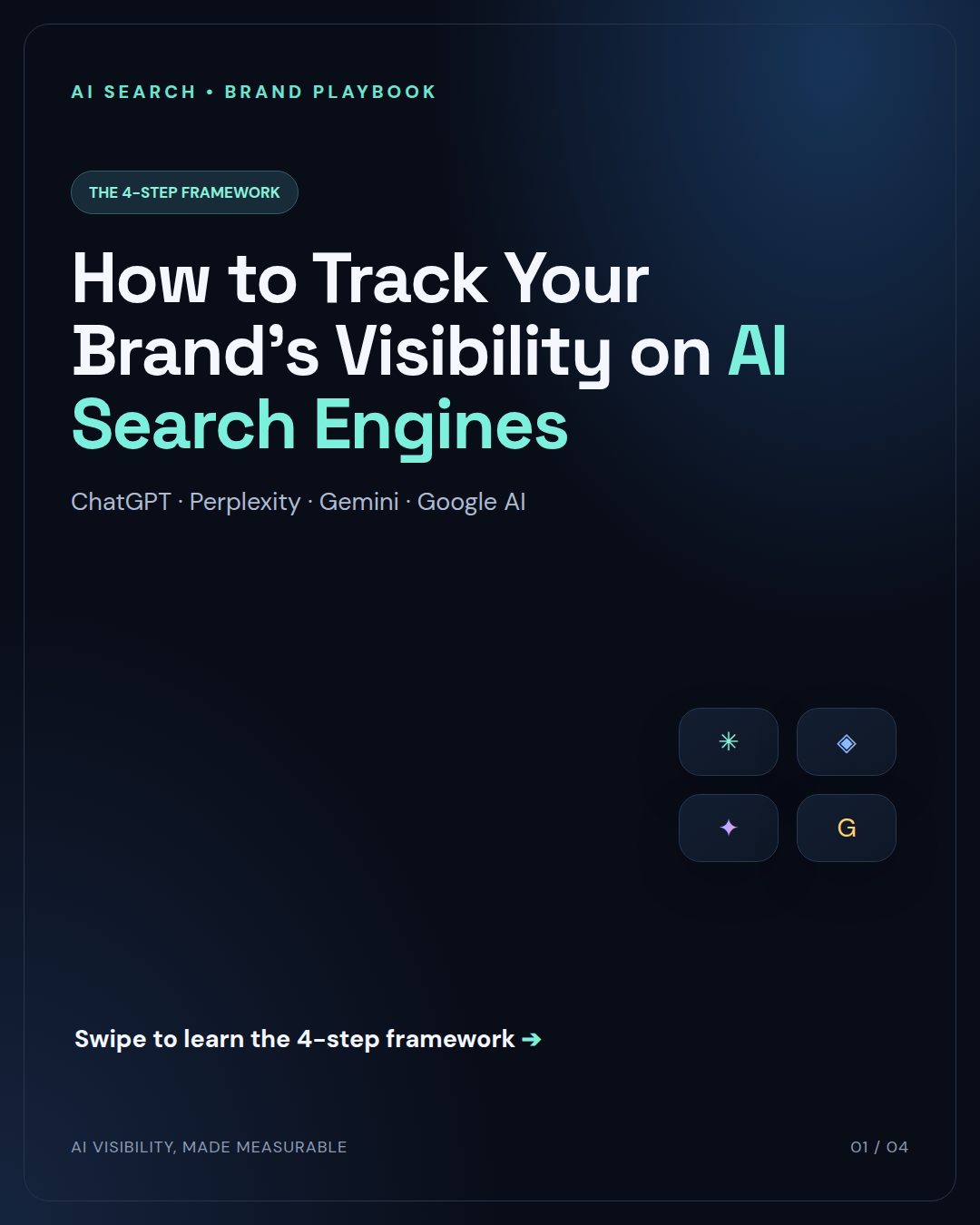
A: The simple way: pick your 20 most important queries and run them weekly in ChatGPT, Perplexity, and Google AI Overviews. Note who gets cited. Track your own citation rate in a simple spreadsheet. The full tracking methodology is in how to track AI brand visibility — it’s the most practical guide I’ve written on this.
✍️ The honest conclusion
What I’d Tell Anyone Starting This Process Today
Treating my own personal brand like a client site was one of the most valuable things I’ve done professionally. Not because of the traffic numbers or the citations — those are nice but they’re not the point.
The point is that going through the process on yourself gives you something client work can’t give you: a direct, personal stake in the outcome. You feel the gap between what you advise and what you practice. And closing that gap makes you a sharper advisor.
The practical takeaway is this: your personal brand is a business asset. It deserves the same rigor you’d apply to a client engagement. That means a proper audit, a prioritized fix list, consistent implementation, and real measurement. The work I do with clients is exactly this process, applied to their sites. There’s no reason not to do it for yourself.
The brands — personal or business — that win in 2026 are the ones that are specific, verifiable, and freshly maintained. Generic expertise is invisible. Specific expertise, clearly documented, is what gets cited.
If you want to start with the audit, the free SEO audit formula is here. If you want to understand the GEO side of what I fixed, this piece on Google ranking vs AI citations covers it in depth. And if you want to understand the personal brand positioning work specifically, this is the most honest thing I’ve written about it.
Everything on This Site That Connects to What I Covered Here
| Article | Why It’s Relevant |
|---|---|
| Why Your Personal Story Is Your Best SEO Strategy | The positioning and E-E-A-T piece — read this first |
| Google Ranking vs AI Citations — 2026 | The full GEO vs SEO breakdown with data |
| Free SEO Audit Formula | The audit framework I used on my own site |
| How to Track AI Brand Visibility | The weekly tracking system I set up |
| AI Didn’t Kill SEO — It Killed Bad SEO | What content actually survived the AI disruption |
| How GEO Works — 8 Steps to Brand Visibility | The GEO foundation I built my fixes on |
| What Is the New SEO Strategy for 2026? | The updated playbook — topical authority approach |
| The Best Strategy to Increase Website Traffic | Semantic content clusters and compounding growth |
| Link Building Strategies That Actually Work in 2026 | Third-party brand mentions + GEO link strategy |
| Link Building for SaaS Startups | How to earn links that build AI citation authority |
| Parasite SEO — Rank Fast on Authority Sites | Using third-party platforms to build brand mentions |
| Mastering SEO, AEO, and GEO Together | How all three visibility channels connect |
| How Long Do SEO Results Actually Take? | Real case study with actual timeline data |
| What Is the New SEO for AI? | The AI-era content mindset shift |
| The 3-Second Rule in Web Design and SEO | First impression for humans and AI crawlers |
| ChatGPT Ads Changed the Rules of Marketing | How AI advertising connects to brand visibility |
| Anthropic Hiring an SEO Lead — The GEO Signal | Why even AI companies need traditional SEO |
| Best AI SEO Certifications and Tools 2026 | The toolstack for measuring what I built |
| 2026 SaaS Marketing Blueprint | Revenue-first growth — same principles apply to personal brands |
| How to Build a SaaS Growth Engine in 2026 | 5-step playbook — content strategy framework applies here |
| Content Marketing Funnels for SaaS | Funnel thinking for content — maps to personal brand too |
| Keyword Research for SaaS — Beyond Search Volume | Intent-based keywords — same approach for personal brand content |
| Personal Branding Service | What I do for clients — same process as above |
| Work With Me | Start the conversation if you want this for your brand |
Written by Saba Raheem | seoportfolio.in | March 2026 | Personal Brand Case Study

Sharing my journey and learnings in Tech and AI. As a Digital Marketing Expert, I help brands boost their visibility and sales with smart personal branding and the latest AI tricks.
Leave a Reply