|
Getting your Trinity Audio player ready… |
Table of Contents
SEO is not dead. What is dead is the version of SEO that relied on keyword density, low-quality backlinks, and thin content to rank for queries that AI search engines now answer directly before a human ever clicks a link. That version of SEO was always lazy. AI search just made the consequences immediate and visible. The real shift for marketers in 2026 is not whether to do SEO it is understanding that the audience for your content now includes both human readers and AI systems that decide what answer to surface. Your content needs to earn the trust of both.
| Is SEO dead with AI search? No. SEO is the foundation that AI search depends on. Google AI Overviews, ChatGPT, and Perplexity all pull from well-ranked, high-quality, trustworthy web content. If your SEO is strong, AI search amplifies it. If your SEO is weak, AI search makes the weakness more expensive. |
| 8.5BGoogle searches per day October 2026 | 15-25%Queries now showing AI Overviews (Semrush 2026) | 8%CTR on organic results when AI Overview is present (Pew Research) | 3-6 moTypical timeline for AI citation authority to build |
What AI Search Actually Changed And What It Did Not
Every few years someone declares SEO is dead. It happened with social media in 2012, voice search in 2016, and mobile-first indexing in 2018. Each time, SEO changed shape rather than disappearing. AI search is the most significant shift yet — but the pattern is the same. The channels through which people find information are evolving. The principle that clear, trustworthy, well-structured content earns visibility is not.
What AI search actually changed is the results page. For approximately 15 to 25 percent of queries in October 2026 (Semrush data), Google now shows an AI-generated summary above the organic results. When this happens, Pew Research found that users clicked a traditional result 8 percent of the time, compared to 15 percent without an AI summary. That is a meaningful reduction in clicks for queries where AI Overviews appear but 75 to 85 percent of queries still show traditional results, and even AI-heavy queries still send clicks to sources cited within the AI answer.
| Area | What Changed | What Stayed the Same |
| Search Results Page | AI Overviews now appear for 15 to 25% of queries, answering directly before organic results | Organic blue links still dominate most queries especially transactional and local |
| Content Quality Standards | Bar is higher AI pulls from trusted, clearly structured, E-E-A-T-strong content | Helpful, accurate, well-written content was always the goal. Now it is enforced by AI citation bias. |
| Click Behaviour | AI Overviews reduce clicks for simple informational queries (zero-click effect) | Complex, high-intent queries still drive significant clicks AI often prompts deeper exploration |
| Technical SEO | AI crawlers (GPTBot, Claude-Web, PerplexityBot) are now additional crawlers to consider | Site speed, mobile usability, indexability, and Core Web Vitals remain non-negotiable |
| Link Building | Named brand mentions across the web carry increasing weight alongside traditional backlinks | High-quality relevant links from authoritative domains still signal trust |
| Local SEO | AI now answers local queries with structured business data GBP accuracy is more critical | Google Business Profile, NAP consistency, and local reviews remain the foundation |
| Google has publicly confirmed that its AI Overviews are built on the same ranking and quality systems as traditional search. In other words, the pages that rank well organically are the same pages most likely to be cited in AI Overviews. Strengthening your traditional SEO directly strengthens your AI search visibility. |
Traditional SEO vs AI Search SEO The Full Comparison
Here is exactly how the two approaches differ in practice:
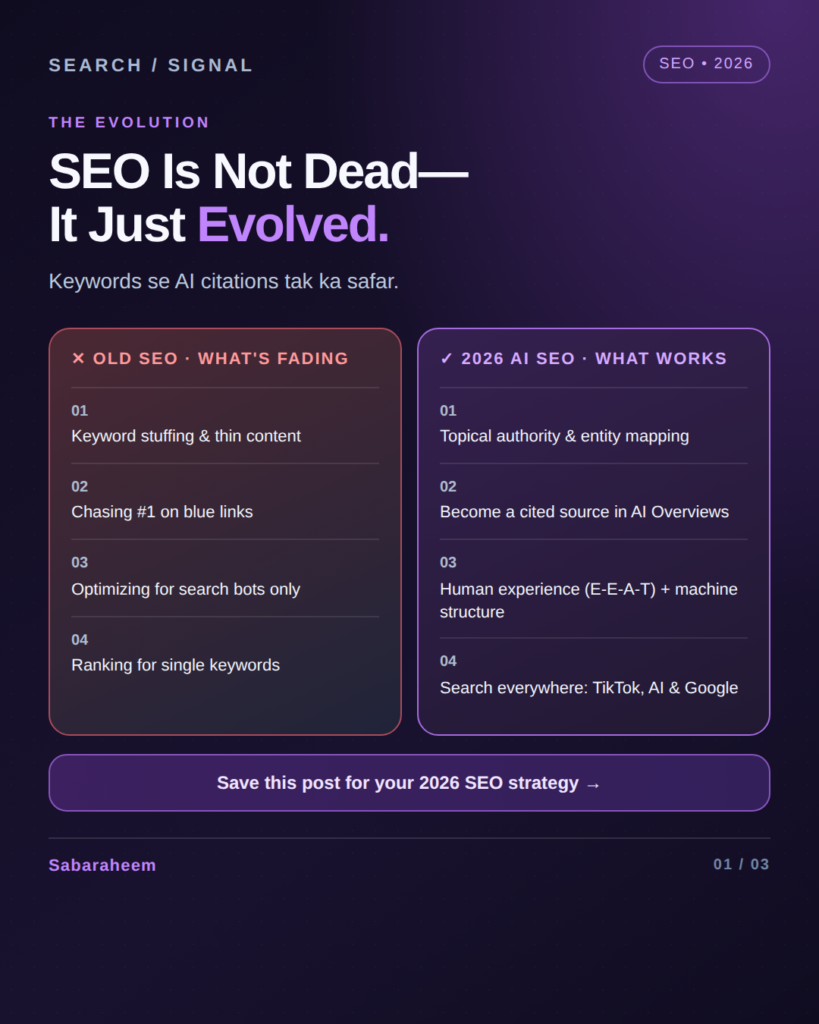
| Factor | Traditional SEO (2015 to 2022) | AI Search SEO (2026) |
| Primary Goal | Rank on page one for target keywords | Rank AND get cited in AI-generated answers (AI Overviews, ChatGPT, Perplexity) |
| Content Approach | Keyword-optimised long-form pages | Answer-first, conversational, structured for extraction |
| Key Ranking Signals | Keyword density, backlinks, domain authority, page speed | Entity clarity, E-E-A-T, brand mentions, structured data, topical authority |
| Query Type | Short keyword phrases (2 to 4 words) | Long natural-language questions (‘What should I look for when…’) |
| Success Metrics | Rankings, organic traffic, CTR | AI citations, branded search growth, referral traffic from AI platforms, conversions |
| Authority Model | Your website’s domain authority is the primary signal | Authority across the entire web: reviews, mentions, directories, publications |
| Who Reads Your Content | Human readers via Google search results | Human readers AND AI systems that decide what answer to surface |
—-
What Is AI SEO Called Now?
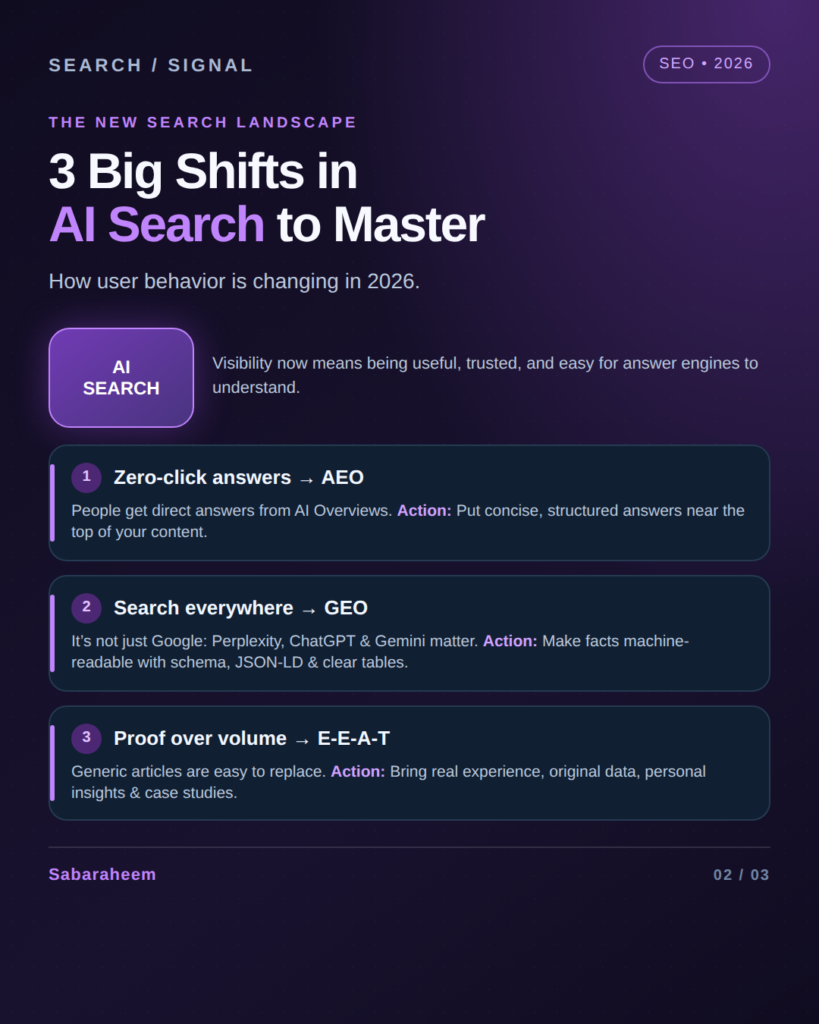
The terminology has expanded. Three acronyms now exist alongside traditional SEO, and understanding the difference between them clarifies what the work actually involves:
- SEO (Search Engine Optimization): the established discipline of ranking in search engine results pages, primarily Google. Still the foundation and still essential.
- AEO (Answer Engine Optimization) : optimising content to be selected as the direct answer in AI-generated responses. Focuses on clear, structured, answer-first writing, FAQPage schema, and E-E-A-T signals.
- GEO (Generative Engine Optimization) : the broader practice of optimising for visibility across AI-generated content, including ChatGPT responses, Perplexity citations, Gemini answers, and other generative AI platforms. Requires brand presence across the full web, not just your own website.
In practice, all three overlap heavily. A strong SEO strategy already addresses the signals that AEO and GEO require. Google itself has stated that optimising for AI search is still optimising for the core search experience. The difference is scope modern SEO now needs to account for multiple platforms and multiple AI systems, not just Google blue links.
For a deeper breakdown of GEO and LLM-specific optimisation, read: LLM SEO in 2026: Complete Guide to AI Search Optimization and GEO.
Is SEO Still Worth It in 2026?
Yes. Here is why the question itself reflects a misunderstanding of what changed.
AI search does not generate its own information. It synthesises and summarises existing web content. Every AI Overview on Google, every Perplexity citation, every ChatGPT answer that references a specific source is pulling from content that exists on the open web — content that was created and indexed through traditional SEO processes. An AI search ecosystem without high-quality indexed web content would have nothing to synthesise.
The businesses that invested in SEO before AI search became dominant now find themselves in a stronger position than businesses that ignored it. Their established topical authority, their E-E-A-T signals, their structured schema markup, their consistent Google Business Profiles — all of these are the exact signals AI systems use to decide which sources to trust and cite.
SEO is worth it in 2026 because it is the input that AI search depends on. The work has not become irrelevant. The output formats have changed.
Is AI Ruining SEO? The Honest Answer
AI is not ruining SEO. AI is enforcing the standards that good SEO always required.
The practices that ‘AI ruined’ are the ones that should have been obsolete years ago: thin content written purely for keyword density, mass directory link schemes, keyword stuffing in meta tags, and low-effort articles that repeat what every other article on the topic already says. AI search systems are trained to recognise and deprioritise exactly this kind of content.
What AI search rewards original expertise, clear structure, named authorship, cited sources, comprehensive topic coverage, brand consistency across the web is what good SEO practice has advocated for since at least the introduction of Google’s Helpful Content guidelines in 2022.
| The accurate statement is: AI search is ruining low-quality SEO. It is actively beneficial for high-quality SEO. Businesses that built genuine topical authority, strong brand presence, and trustworthy content are experiencing visibility gains in AI search, not losses. |
Can ChatGPT Do SEO?
ChatGPT and similar AI tools can assist with several SEO tasks, but they cannot replace the strategic, analytical, and relationship-based elements of a real SEO strategy:
What AI tools can help with in SEO
- Generating draft content structures and outlines based on topic research
- Suggesting semantic keywords, related entities, and People Also Ask variations
- Drafting meta descriptions and title tag variations for testing
- Summarising competitor content to identify gaps
- Generating FAQ sections based on common search queries
- Assisting with schema markup code generation
What AI tools cannot replace in SEO
- Original experience, expertise, and genuinely new insights the core of E-E-A-T
- Strategic decisions about which topics to prioritise, which audience to target, and which content to build authority around
- Relationship-based link building and digital PR
- Technical SEO auditing of your specific site architecture
- Accurate, current data on your own site performance from GSC and GA4
- The judgment to know which AI-generated content is accurate and which needs correction
The correct use of AI in SEO is as an acceleration tool, not a replacement for expertise. Content produced by AI without genuine human expertise, editorial judgment, and original insight consistently underperforms in both traditional rankings and AI citation rates.
8 Actions to Win in AI Search SEO Right Now
These are the highest-impact, most practical steps based on current AI search behaviour in October 2026:
| Action | What to Do | Why It Matters for AI Search | Effort Level |
| 1 | Write answer-first content put the direct answer in the first 40 to 60 words under every heading | AI Overviews extract direct answers. Pages without a clear upfront answer get passed over. | Low restructure existing content |
| 2 | Build topic clusters pillar page + 6 to 10 supporting articles, all interlinked | AI systems trust sites that demonstrate deep, broad knowledge of a subject | Medium requires content planning |
| 3 | Implement schema markup FAQPage, Article, Organization, LocalBusiness, Person | Structured data is a direct signal to AI systems about what your content covers | Medium technical implementation |
| 4 | Strengthen E-E-A-T named authors with credentials, case studies, cited sources, client results | AI pulls from sources it can verify as trustworthy. Anonymous or thin sites are skipped. | High ongoing commitment |
| 5 | Build brand mentions digital PR, guest contributions, industry publications, expert quotes | AI learns from the whole web. Named mentions across reputable sources build entity recognition. | High requires outreach |
| 6 | Optimise Google Business Profile complete all fields, post weekly, respond to reviews | AI Overviews for local queries pull directly from GBP data and reviews | Low free and fast |
| 7 | Update content regularly — add ‘last updated’ dates, refresh statistics and examples | Freshness signals trust. AI systems deprioritise outdated content. | Low quarterly reviews |
| 8 | Test your AI visibility — search your target queries in ChatGPT, Perplexity, and Google AI Overviews | You cannot optimise for what you do not measure. Manual AI citation testing is free. | Low no cost, just time |
Common SEO Mistakes to Avoid in the AI Search Era
| Mistake | Why It Hurts | What to Do Instead |
| Publishing mass-produced AI content with no human editing | Adds noise to your site and reduces E-E-A-T signals. Google confirmed it can detect low-quality AI content patterns. | Use AI to assist research and structure, then rewrite with genuine expertise, personal experience, and original insight |
| Chasing keyword rankings while ignoring AI citations | Ranking number one means less when an AI Overview answers the query above your result and gets the click | Optimise for both structure content for AI extraction AND maintain strong traditional ranking signals |
| Ignoring brand reputation and reviews | AI systems evaluate brand trustworthiness across the whole web. Poor review signals reduce citation probability. | Actively manage your Google Business Profile, respond to reviews, and build presence on authoritative review platforms |
| Blocking AI crawlers in robots.txt | ChatGPT, Perplexity, and Claude all use dedicated crawlers. Blocking them removes you from those platforms’ knowledge base. | Review your robots.txt. Allow GPTBot, ClaudeBot, PerplexityBot unless you have a specific reason to block them. |
| Expecting AI search results overnight | AI citation authority builds over time — same timelines as traditional SEO authority, roughly 3 to 6 months. | Set realistic timelines. Track branded search growth and AI visibility improvement as early indicators. |
Does SEO Have a Future? Will SEO Exist in 5 Years?
| Question | The Fear | The Reality in 2026 |
| Will SEO jobs be replaced by AI? | AI will automate everything and SEO specialists will be unnecessary | AI automates grunt work (audits, meta tags, basic content). Strategic SEO entity building, AI visibility, content architecture is growing in demand, not shrinking. |
| Will SEO exist in 5 years? | AI search will replace Google entirely, making SEO irrelevant | Google still processes 8.5 billion searches per day. Search behaviour is changing, not ending. SEO will exist it will cover more platforms. |
| Does Google SEO punish AI content? | Using AI to write content will result in penalties | Google penalises low-quality, unhelpful content regardless of how it was produced. Well-edited, expert-level AI-assisted content is not penalised. |
| Can a beginner do SEO? | AI search makes SEO too complex for non-specialists | The fundamentals remain learnable. Technical SEO, content strategy, and AI optimisation each have clear entry points. Specialist knowledge improves results but beginners can make meaningful progress. |
| Do I need coding for SEO? | Technical SEO in 2026 requires deep development knowledge | Basic HTML, schema markup, and an understanding of how crawlers work is helpful. Deep coding skills are not required for most SEO work. |
The marketers asking ‘will SEO exist in 5 years?’ are asking the wrong question. The right question is: ‘Will people still search for information online in 5 years?’ The answer to that is clearly yes. The platforms, formats, and algorithms will continue to evolve. The underlying discipline of making your content findable, trustworthy, and clear to search systems — whether those systems are traditional crawlers or AI models will not go away.
Is SEO Still Worth It? The Best Way to Increase SEO in 2026
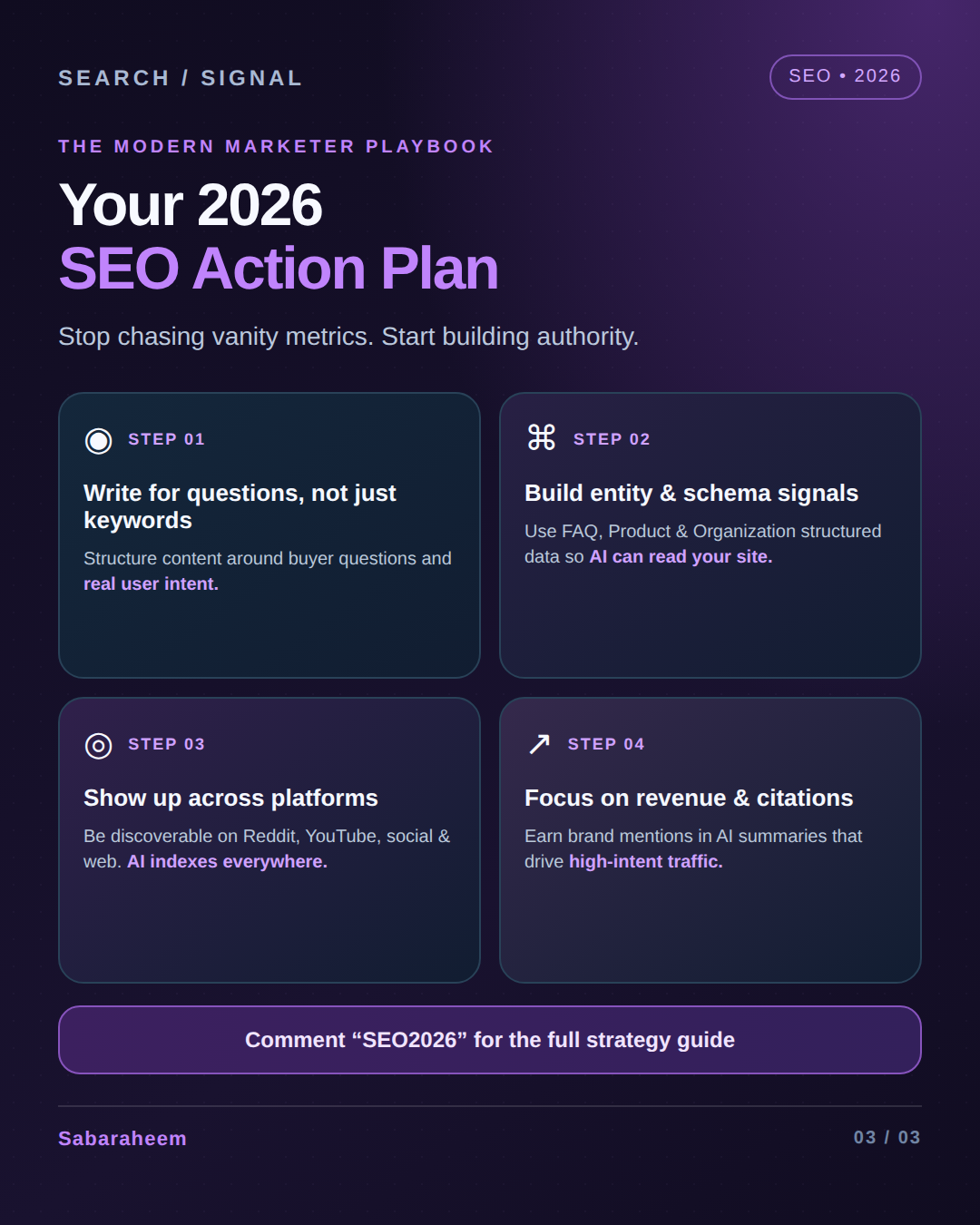
The best way to increase SEO performance in 2026 is to build for both audiences simultaneously
- Write content that a human expert would find genuinely useful — original insight, specific examples, real experience
- Structure it so an AI system can extract a clear answer — direct response in the first sentence, logical headings, bullet points for lists, tables for comparisons
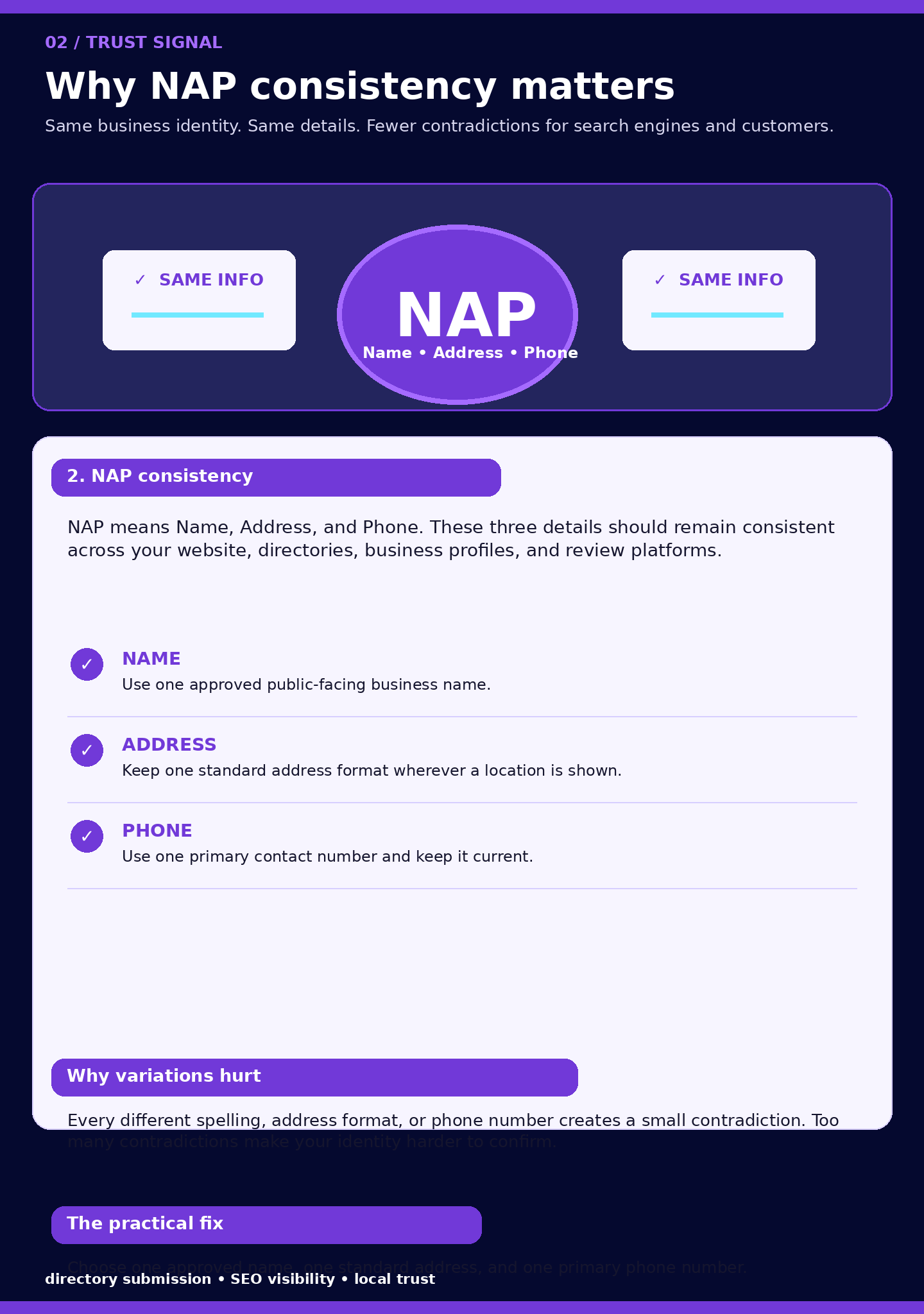
- Build your entity across the web — consistent NAP, complete GBP, named author profiles, industry publication mentions
- Maintain technical health — crawlability, speed, mobile, Core Web Vitals, schema
- Track your AI visibility — manually search your target queries in ChatGPT, Perplexity, and Google regularly to assess whether you are being cited
For the best free tools to support this work, read: Best Free SEO Software for Keyword Research and Website Audits.
What People Search About SEO and AI in 2026
This guide answers all of these real queries:
- Is SEO dead with AI search?
- Is SEO still worth it in 2026?
- How is SEO changing with AI?
- Is AI ruining SEO?
- Can ChatGPT do SEO?
- What is AI SEO called now?
- Will SEO exist in 5 years?
- Will SEO jobs be replaced by AI?
- Does Google SEO punish AI content?
- Does SEO have a future?
- Do I need coding for SEO?
- Can a beginner do SEO?
- What are common SEO mistakes to avoid?
- What is the best way to increase SEO?
- Does SEO matter anymore?
- Can I do SEO myself?
Frequently Asked Questions
Is SEO dead with AI search?
No. SEO is the foundation that AI search depends on. Google AI Overviews, ChatGPT, and Perplexity all pull from well-ranked, structured, trustworthy web content. If your SEO is strong, AI search amplifies your visibility. If it is weak, AI search makes that weakness more expensive. The version of SEO that is dying is the low-quality, keyword-stuffed, link-farmed variety that was always poor practice.
How is SEO changing with AI search?
The goal has expanded from ranking in search results to ranking AND being cited in AI-generated answers. This requires answer-first content structure, stronger E-E-A-T signals, entity recognition across the full web, schema markup, and brand presence beyond your own website. The technical fundamentals — site speed, mobile usability, crawlability — remain unchanged. The content and authority standards have risen significantly.
Is SEO still worth it in 2026?
Yes. Google still processes 8.5 billion searches per day. AI search tools synthesise content from the open web — they need high-quality indexed content to function. The businesses that have invested in real SEO authority are the same businesses most likely to be cited in AI Overviews and AI platform responses. SEO is the input that makes AI search visibility possible.
Does Google penalise AI-generated SEO content?
Google penalises low-quality, unhelpful content regardless of how it was produced. High-quality AI-assisted content that is edited by genuine experts, contains original insight, and genuinely helps readers is not penalised. The distinction Google draws is between helpful content and content produced primarily to manipulate search rankings — the production method is secondary to the quality and helpfulness of the output.
Will SEO jobs be replaced by AI?
Not the strategic, complex parts. AI automates repetitive SEO tasks — generating meta descriptions, identifying technical issues, suggesting keywords — but the strategic elements are growing in demand: entity building, AI citation strategy, content architecture, digital PR, and multi-platform visibility analysis. The SEO job description is changing, not disappearing. Specialists who understand AI search are in higher demand in 2026 than in 2022.
Can I do SEO myself without a specialist?
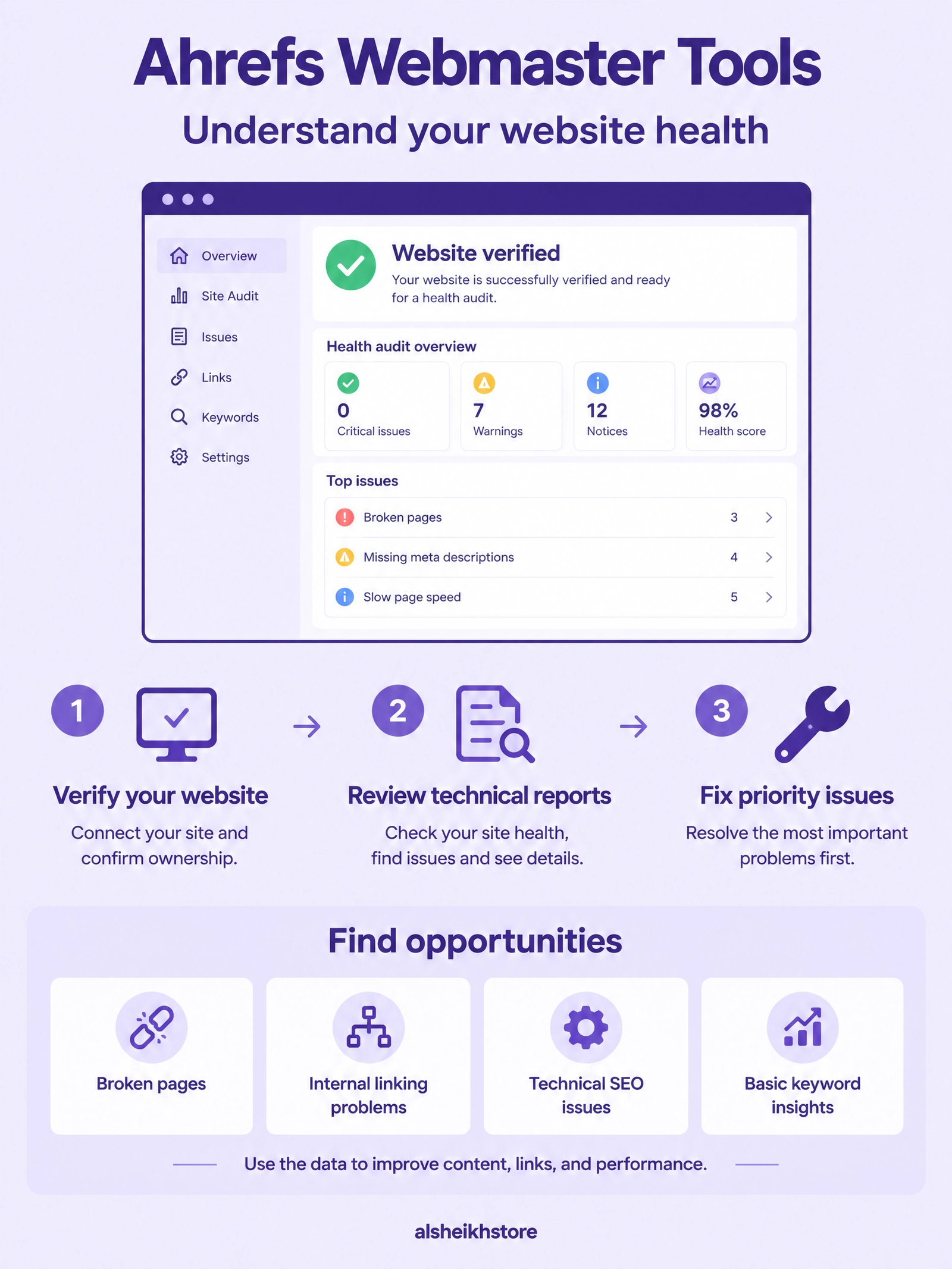
Yes, for foundational work. Google Search Console, Google Analytics 4, Ahrefs Webmaster Tools (free for your own site), and Screaming Frog (free up to 500 URLs) cover the core technical and performance monitoring tasks. Keyword research, content creation, and basic schema markup are all learnable skills. Where specialists add the most value is in strategic direction, competitive intelligence, digital PR, and the increasingly complex area of AI search optimisation.
Internal Links — seoportfolio.in
| Article | URL |
| LLM SEO and GEO Complete Guide 2026 | https://seoportfolio.in/llm-seo-in-2026-the-complete-guide-to-ai-search-optimization-generative-engine-optimization-geo/ |
| Keywords vs Topics vs Entities: The SEO Shift | https://seoportfolio.in/keywords-vs-topics-vs-entities-seo-shift/ |
| How Much Does AI SEO Cost vs Traditional SEO? | https://seoportfolio.in/how-much-does-ai-seo-cost-vs-traditional-seo/ |
| Best Free SEO Software for Keyword Research and Audits | https://seoportfolio.in/best-free-seo-software-keyword-research-website-audits/ |
| Directory Submission and NAP Consistency Guide | https://seoportfolio.in/directory-submission-nap-consistency-seo/ |
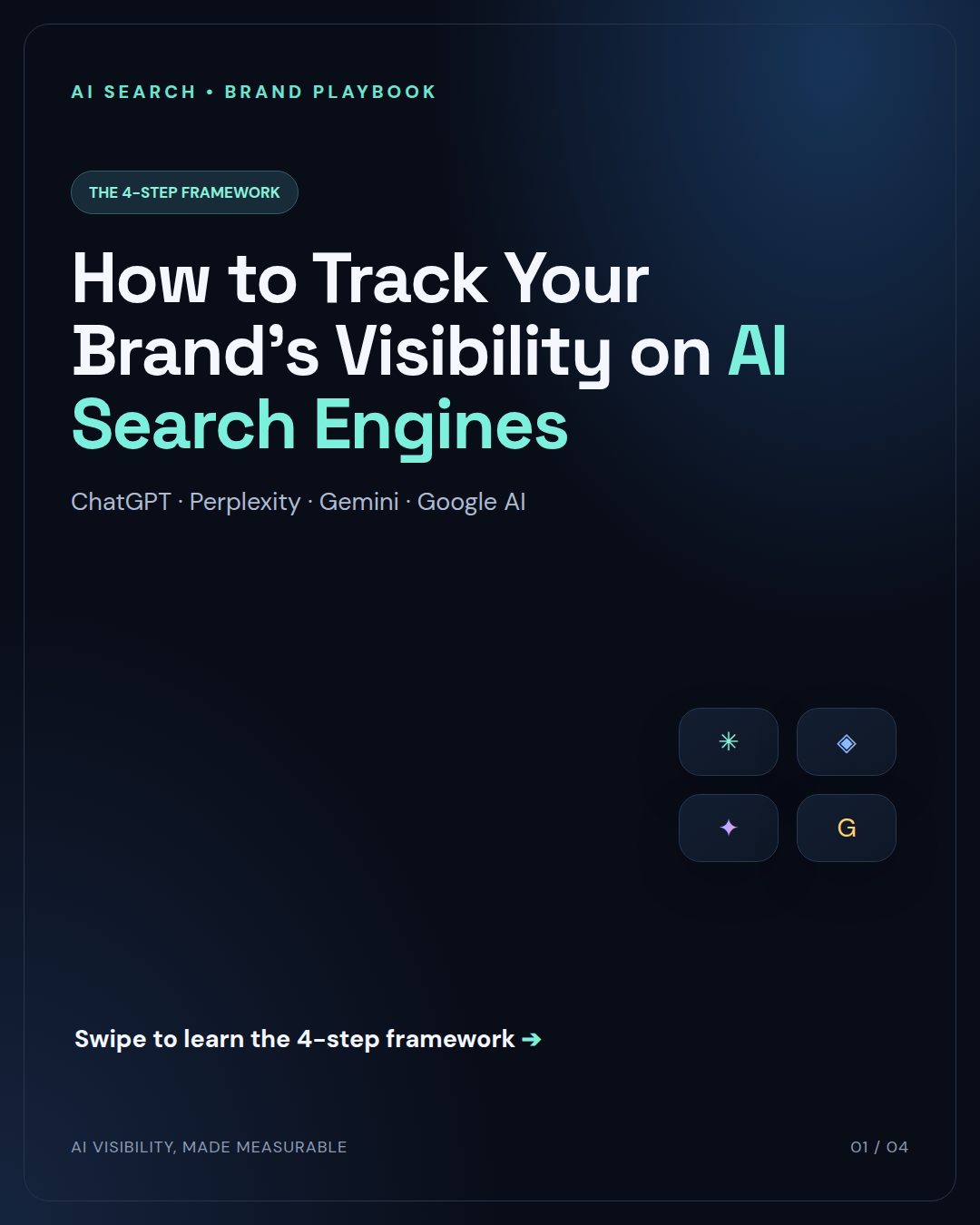
| How to Track AI Brand Visibility | https://seoportfolio.in/how-are-you-tracking-ai-brand-visibility/ |
| 15 Proven SEO Techniques in Digital Marketing | https://seoportfolio.in/15-proven-seo-techniques-in-digital-marketing-to-boost-your-website-traffic/ |
Anchor Text Suggestions for Internal Linking
Use these when linking to this post from other pages on seoportfolio.in:
- is SEO dead with AI search 2026
- what AI search really changes for marketers
- SEO is not dead but AI changed the rules
- how to adapt your SEO strategy for AI search
- traditional SEO vs AI search SEO comparison
- is SEO still worth it in 2026
- how is SEO changing with AI overviews
- can ChatGPT do SEO
- what is AI SEO called now GEO AEO
- will SEO exist in 5 years
Is Your Brand Visible in AI Search? Find Out for Free.
Get a free AI visibility and SEO readiness audit at seoportfolio.in/seo-audit-formula find out where you are currently cited, where you should be, and the highest-impact actions to take first.
Sources and References
TRIO Solutions SEO Is Not Dead: How AI Search Is Changing SEO (June 2026) · SEOInventiv SEO Is Not Dead But AI Search Changed the Rules (October 2026) · Semrush AI Overview Trigger Study (2026) · Pew Research Center Google Users Less Likely to Click Links When AI Summary Appears (July 2026) · Google Search Central — AI Optimization Guide (2026) · Forbes Agency Council SEO Is Not Dead: What AI Search Really Changes for Marketers (October 2026) · Neil Patel Is SEO Dead in 2026 (Data-Driven Analysis)

Sharing my journey and learnings in Tech and AI. As a Digital Marketing Expert, I help brands boost their visibility and sales with smart personal branding and the latest AI tricks.
Leave a Reply