|
Getting your Trinity Audio player ready… |
Table of Contents
To track your company’s visibility across AI search platforms, run a fixed list of customer style prompts through ChatGPT, Google AI Overviews, Google AI Mode, Gemini, Perplexity and Copilot on a regular schedule, then record whether your brand is mentioned, where it appears, how it is described and which pages are cited. You can do this by hand for free, or automate it with a dedicated AI visibility tool.
The part most guides skip is that AI answers change from one run to the next. A single check tells you very little. What works is a repeatable loop with the same prompts, the same metrics and a steady rhythm, so you can see real movement over weeks instead of guessing from one lucky or unlucky answer.
What Is AI Search Visibility?
AI search visibility is how often, and how favorably, an AI answer engine names or links your brand when it responds to a relevant question. It is a different thing from a Google ranking. You can sit in the top position on Google and still be missing from the AI generated answer shown above it.
This is why many marketers now talk about GEO (generative engine optimization) and AEO (answer engine optimization) alongside classic SEO. If you want the bigger picture on how the two fit together, read SEO Is Not Dead: What AI Search Really Changes for Marketers in 2026.
Why Traditional SEO Tools Cannot Show Your AI Visibility
Rank trackers measure positions on a results page. AI answers have no fixed positions. They are written fresh for each question, they change with phrasing, and they can differ by user, location and settings. That is why a keyword report cannot tell you whether ChatGPT recommends you or a competitor.
Search Console is useful but incomplete. As far as I know, it reports traffic from Google’s AI features together with regular web search traffic rather than as a clean separate report, so treat it as a signal, not a full picture. Verify the current reporting options in Search Console itself.
The Five Metrics That Define AI Visibility
Track these together. Each one answers a different question about how AI engines treat your brand.
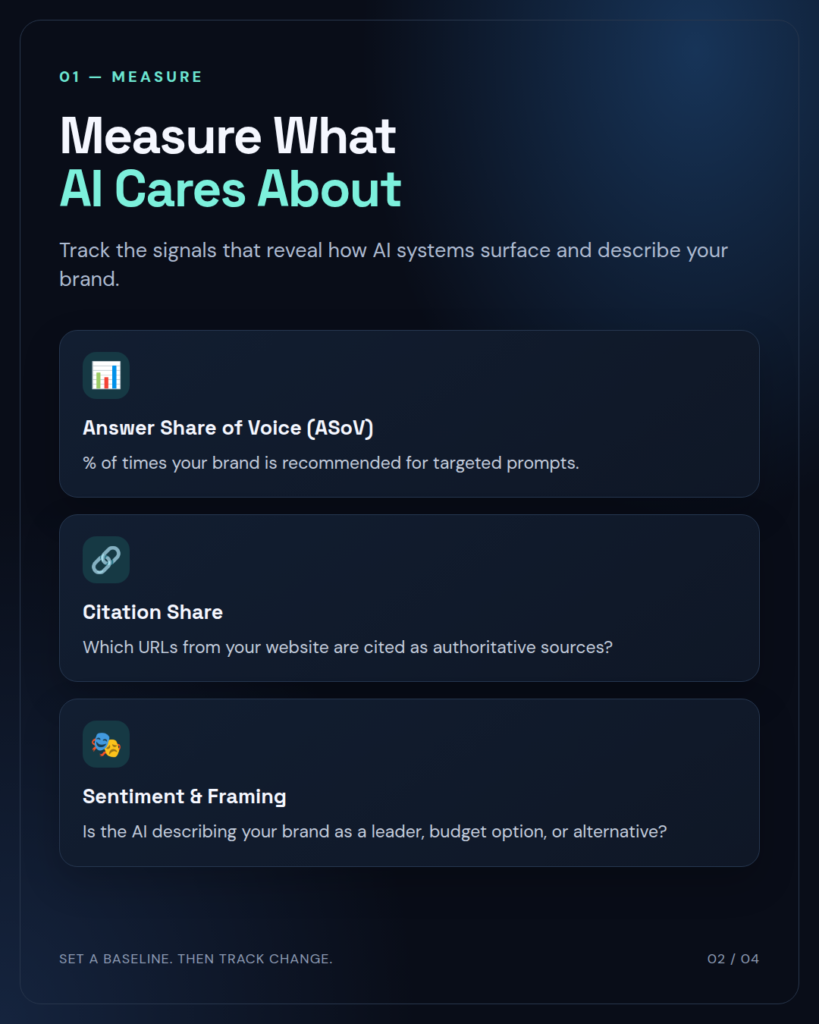
- Mention rate (visibility score): the share of tracked prompts where your brand appears. If you track 100 prompts and your brand shows up in 25 answers, your visibility score is 25 percent.
- Share of voice: your mentions compared with the mentions of all competitors across the same prompts. Visibility in AI search is always relative.
- Citations: how often AI answers link to your pages as a source, and which pages they pick.
- Position: whether you are named first, in the middle or at the end of a list.
- Sentiment and accuracy: whether the description of your brand is positive, neutral or wrong.
A number alone means little. A visibility score of 42 percent is just a figure, but a score of 42 percent that rose from 35 percent last month, driven by AI Overviews, is a finding you can act on.
How to Track Your Brand Visibility in AI Search, Step by Step
Step 1: Build a prompt list that matches real customer questions
Write between 50 and 100 prompts to start, covering every stage of the buying journey. Include discovery prompts such as “best [your category] for [your audience]”, comparison prompts such as “[your brand] vs [competitor]”, and validation prompts such as “is [your brand] worth it”. Track topics and their variations rather than one exact sentence, because small wording changes can change the answer.
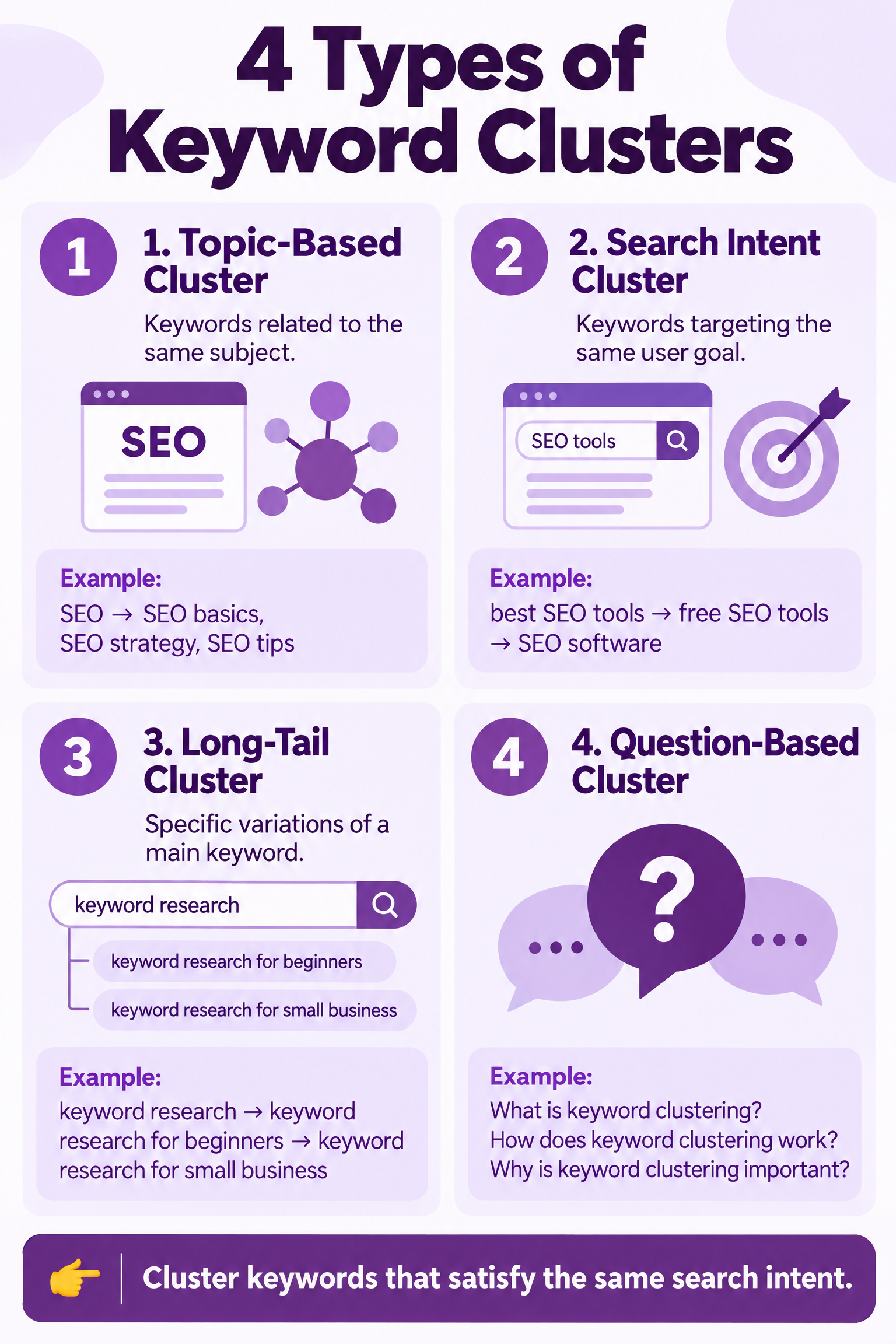
Grouping prompts into themes works the same way as grouping keywords. This guide on keyword clustering shows how to organize them so each cluster maps to a content plan.
Step 2: Run a manual baseline
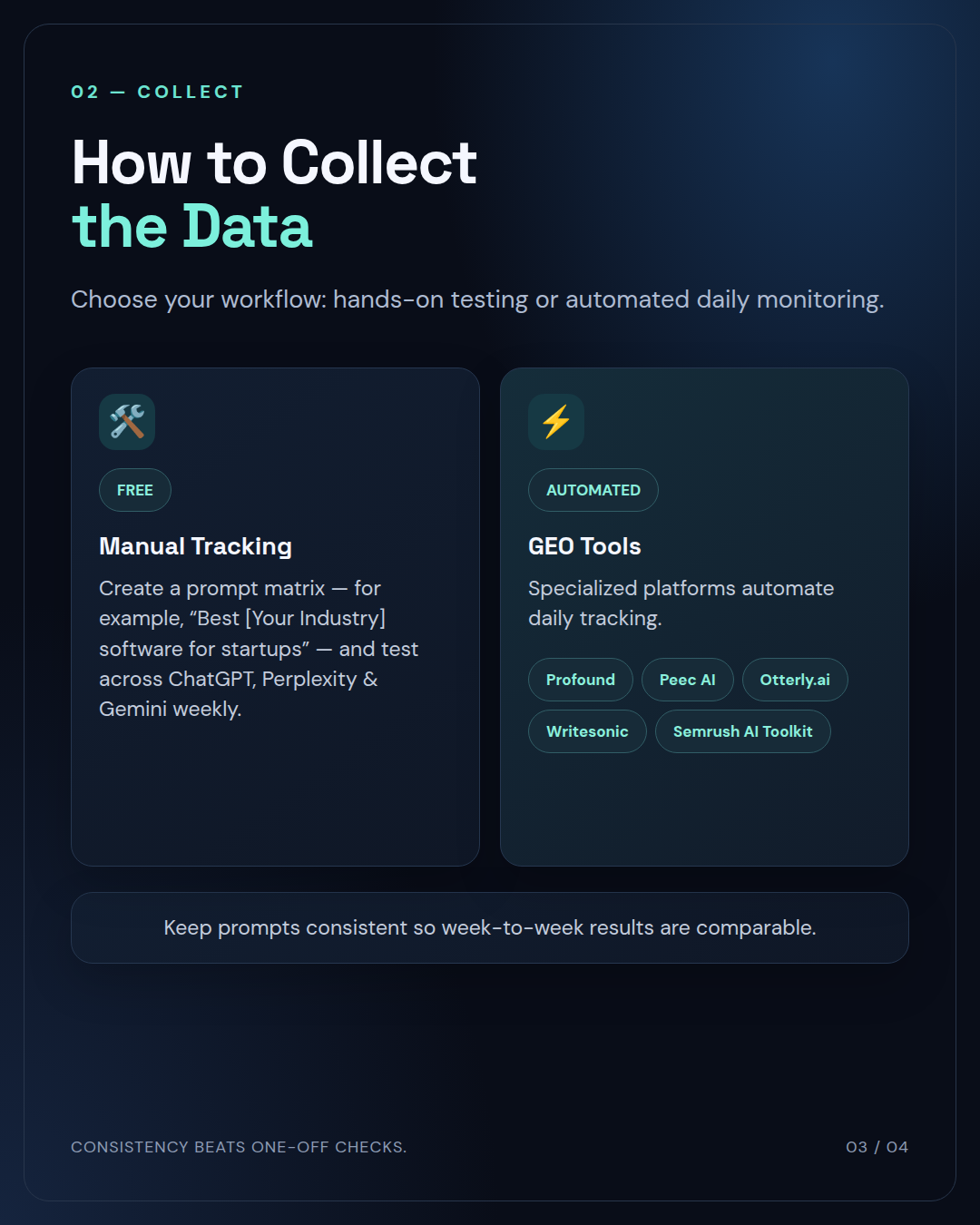
Before paying for anything, open each AI platform in a fresh session and run your prompts. Record every result in a spreadsheet with these columns: date, platform, prompt, brand mentioned (yes or no), position, competitors named, sentiment, and cited URLs. This takes time, but it shows you exactly how AI describes you today.
Step 3: Track each platform separately
ChatGPT, Perplexity, Gemini, Google AI Overviews, Google AI Mode and Copilot behave differently, pull from different sources and show different brands. Report them as separate channels so you can see where you are strong and where you are invisible.
Step 4: Use Search Console and analytics for the traffic side
Watch Google Search Console for changes in impressions and clicks on pages that you expect AI features to cite. In your analytics, look for referral traffic from AI platforms such as chatgpt.com and perplexity.ai, and segment it so you can see whether those visitors convert. Free tools are enough to start, and this list of the best free SEO software covers the main options.
Step 5: Check that AI crawlers can reach your site
If your robots.txt, firewall or rendering setup blocks AI crawlers, you may be shut out of AI answers regardless of content quality. Review your robots.txt rules, make sure key pages load without heavy scripts, and confirm your important content is available as plain text.
Step 6: Repeat on a schedule and compare over time
Run the same prompts weekly or monthly, depending on how fast your market moves. Compare the trend, not any single result. Do not track once and call it done.
How to Check Your AI Visibility for Free
You can get a useful picture without a paid plan. Start with the manual prompt log described above. Add Google Search Console for traffic signals and your analytics for AI referrals. Then try the free AI visibility checker tools offered by vendors such as Semrush and Ahrefs for a quick snapshot of your brand. Free checkers are usually limited to a small number of prompts or a single check, so treat them as a starting point and not as a long term tracking system.
The Best AI Visibility Tools to Consider
Paid AI visibility tools run many prompts on a schedule and report your mention rate, share of voice and how AI systems describe you. Most are still maturing, and many lean on existing keyword data, so use them to support your own prompt research and not replace it. Features and pricing change quickly, so verify details on each vendor’s site before you decide.
| Tool | What it is used for | Worth knowing |
|---|---|---|
| Semrush AI Visibility Toolkit | Benchmarking AI visibility, sentiment analysis, prompt discovery, daily tracking and technical audits for AI crawler access | A free AI search visibility checker and a paid toolkit both exist. Check current limits on the Semrush site. |
| Ahrefs Brand Radar | Monitoring AI mentions and custom prompts across AI Overviews, ChatGPT, Perplexity, Copilot and Gemini | Ahrefs also offers a free AI visibility checker. Confirm current features before buying. |
| Profound | Visibility score, share of voice, average position and a citations dashboard across AI engines | Built for AI answer tracking from the start. Platform coverage varies by plan. |
| Peec AI | Tracking mentions, position, sentiment and citations across ChatGPT, Perplexity, AI Overviews, AI Mode and Gemini | Useful when you want each AI channel reported separately. |
| Otterly.ai | AI search monitoring for ChatGPT, Perplexity and Google AI Overviews | Simple monitoring focus. Check which platforms your plan includes. |
| Amplitude | Amplitude also markets AI visibility features alongside its analytics product | I am not fully certain of the current feature set, so verify it in their documentation. |
How Is AI Visibility Calculated?
There is no single official formula, and each tool defines its own. The most common approach is simple. The tool runs a set of prompts across AI platforms, checks every answer for your brand name and your competitors, and then calculates your visibility score as mentions divided by total prompt runs. Share of voice divides your mentions by all brand mentions in those answers. Because the answers vary, good tools repeat each prompt several times and average the results.
When you compare tools, ask how many times each prompt is run, which platforms are included, and whether the data comes from real interfaces or from API access, since these choices change the numbers.
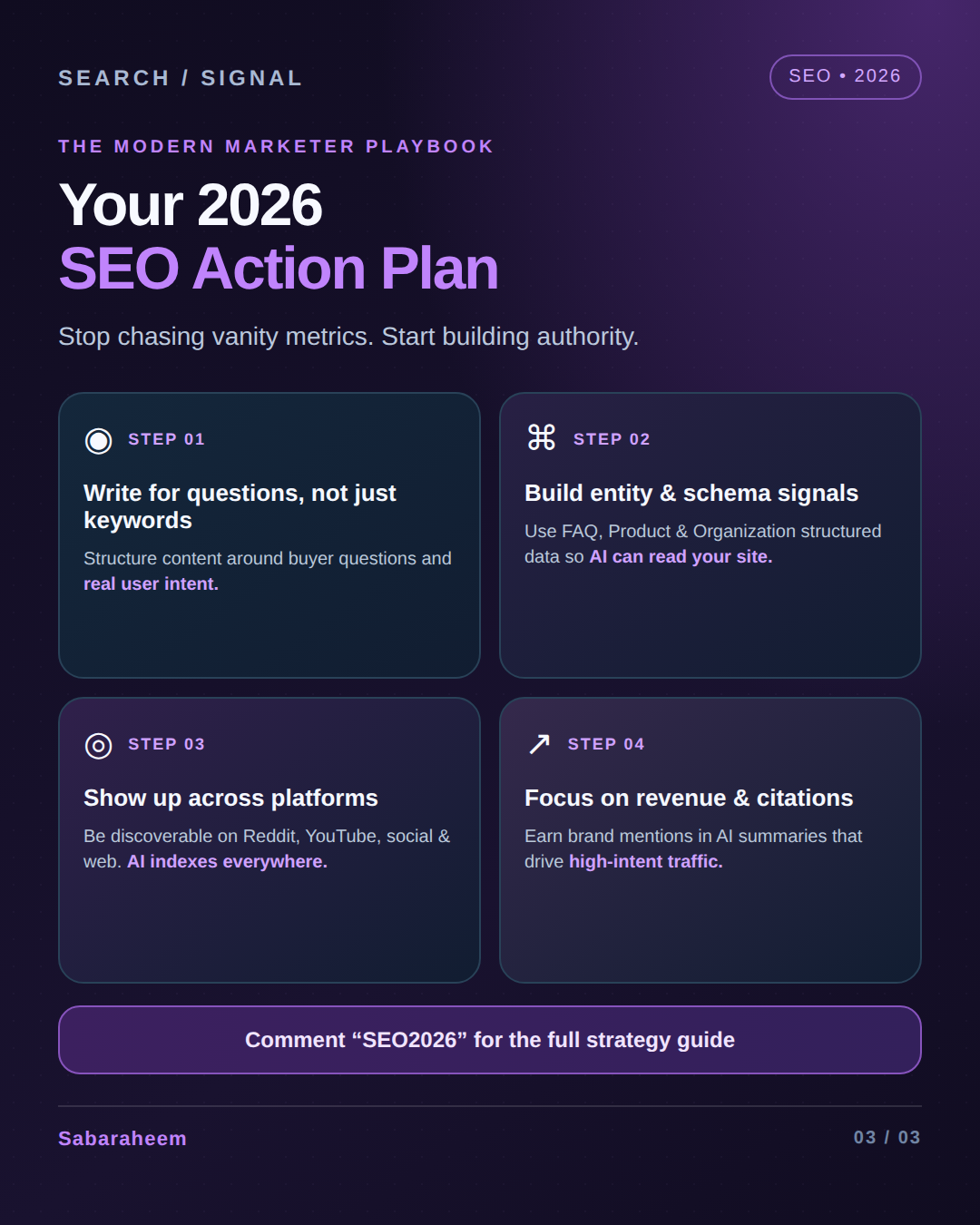
How to Show Up More in AI Searches
Tracking tells you where you stand. Improving it takes work on the same foundations that drive strong SEO, plus a few habits specific to AI answers.
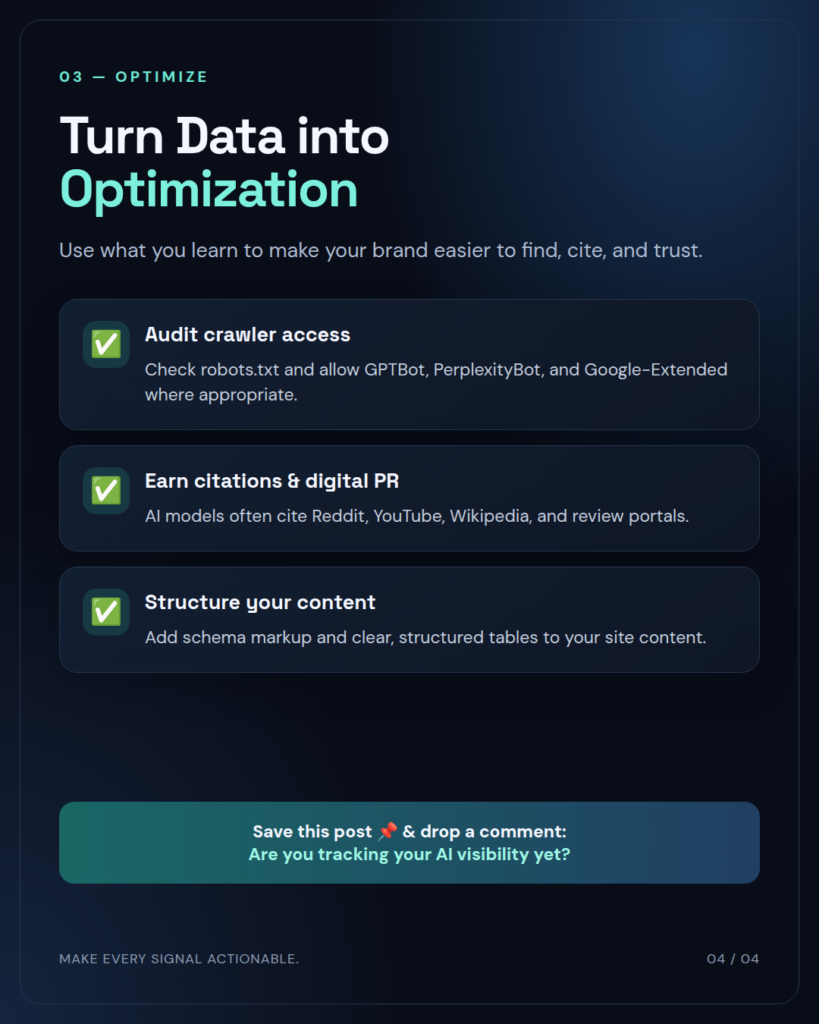
- Answer questions directly. Put a clear, short answer near the top of each page, then support it with detail. AI systems favor content that is easy to extract.
- Build topical authority. Cover a subject in depth with connected pages instead of isolated posts. Understanding the shift from keywords to topics and entities helps you structure this properly.
- Make your brand a clear entity. Use consistent naming, an accurate About page and structured data so machines can tell who you are and what you do.
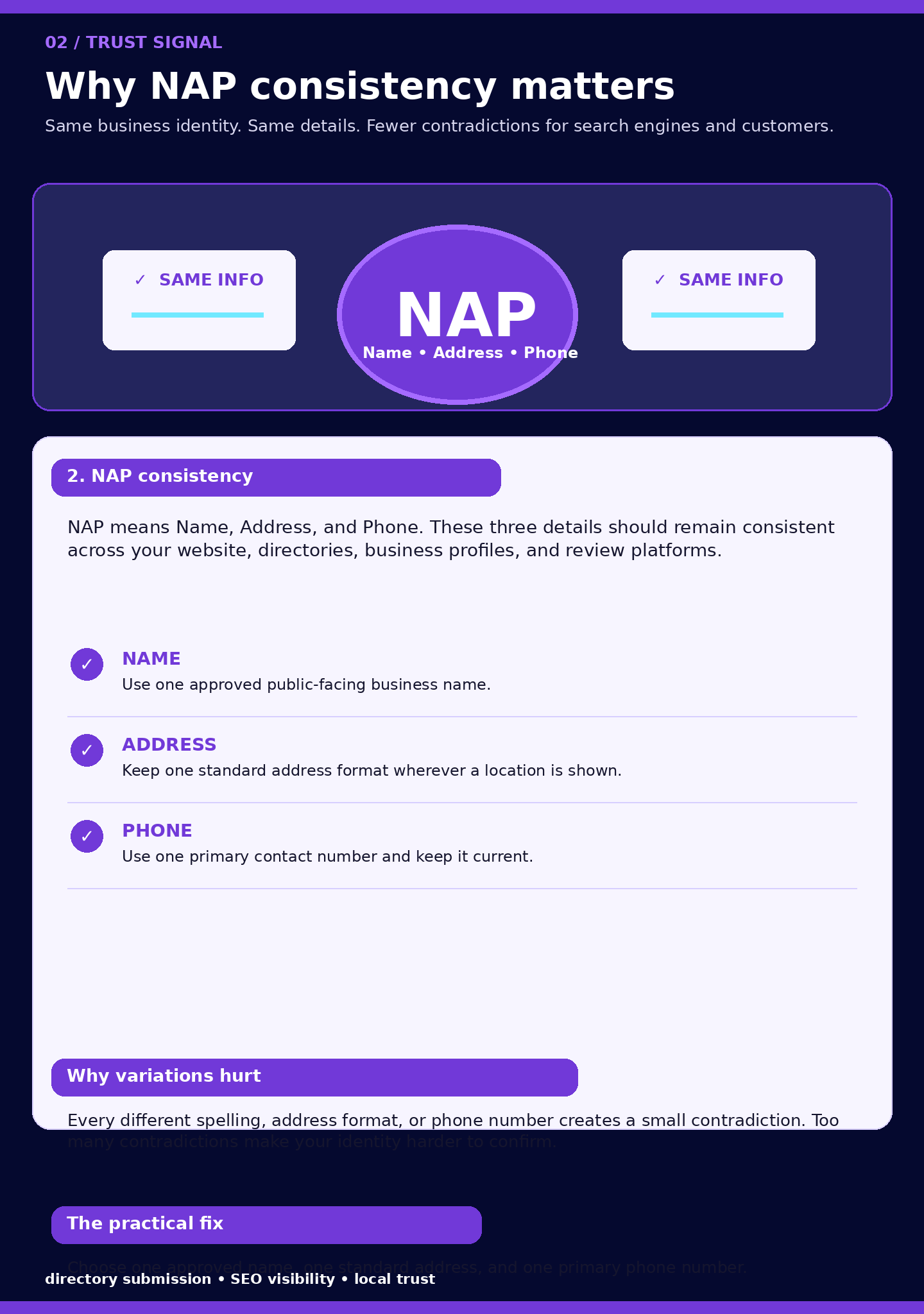
- Earn mentions outside your own site. AI answers draw on third party sources, reviews, communities and trusted listings. Consistent business listings also help, as explained in this post on directory submissions.
- Keep content fresh and accurate. Update key pages, fix outdated claims and publish original data or first hand experience that others cite.
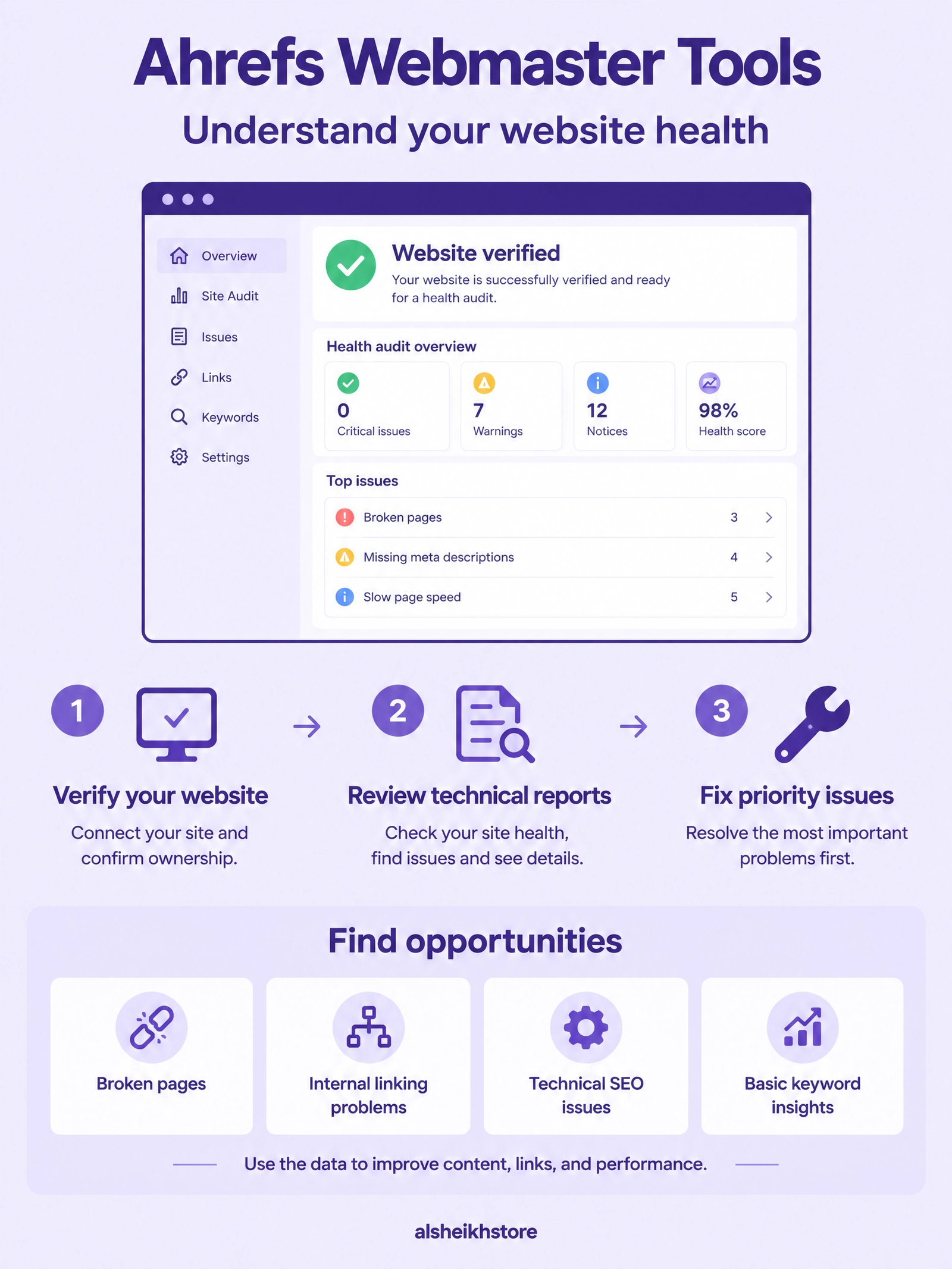
- Fix the technical basics. Fast pages, clean crawlability and correct indexing support both Google and AI platforms.
If you want expert help turning these steps into a plan, see SEO and web optimization and content marketing services, or start with a free website audit.
How Do I Appear in ChatGPT Searches?
There is no submission form for ChatGPT. As far as I know, appearing in its answers depends on being easy to find, easy to trust and clearly relevant for the question. Publish helpful pages that match real questions, make sure your site is crawlable, build mentions on reputable third party sites, and keep your brand information consistent everywhere. Then test the prompts your customers use and track whether you appear. Behavior can change quickly, so verify with fresh tests.
How Do I Get My Business to Show Up When Googled?
Start with the basics. Claim and complete your Google Business Profile, make sure your site is indexed in Search Console, target the searches your customers actually use, and give each service or product its own useful page. Add reviews, accurate contact details and consistent listings. For local businesses, location signals matter a great deal. These same basics also feed AI answers, which is why a healthy SEO foundation comes first.
Is SEO Dead Now With AI?
No. AI search adds a new layer on top of SEO and does not replace it. Strong rankings, trusted content and a clear brand still feed the sources that AI systems draw from. What has faded is the older style of SEO built on thin content and keyword stuffing. The sensible approach is to keep investing in SEO fundamentals and add AI visibility tracking alongside them.
Frequently Asked Questions
Can AI searches be tracked?
Yes, but imperfectly. You can track how often your brand appears across a fixed set of prompts, along with citations, position and sentiment. You cannot see every private query people type, and results vary between runs, so treat the data as a trend indicator.
How often should I check my brand visibility in AI search?
Weekly or monthly is a practical rhythm for most businesses. Fast moving categories may justify more frequent checks. Always compare against previous results using the same prompts.
Which AI platforms should I track?
Start with ChatGPT, Google AI Overviews, Google AI Mode, Gemini and Perplexity, then add Copilot or others if your audience uses them. Prioritize the platforms your customers actually use.
Is AI visibility the same as SEO?
No, but they are connected. SEO focuses on rankings and clicks from search results. AI visibility focuses on being named or cited inside the generated answer. A healthy SEO foundation supports both.
How do I check brand visibility?
Run your key prompts across AI platforms and note whether your brand appears, check Search Console and analytics for traffic signals, and search your brand name to see how it is presented. A dedicated tool can automate the process once you know what to measure.
How many prompts should I track?
Fifty to one hundred well chosen prompts is a sensible starting range, spread across discovery, comparison and validation questions.
Final Thoughts
Tracking AI search visibility comes down to a simple loop. Choose the prompts your customers use, test them across each AI platform, record mentions, citations, position and sentiment, and repeat on a schedule. Pair that tracking with strong SEO foundations and clear, trustworthy content, and you will see where AI platforms already recommend you and where you still have room to grow.

Sharing my journey and learnings in Tech and AI. As a Digital Marketing Expert, I help brands boost their visibility and sales with smart personal branding and the latest AI tricks.
Leave a Reply