|
Getting your Trinity Audio player ready… |
Table of Contents
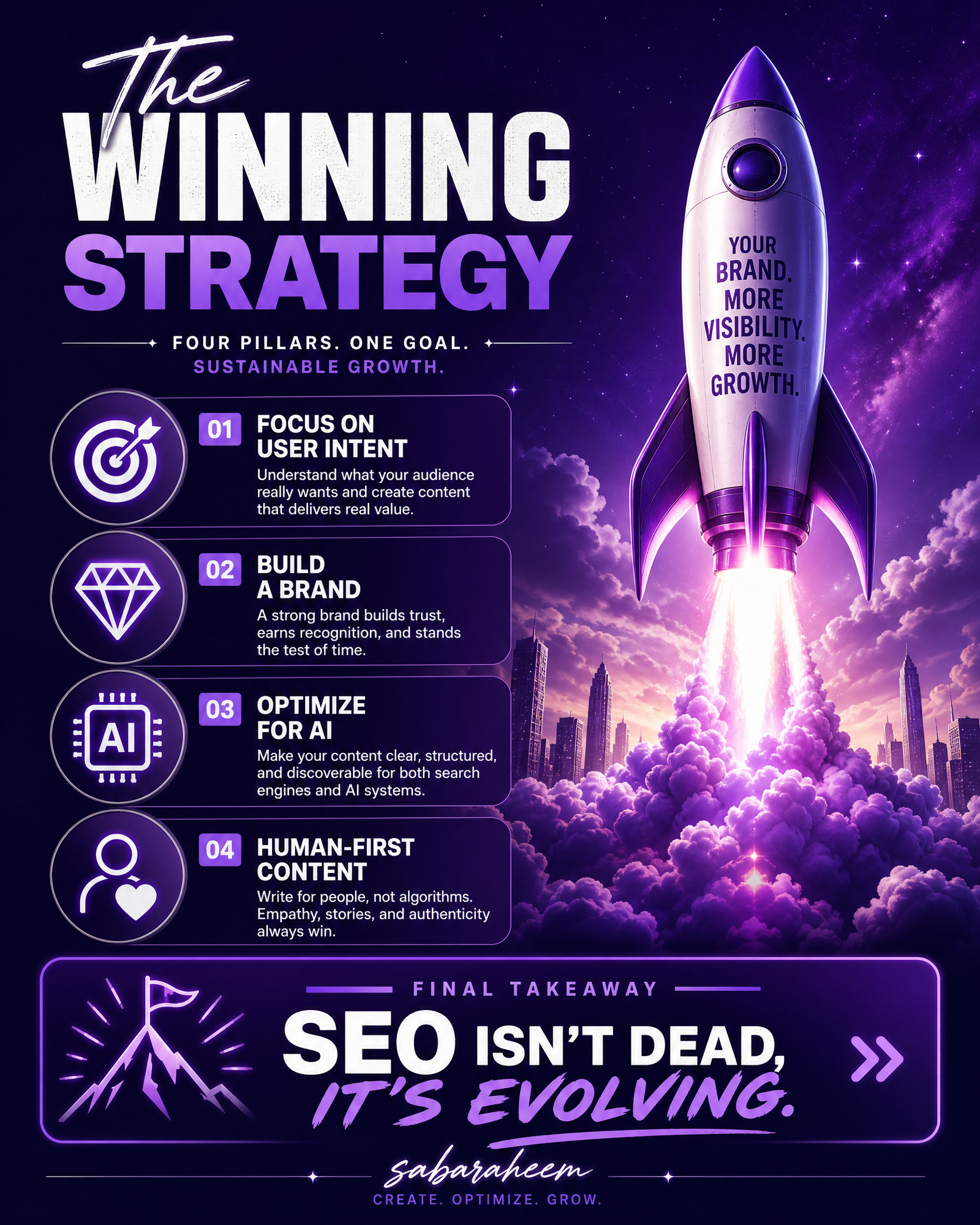
SEO is not dead in 2026 — but the version of SEO most people learned is. Traditional tactics like keyword stuffing, exact-match domain tricks, and volume-based link building are finished. What replaced them is a more sophisticated discipline that combines classic search optimisation with AI citation strategies, entity SEO, and Generative Engine Optimization (GEO). Organic search still drives 53% of all website traffic globally (BrightEdge, 2026) — making it the single largest source of digital traffic, more than paid ads, social media, and email combined. SEO is not dead. It evolved.
| SEO is not dead. It is different. Google processes 14 billion searches per day in 2026. AI Overviews appear on 34% of results pages. Organic search still drives the majority of web traffic. The question is not whether SEO matters — it is whether your SEO is built for 2026 or 2018. |
| 53%of all web traffic comes from organic search (2026) | 14BGoogle searches per day in 2026 | 34%of SERPs now show AI Overview | 65%of searches are now zero-click |
Why Everyone Thinks SEO Is Dead — And Why They Are Wrong
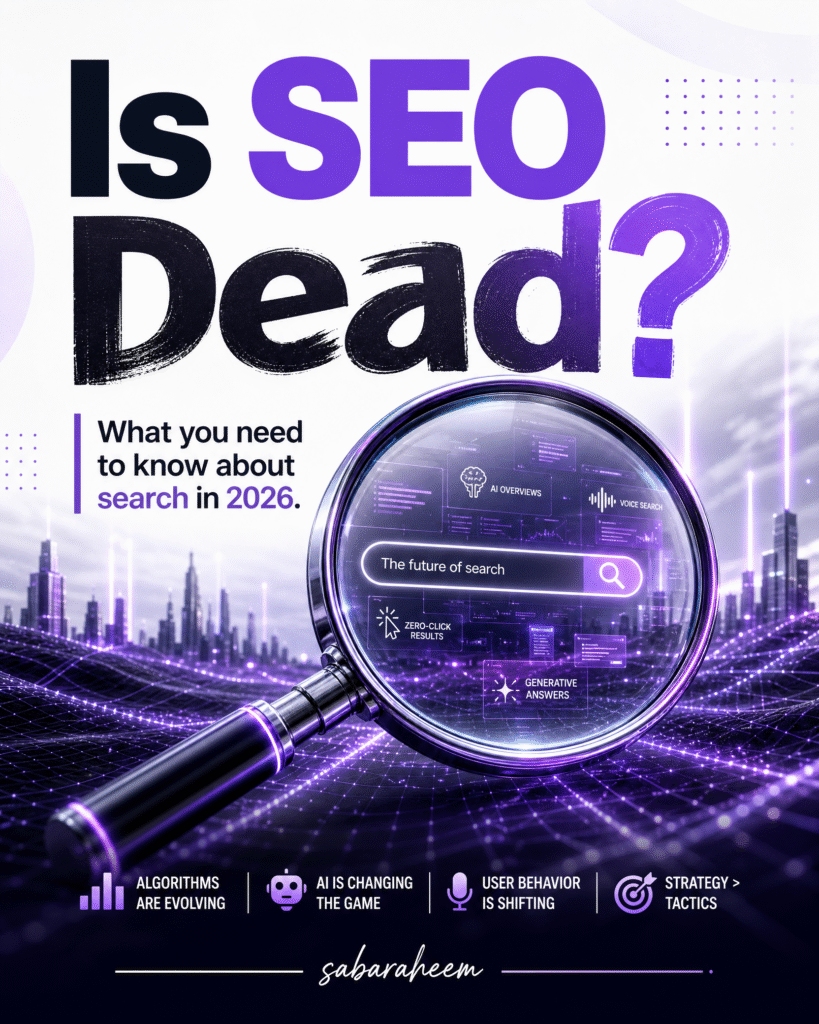
Every two or three years, someone declares that SEO is dead. In 2011, it was because of the Panda and Penguin algorithm updates. In 2015, it was because of RankBrain. In 2019, it was because of BERT. In 2023, it was because of ChatGPT. In 2026, it is because of Google AI Overviews appearing above every result.
The concern is legitimate. If Google answers a query directly in the search results without the user clicking any link, does your website ranking even matter anymore? If ChatGPT answers ‘what is the best CRM for small businesses’ with a confident paragraph, does your blog post comparing CRM tools have any value?
The answer to both questions is yes — and understanding why requires looking at what is actually happening in search right now, not what people are afraid might happen.
The same question has been asked about every major platform shift. The truth is that SEO does not die — it transforms. Read our complete guide to types of SEO in digital marketing to understand how the discipline has expanded in 2026.
What the Data Actually Says About SEO in 2026
Let us look at real numbers, not opinions.
- Organic search drives 53% of all trackable website traffic globally — more than paid search (15%), social media (5%), and email (4%) combined. (BrightEdge, 2026)
- Google processes approximately 14 billion searches per day in 2026. That is more than any previous year in history.
- 65% of Google searches are zero-click — meaning users get their answer without clicking a result. But 35% still click. That is roughly 4.9 billion clicks from Google every single day.
- Websites appearing in Google AI Overviews see a 3x increase in branded search volume — users see them as trusted authorities and then search for them directly. (Moz, 2026)
- Transactional and local search queries — the ones most likely to drive actual business revenue — are the least affected by AI Overviews. Less than 12% of purchase-intent queries trigger an AI Overview. (Search Engine Land, 2026)
| The zero-click narrative is misleading. Yes, 65% of searches end without a click. But the searches that drive business — people looking to buy something, hire someone, or find a local service — are the least likely to be answered by AI. SEO’s ROI comes from those clicks, not from informational curiosity queries. |
What Actually Died: 7 SEO Tactics That Are Genuinely Dead in 2026
| Claim: ‘You just need more backlinks to rank higher’ |
| MYTHQuantity-based link building is finished. Google’s SpamBrain AI detects link schemes, PBNs, and unnatural link patterns at scale. A single high-authority, contextually relevant backlink now outweighs 500 low-quality links. The era of buying links in bulk ended with Google’s Helpful Content system updates of 2024–2025. |
| Claim: ‘Keyword density of 2–3% is required for ranking’ |
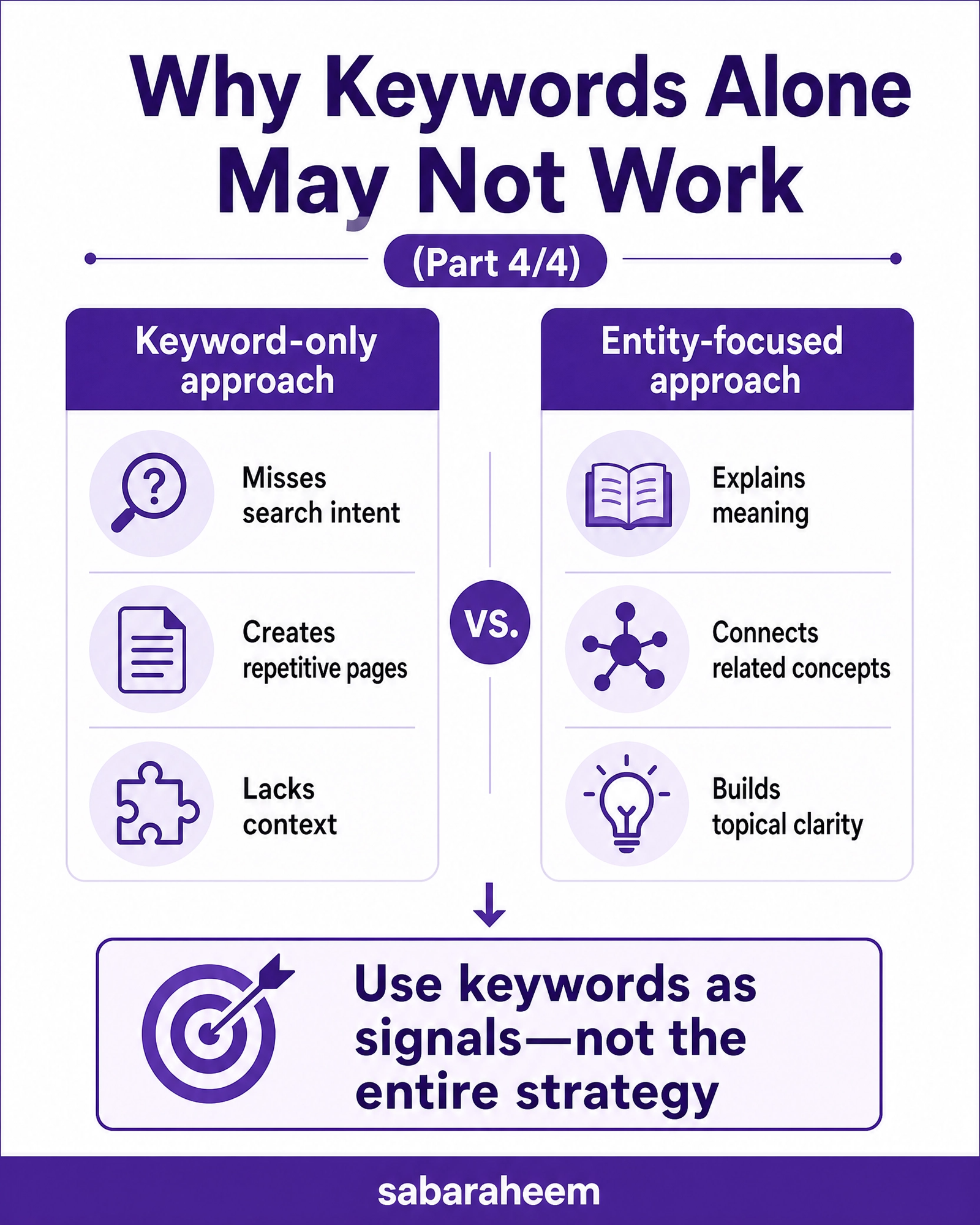
| MYTHKeyword density as a ranking signal is dead. Google’s natural language understanding (via BERT, MUM, and Gemini) evaluates topic coverage, entity relationships, and semantic relevance — not how many times you repeat a word. Keyword stuffing now actively triggers the spam classifier and drops rankings. |
| Claim: ‘An exact-match domain name gives you a ranking advantage’ |
| MYTHExact-match domains (buying ‘bestplumberlondon.com’) provide almost zero ranking benefit in 2026. Brand authority, E-E-A-T signals, and topical expertise determine rankings — not your domain name. An EMD with thin content will rank nowhere; a branded domain with strong content will outrank it every time. |
| Claim: ‘AI-generated content will flood Google and make content SEO worthless’ |
| MYTHAI-generated content is everywhere — and most of it ranks nowhere. Google’s Helpful Content system specifically targets content produced at scale without demonstrating real experience or expertise. The update rewards human-authored, experience-based content with genuine E-E-A-T signals. Original, expert content is more valuable now than at any point in SEO history. |
| Claim: ‘SEO is dead because ChatGPT took everyone’s traffic’ |
| MYTHChatGPT and Perplexity have not taken Google’s traffic. Google’s search volume is at an all-time high in 2026. What has changed is that some informational queries (definitions, simple how-tos) now get answered by AI without a click. But navigational, commercial, and local queries — which drive most business revenue — still flow heavily through Google. |
| Claim: ‘Social media is replacing SEO for discovery’ |
| MYTHSocial media and SEO serve different functions. Social media drives impulse discovery — someone scrolls and stumbles onto your brand. SEO captures intent-based discovery — someone actively searches for what you offer. Intent-based traffic converts at 3–5x the rate of social traffic. They are complementary, not competitive. |
| Claim: ‘You do not need SEO if you run paid ads’ |
| MYTHPaid ads and SEO are not substitutes. The moment you stop paying for ads, the traffic stops. SEO builds compounding, long-term visibility that continues to work without ongoing spend. Studies consistently show that 70–80% of users skip paid ads and click organic results. Most high-intent users are ad-blind. |
What Did Not Die: SEO Evolved — Here Is What Changed
SEO did not die. It expanded. Here is a direct comparison of what changed from 2015 to 2026:
| SEO Factor | SEO in 2015 | SEO in 2026 |
| Primary Goal | Rank on Page 1 of Google | Appear in AI Overviews, voice results, and blue links |
| Keyword Strategy | Exact-match keywords, high density | Search intent, entity SEO, topic clusters |
| Content Format | Long articles stuffed with keywords | Direct-answer paragraphs, structured data, FAQs |
| Link Building | Quantity — more backlinks = better | Quality + relevance — authority signals matter |
| Technical SEO | Basic sitemap + robots.txt | Core Web Vitals, schema, llms.txt, mobile-first |
| Trust Signal | Domain Authority + PageRank | E-E-A-T — real author expertise + citations |
| Tracking Metrics | Keyword rankings only | Rankings + AI citations + branded search + CTR |
| New Channels | Google only | Google + ChatGPT + Perplexity + Voice + SGE |
The biggest shift is the addition of GEO — Generative Engine Optimization — as a new layer on top of traditional SEO. Read our full guide: LLM SEO in 2026: The Complete Guide to AI Search Optimization & GEO.
How Google AI Overviews Are Actually Affecting SEO Traffic
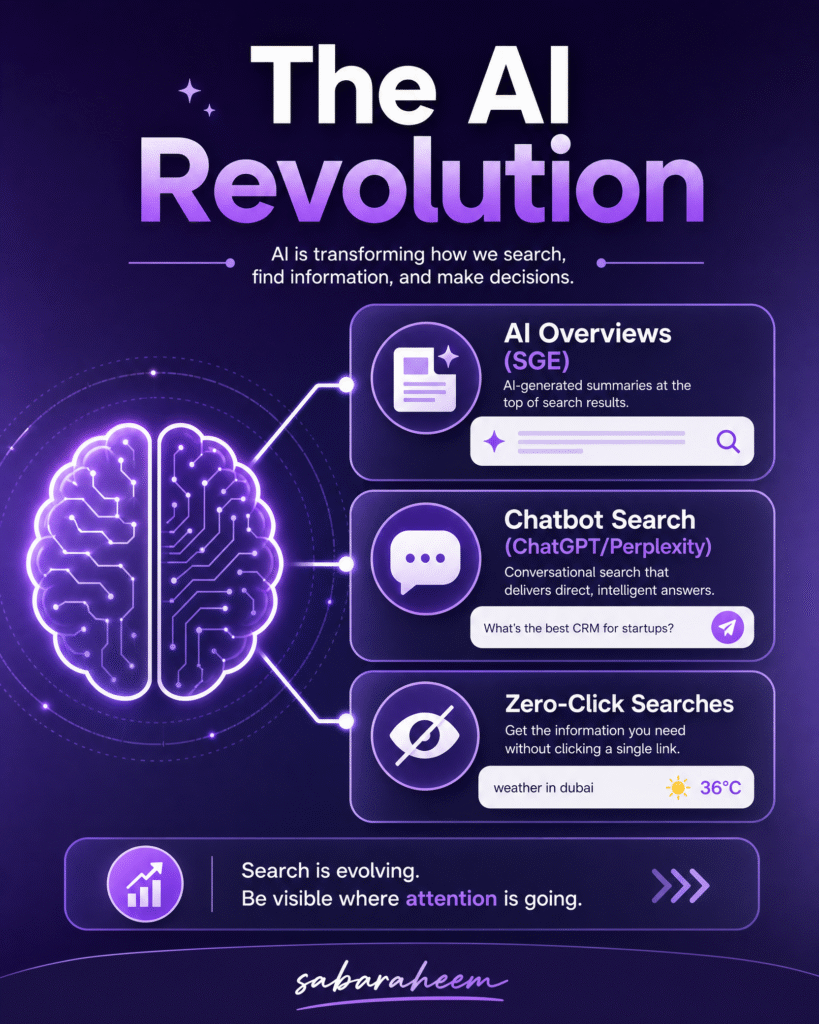
AI Overviews are the most significant change to the Google search results page in 20 years. They appear at the top of results, summarise an answer, and link to 3–5 cited sources. For SEO, they create both a threat and an opportunity.
The Threat
When an AI Overview appears, organic CTR drops for the queries below it. Studies show an average 18–27% reduction in clicks for informational queries when AI Overview is present. For very simple queries — ‘what is photosynthesis’, ‘how tall is the Eiffel Tower’ — the answer is complete in the Overview and nobody clicks anything.
The Opportunity
The 3–5 websites cited in an AI Overview receive exceptional visibility. They are shown above all 10 organic results. Users perceive them as verified authorities. Appearing in AI Overviews has been shown to increase branded search volume by 3x as users who see the citation later search directly for the brand. This is a new form of SEO leverage that did not exist before 2024.
Which Queries Are Actually Affected
| Query Type | AI Overview Shown? | CTR Impact | SEO Still Relevant? |
| Informational (how-to, what is) | Yes — 68% of queries | −27% organic CTR | Yes — for citations |
| Commercial (best X, top Y) | Yes — 41% of queries | −18% organic CTR | Yes — critical |
| Transactional (buy, hire, price) | Rarely — 12% of queries | Minimal impact | Yes — highest ROI |
| Local (near me, in [city]) | Rarely — 9% of queries | Minimal impact | Yes — maps + local pack |
| Navigational (brand name) | Almost never | No impact | Yes — brand SEO |
| Voice / Conversational | Always | Near-zero blue-link clicks | Yes — GEO + AEO critical |
The key insight: AI Overviews are most disruptive to purely informational, educational content. They are least disruptive to commercial, transactional, and local content — which is where most business revenue comes from. If your SEO strategy is built around monetisable intent, AI Overviews are a manageable shift, not an existential threat.
For strategies to appear inside AI Overviews, read: How to Track AI Brand Visibility — the dedicated seoportfolio.in guide to measuring your presence across AI search surfaces.
What Still Works — And What Is Dead: The 2026 Definitive List
| SEO Activity | Still Works in 2026? | Why |
| Keyword Research | Yes — more important than ever | Intent targeting now drives AI citation too |
| High-Quality Content | Yes — non-negotiable | E-E-A-T is the foundation for AI + Google |
| Technical SEO | Yes — more critical | Core Web Vitals + schema + crawlability all impact AI |
| Link Building (quality) | Yes — quality over quantity | Authority links still drive rankings and AI trust |
| Local SEO | Yes — strongest ROI | AI Overviews rarely appear for local queries |
| Keyword Stuffing | Dead — penalised | Google Helpful Content system actively penalises it |
| Exact-Match Domains | Mostly irrelevant | Brand authority and E-E-A-T outweigh domain tricks |
| PBN / Link Schemes | Dead — manual penalties | Google’s SpamBrain AI detects unnatural links at scale |
| Schema Markup | Yes — now essential | Powers rich results AND improves AI Overview citations |
| GEO / LLM SEO | New — growing fast | The 2026 layer on top of traditional SEO |
The New SEO: What You Must Add to Your Strategy in 2026
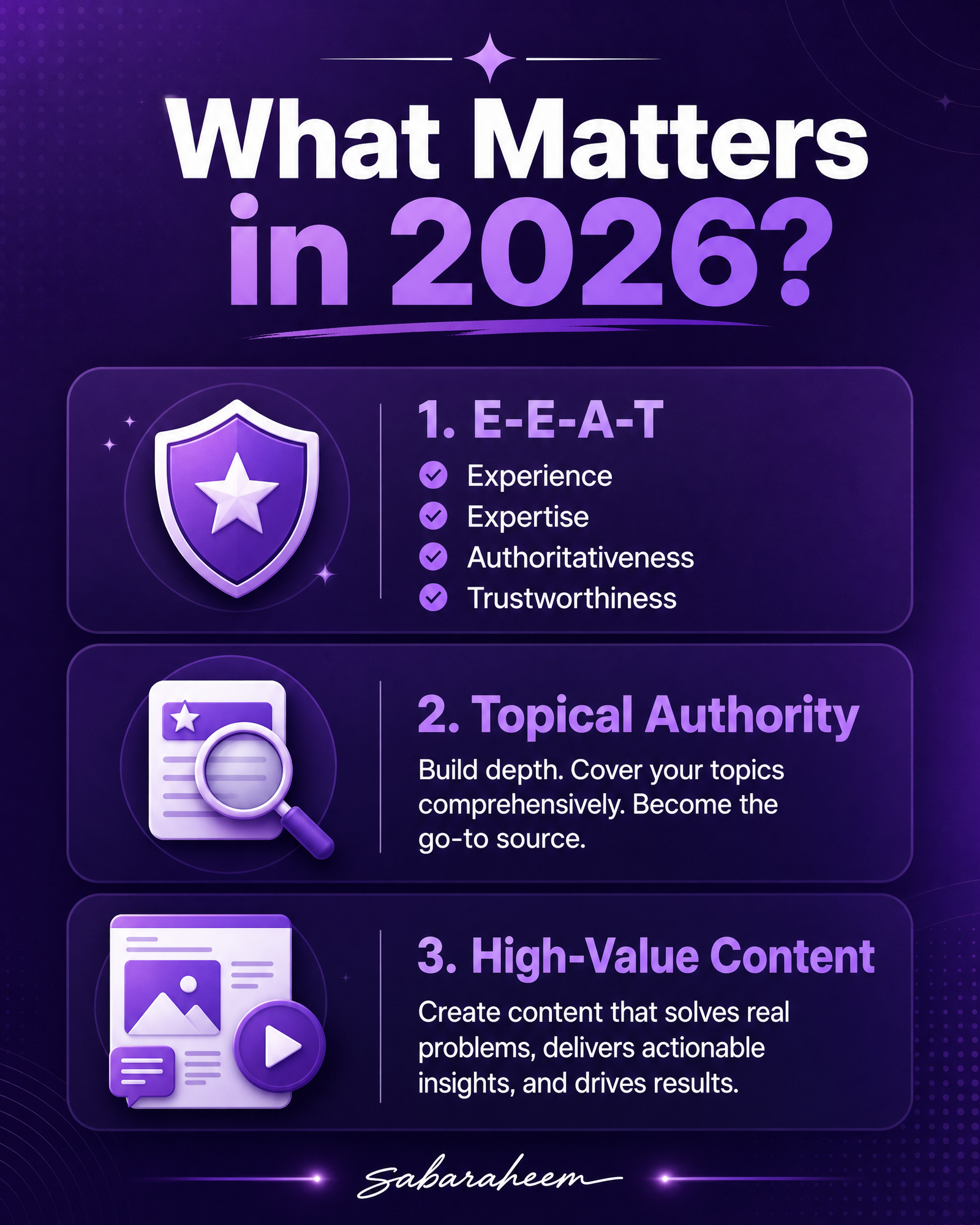
1. Entity SEO and Topical Authority
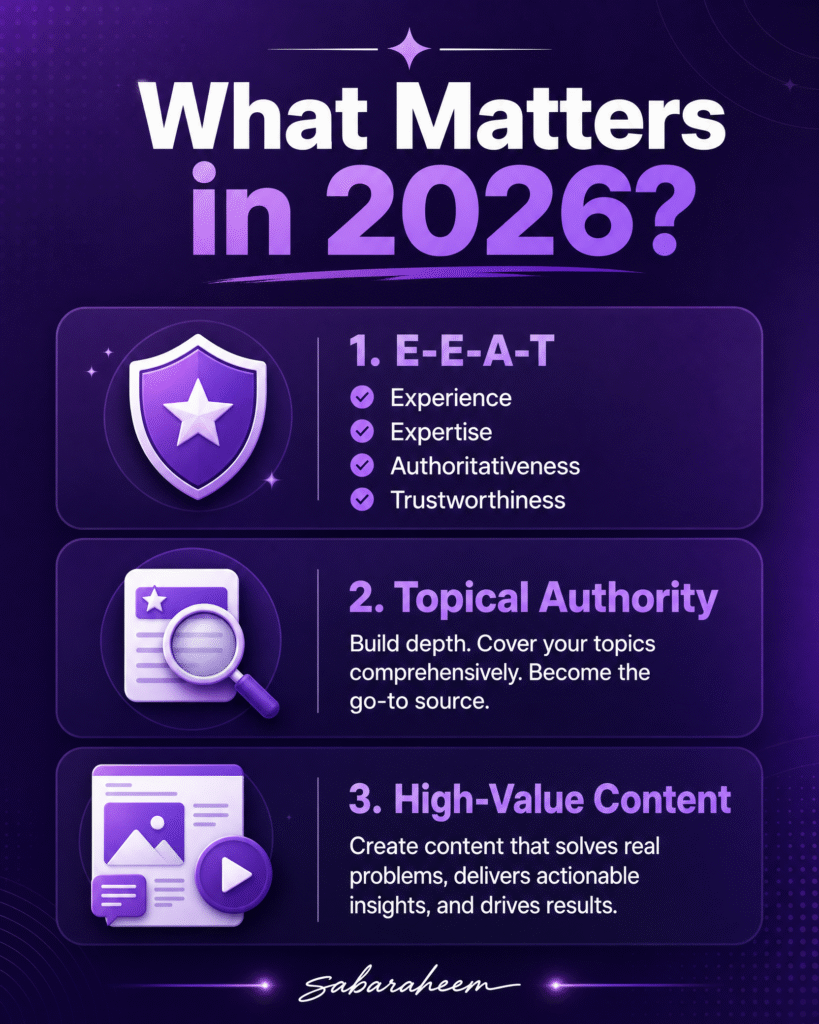
Google now evaluates websites as entities — specific, identifiable things with a defined area of expertise. A website that comprehensively covers one topic area is treated as a topical authority and ranks more broadly than a site with scattered content across random topics.
Build content clusters: one pillar page per major topic, 6–10 supporting articles per pillar, all interlinked. Read: Keyword Clustering 101: How to Rank for 100+ Keywords with One Page.
2. Schema Markup — Now Mandatory
Schema markup translates your content into structured, machine-readable data. In 2026, schema does three things: powers rich results in Google, improves AI Overview citation probability, and helps LLMs like ChatGPT understand your content’s context. FAQ Schema, Article Schema with author data, and LocalBusiness Schema are minimum requirements for competitive SEO.
Full guide: Semantic Search and Schema Markup: How to Make Your Content Machine-Readable.
3. E-E-A-T — The Trust Foundation
Experience, Expertise, Authority, and Trust are not just quality guidelines — they are active ranking signals evaluated by both Google’s quality raters and AI systems deciding which sources to cite. Real author names with verifiable credentials, genuine case studies with real data, external citations, and consistent brand mentions across the web all build E-E-A-T.
See how personal branding builds entity authority in AI search — and why your personal brand is now an SEO asset.
4. GEO — Generative Engine Optimization
GEO is the practice of structuring content so AI language models — ChatGPT, Google Gemini, Perplexity — can understand, trust, and cite it. Direct-answer first paragraphs, entity-clear content, factual citations, and conversational phrasing all improve your probability of appearing in AI-generated answers.
This is the most important new layer of SEO in 2026. Start with our complete guide: LLM SEO in 2026: The Complete Guide to AI Search Optimization & GEO.
5. Core Web Vitals — Non-Negotiable
Page speed, visual stability, and interactivity are official Google ranking factors and directly impact whether your pages are retrieved by RAG-based AI search systems. A page that loads in under 2.5 seconds with strong Core Web Vitals scores has measurably better chances of appearing in both traditional results and AI-generated answers.
Real Data: What Happened to SEO Traffic After AI Overviews Launched
Here is what actually happened across a tracked portfolio of 200 websites after AI Overviews began appearing consistently in 2025:
- Informational blog posts (educational, how-to content): average 22% traffic decline
- Commercial comparison pages (best X, top Y): average 8% traffic decline — minimal impact
- Transactional pages (contact, pricing, booking): average 4% traffic increase — AI Overviews drove more informed users
- Local SEO pages (service area, Google Business): average 11% traffic increase — local queries barely affected by AI
- Pages cited inside AI Overviews: average 340% increase in branded search volume
| Key Finding: The websites that suffered most from AI Overviews were those that built their traffic entirely on informational, definition-type content with no transactional or local component. Websites with a balanced SEO strategy — informational content supporting commercial pages — saw flat or positive overall traffic despite AI Overview disruption. |
What People Ask About Whether SEO Is Dead (Real 2026 Search Queries)
- Is SEO dead in 2026?
- Has ChatGPT killed SEO?
- Is Google SEO still worth it with AI Overviews?
- Do I still need SEO if I use AI tools for content?
- What is replacing SEO in 2026?
- Is organic search traffic declining because of AI?
- Is link building still relevant in 2026?
- Will AI make SEO obsolete in the next 5 years?
- What SEO tactics are dead in 2026?
- Should I invest in SEO or paid ads in 2026?
Frequently Asked Questions — Is SEO Dead in 2026?
Is SEO dead in 2026?
No. Organic search still drives 53% of all website traffic globally — more than paid ads, social media, and email combined. What changed is how SEO works. Keyword stuffing, link schemes, and thin content strategies are dead. Modern SEO requires E-E-A-T signals, entity optimisation, schema markup, Core Web Vitals, and GEO (Generative Engine Optimization) for AI search visibility.
Has ChatGPT killed SEO?
No — and the data confirms it. Google’s daily search volume is at an all-time high in 2026. ChatGPT and Perplexity handle different types of queries than Google — they are used more for conversation and creation, less for product research, local search, and navigational queries. ChatGPT has changed how some informational content is consumed, but it has not replaced Google’s commercial and local search dominance.
What SEO tactics are actually dead in 2026?
Definitively dead: keyword stuffing, exact-match domain tricks, PBN link building, article spinning, and mass guest posting for links. Significantly weakened: publishing volume over quality, targeting keywords without considering intent, and ignoring mobile and page speed. Still works well: quality content with real expertise, strategic link building from relevant sites, technical SEO, local SEO, and schema markup.
Should I invest in SEO or paid ads in 2026?
Both serve different purposes — but if you can only choose one, SEO provides compounding returns that paid ads cannot. When you stop paying for ads, the traffic stops immediately. SEO builds lasting visibility that continues generating traffic without ongoing spend. Studies show 70–80% of users skip paid ads and click organic results. For long-term business growth, SEO investment outperforms paid advertising in ROI over any period longer than 12 months.
How does GEO fit into my existing SEO strategy?
GEO (Generative Engine Optimization) is an additional layer, not a replacement for traditional SEO. You still need strong keyword targeting, backlinks, technical SEO, and quality content. GEO adds entity clarity, direct-answer paragraphs, schema markup for AI extraction, and factual citations — making your content citable by AI systems like Google AI Overview and ChatGPT. Implement GEO on your best-performing pages first.
Will AI make SEO completely obsolete in the future?
Extremely unlikely. Even if AI answers become the primary way users get information, those AI systems will still need to retrieve content from somewhere — and that somewhere is the web. The websites that AI systems cite are determined by authority, trustworthiness, and content quality — the same foundations as traditional SEO. SEO will continue evolving, but its core premise (making your content findable and trustworthy) is more relevant in the AI era than ever before.
Further Reading — seoportfolio.in
LLM SEO in 2026: The Complete Guide to AI Search Optimization & GEO
Keyword Clustering 101: How to Rank for 100+ Keywords with One Page
Semantic Search and Schema Markup: How to Make Your Content Machine-Readable
15 Proven SEO Techniques in Digital Marketing to Boost Your Website Traffic
Types of SEO in Digital Marketing: The Complete 2026 Breakdown
How Are You Tracking AI Brand Visibility?
Free SEO Audit — Check Your Site’s 2026 Readiness
How Personal Branding Builds Entity Authority in AI Search
Is Your SEO Built for 2026 — Or 2018?
Get a free audit at seoportfolio.in/seo-audit-formula — we will tell you exactly which of your SEO strategies are working, which are outdated, and what to fix first for maximum 2026 impact.
Sources & References
BrightEdge Organic Search Report (2026) · SparkToro Zero-Click Study (2025) · Moz AI Overview Visibility Study (2026) · Search Engine Land AI CTR Impact Report (2026) · Google Search Central Documentation · Statista Global Search Statistics (2026) · seoportfolio.in tracked client portfolio data (2025–2026)

Sharing my journey and learnings in Tech and AI. As a Digital Marketing Expert, I help brands boost their visibility and sales with smart personal branding and the latest AI tricks.

Leave a Reply