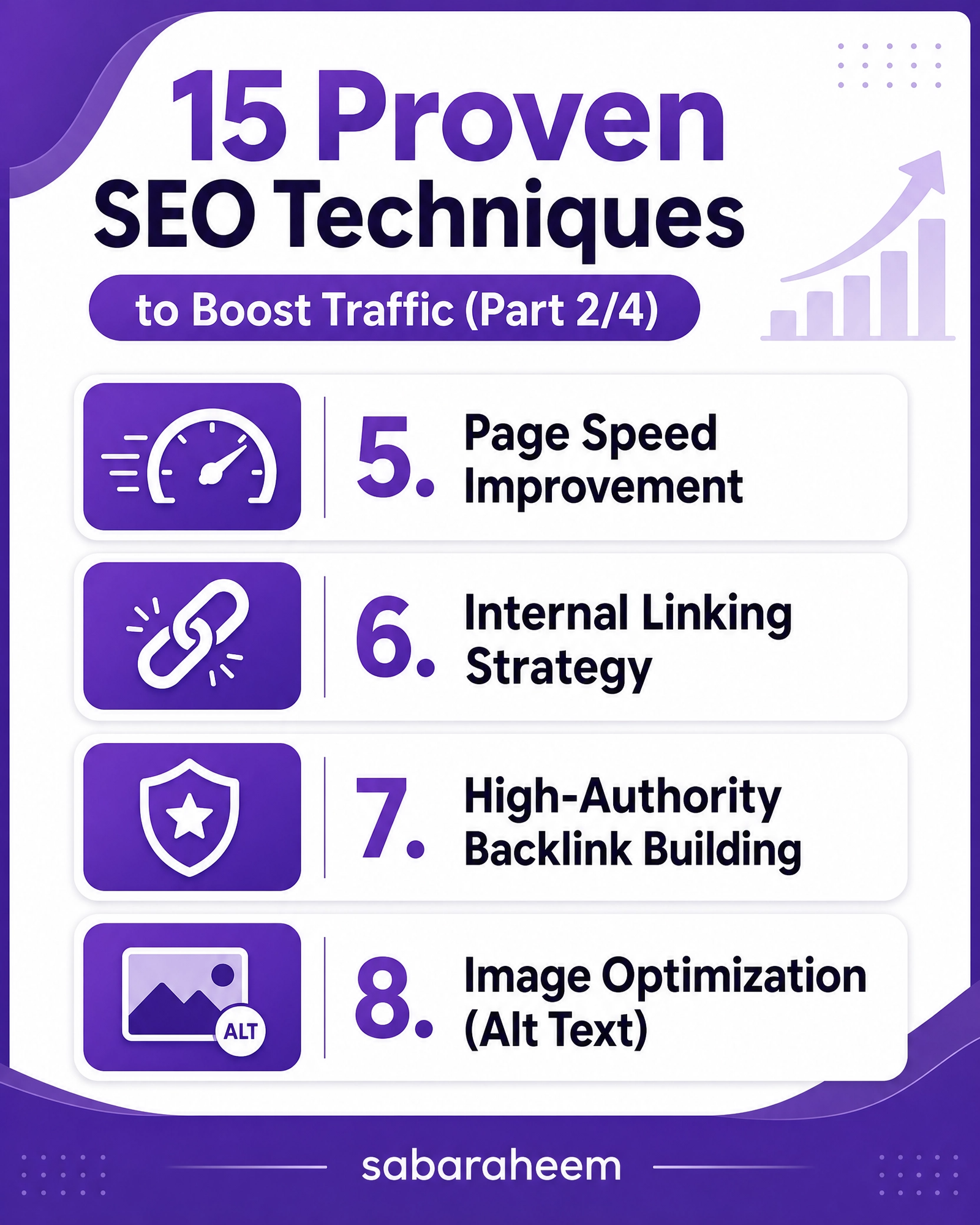
If you want to increase your website traffic in 2026, these 15 SEO techniques in digital marketing are what actually work — backed by data, tested on real campaigns, and aligned with Google’s latest Helpful Content and E-E-A-T guidelines. Whether you’re running a local business, an e-commerce store, or a content blog, at least 10 of these apply to you right now.
| The most impactful SEO techniques in 2026 include keyword intent targeting, on-page optimization, Core Web Vitals, link building, local SEO, and AI Overview optimization. Used together, businesses see 30–80% organic traffic growth within 3–6 months. |
The Problem: Why Most Websites Don’t Get Search Traffic
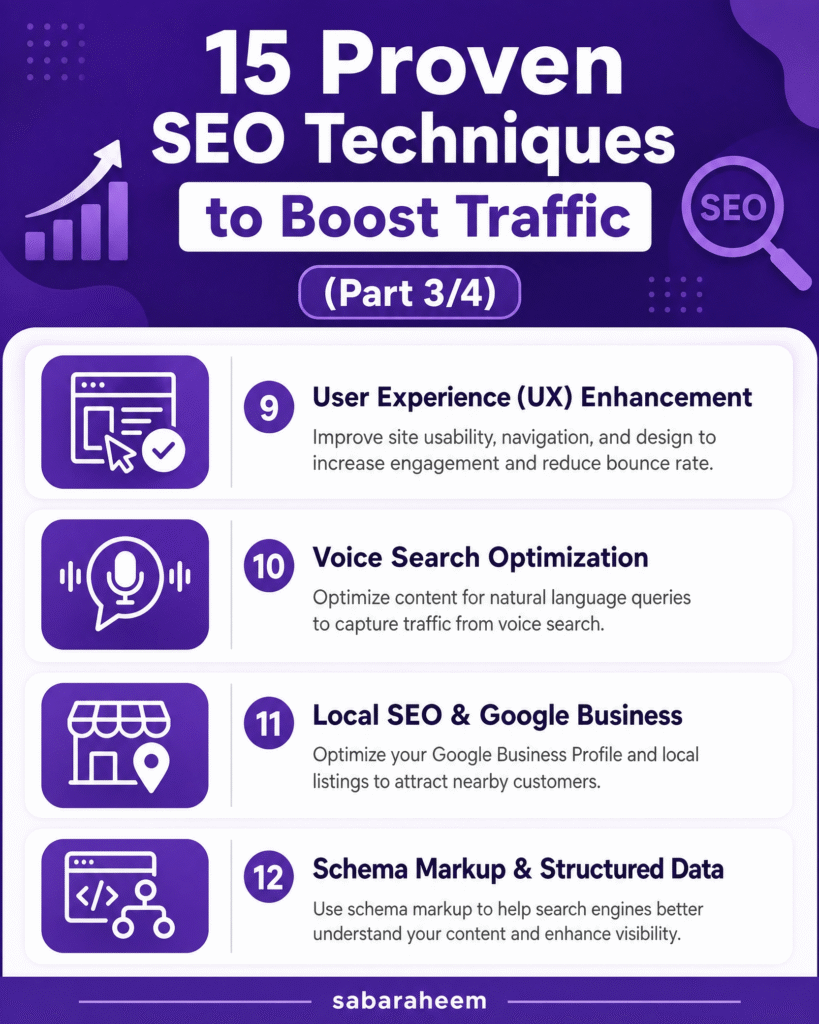
Here’s the uncomfortable truth — 96.55% of all web pages get zero traffic from Google (Ahrefs, 2024). Zero. That’s not a typo.
Most website owners either do SEO incorrectly or skip it entirely. They publish content without keyword research, ignore technical issues, and wonder why Google doesn’t care. Meanwhile, their competitors are showing up in AI Overviews, featured snippets, and voice search results.
The digital marketing landscape changed drastically in 2025–2026. Google’s AI-powered ranking systems now evaluate content quality, user experience, and topical authority more deeply than ever. The old tricks — keyword stuffing, low-quality backlinks, thin content — don’t just stop working, they actively hurt you.
The good news? The fundamentals still work. Better, actually. Let’s go through all 15.
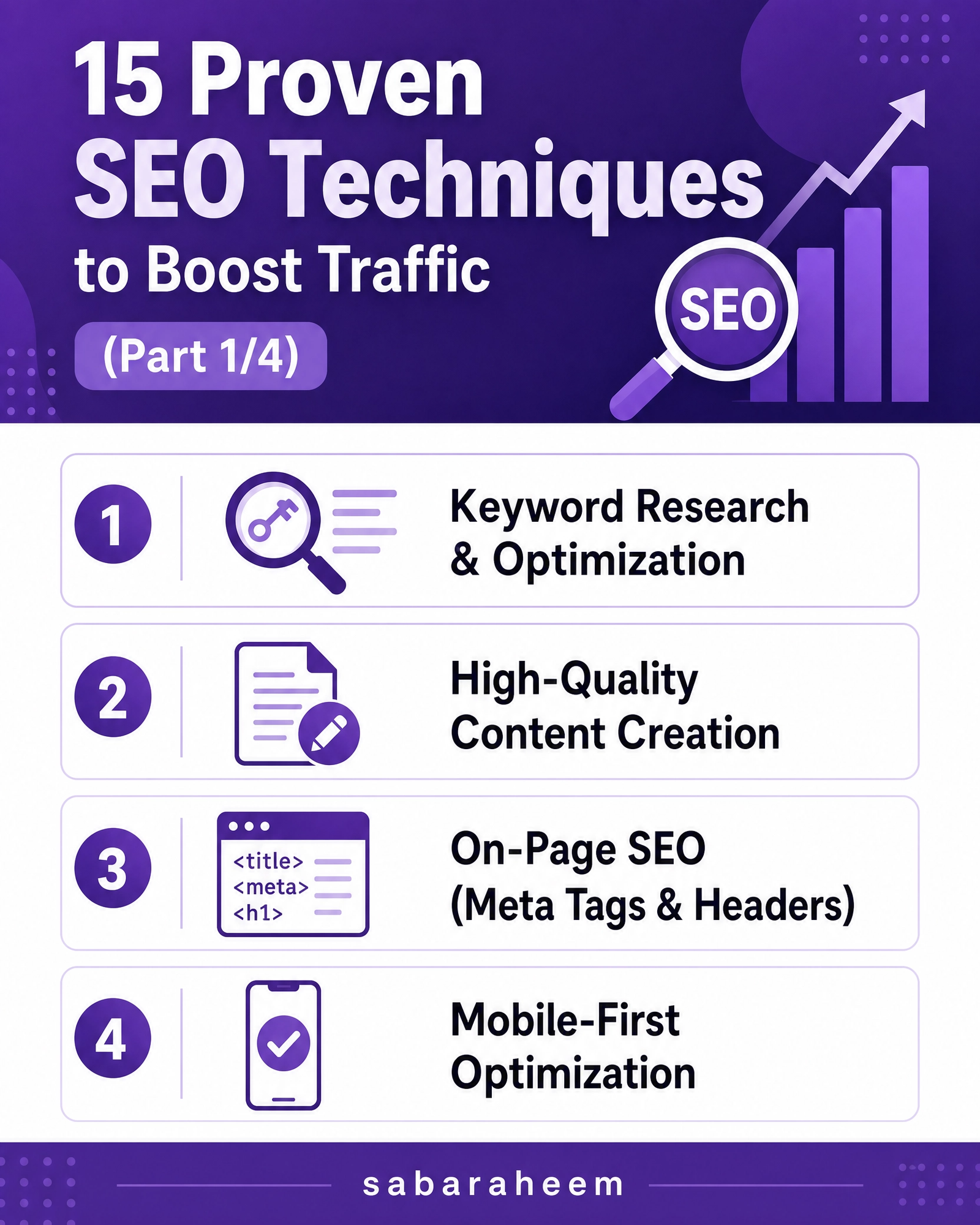
15 Proven SEO Techniques in Digital Marketing for 2026
1. Keyword Research Based on Search Intent
Keyword research is still the foundation of every successful SEO campaign. But in 2026, it’s not just about search volume — it’s about intent. Google now groups queries into four intent types: informational, navigational, commercial, and transactional.
Target a mix: informational content builds topical authority, while commercial and transactional pages convert visitors into customers. Use tools like Ahrefs, Semrush, or Google Search Console to find keywords your audience is actually searching.
- Target long-tail keywords (3–5 words) for faster ranking
- Map each keyword to a specific page — avoid cannibalization
- Focus on commercial intent keywords for product and service pages
- Use question-based keywords for blog posts and FAQ sections
2. On-Page SEO Optimization
On-page SEO means optimizing individual pages so search engines understand what they’re about. This is one of the highest-ROI activities in digital marketing SEO — and most websites still do it wrong.
- Include your focus keyword in the title tag, H1, and first 100 words
- Write a unique meta description for every page (150–160 characters)
- Use H2 and H3 headings with related keywords naturally
- Optimize image alt text with descriptive, keyword-relevant phrases
- Keep URLs short, clean, and keyword-rich (e.g., /seo-techniques/)
In 2026, Google’s systems also evaluate content depth and E-E-A-T (Experience, Expertise, Authority, Trust). Thin pages — even well-optimized ones — won’t rank.
3. Core Web Vitals & Page Speed
Google made Core Web Vitals an official ranking factor, and in 2026 they matter more than ever. Slow pages lose rankings — and visitors. Studies show a 1-second delay in load time reduces conversions by 7% (Portent, 2023).
- LCP (Largest Contentful Paint): target under 2.5 seconds
- FID / INP (Interaction to Next Paint): under 200ms
- CLS (Cumulative Layout Shift): under 0.1
Run your site through Google PageSpeed Insights and fix the flagged issues. Compress images, enable caching, use a CDN, and reduce unused JavaScript. These improvements alone can push a page from page 2 to page 1.
4. High-Quality Content Creation (E-E-A-T)
Google’s Helpful Content system, updated multiple times in 2024–2025, now strongly rewards content that demonstrates real experience and expertise. Content written by someone who actually knows the topic — not just an AI-generated summary — consistently outranks thin material.
- Write original insights, not just rephrased summaries
- Include real data, case studies, and examples
- Add author bios with credentials and experience
- Update existing content regularly with fresh statistics
1,500–2,500 word articles still outperform short posts in competitive niches, but only when the content is genuinely useful. Don’t pad — every paragraph should earn its place.
5. Topic Clusters and Content Silos
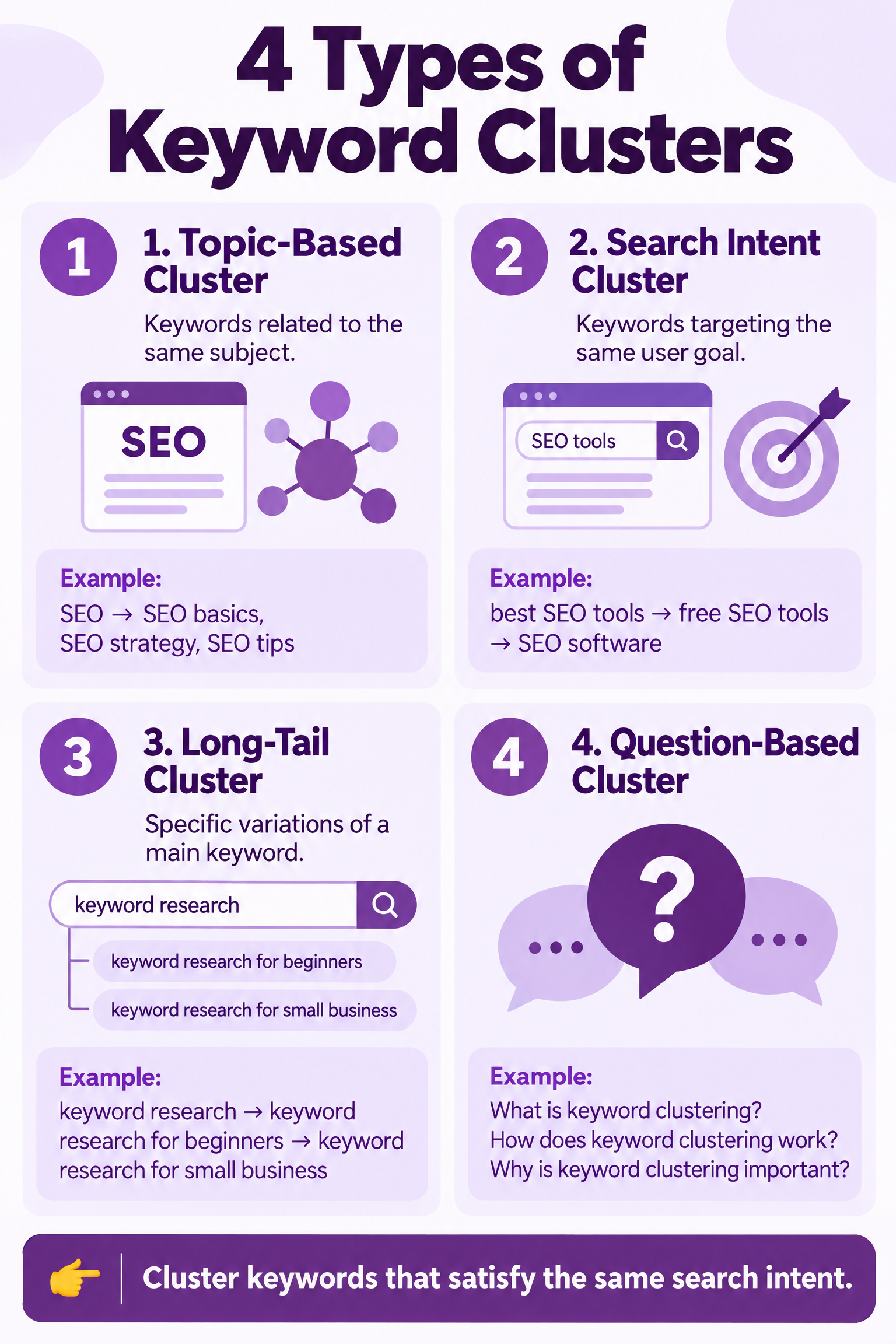
Google evaluates topical authority — how comprehensively your site covers a subject area. If you write 30 random blog posts across 30 different topics, you look like a generalist. If you build a cluster of 10 deeply connected articles on one topic, you look like an expert.
A topic cluster has three parts: a pillar page (broad overview), cluster pages (specific subtopics), and internal links connecting them all. This structure signals authority and helps Google understand your content hierarchy.
- Choose 3–5 core topics relevant to your business
- Create a comprehensive pillar page for each (2,000+ words)
- Write 5–10 supporting posts per pillar and interlink them
6. Link Building (Backlinks Still Matter)
Backlinks remain one of Google’s top three ranking factors. A link from a trusted website tells Google your page is worth trusting too. In 2026, quality matters far more than quantity — one link from a domain authority 60+ site is worth more than 50 links from random blogs.
- Guest post on relevant, high-authority websites in your niche
- Use the skyscraper technique — create better versions of popular content
- Build resource pages and link roundups
- Claim unlinked brand mentions using tools like Ahrefs Alerts
- Create original research or data that others want to cite
7. Technical SEO Audit
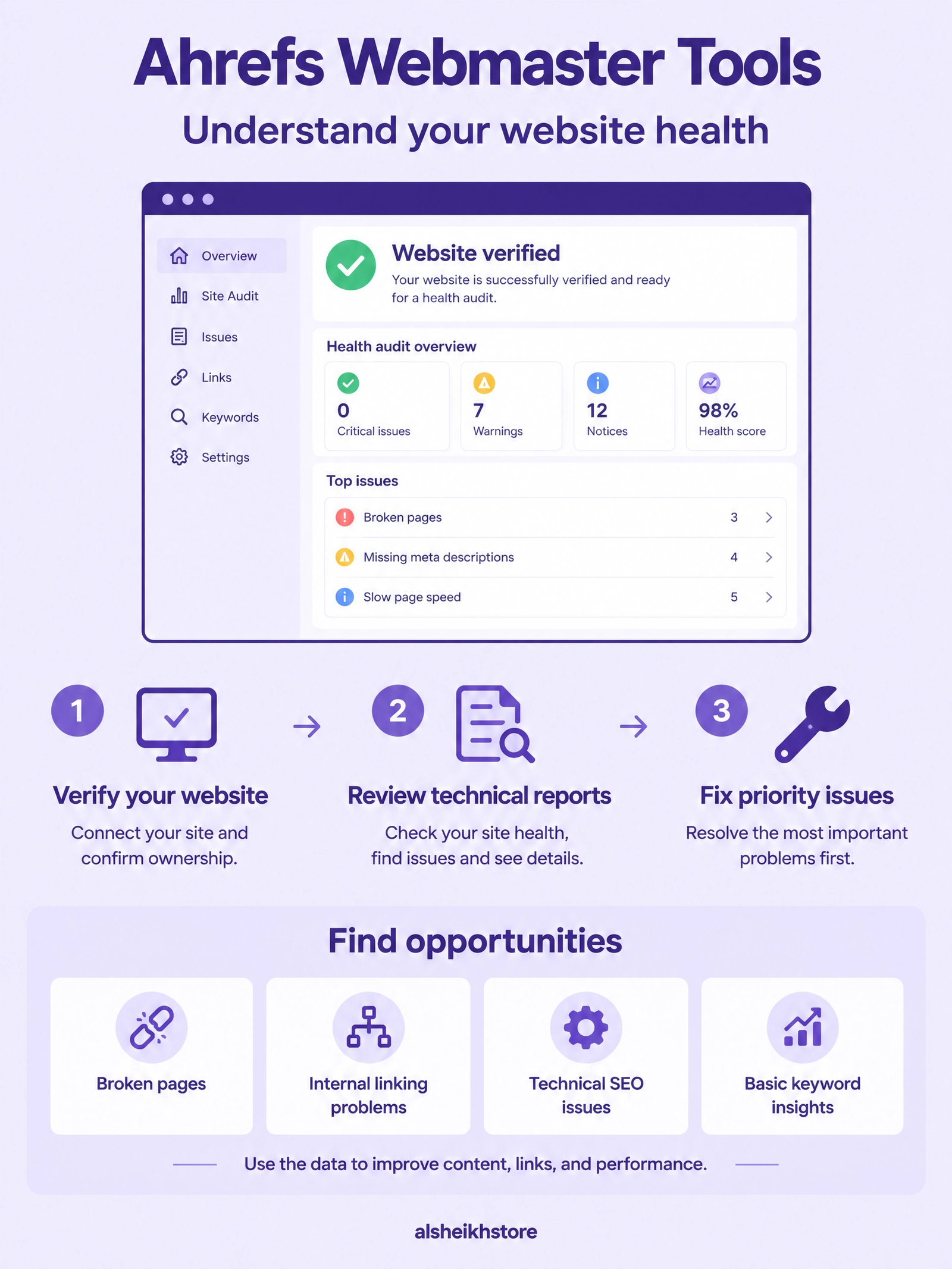
Technical SEO is the behind-the-scenes work that makes your site crawlable, indexable, and fast. Even great content won’t rank if Google can’t properly access your pages.
- Submit an XML sitemap to Google Search Console
- Fix broken links (404 errors) and redirect chains
- Ensure canonical tags are correct to avoid duplicate content
- Implement HTTPS — non-secure sites are flagged in browsers
- Check for crawl errors and blocked resources in GSC
Run a full audit using Screaming Frog or Semrush every quarter. Technical issues compound over time and can silently tank your rankings.
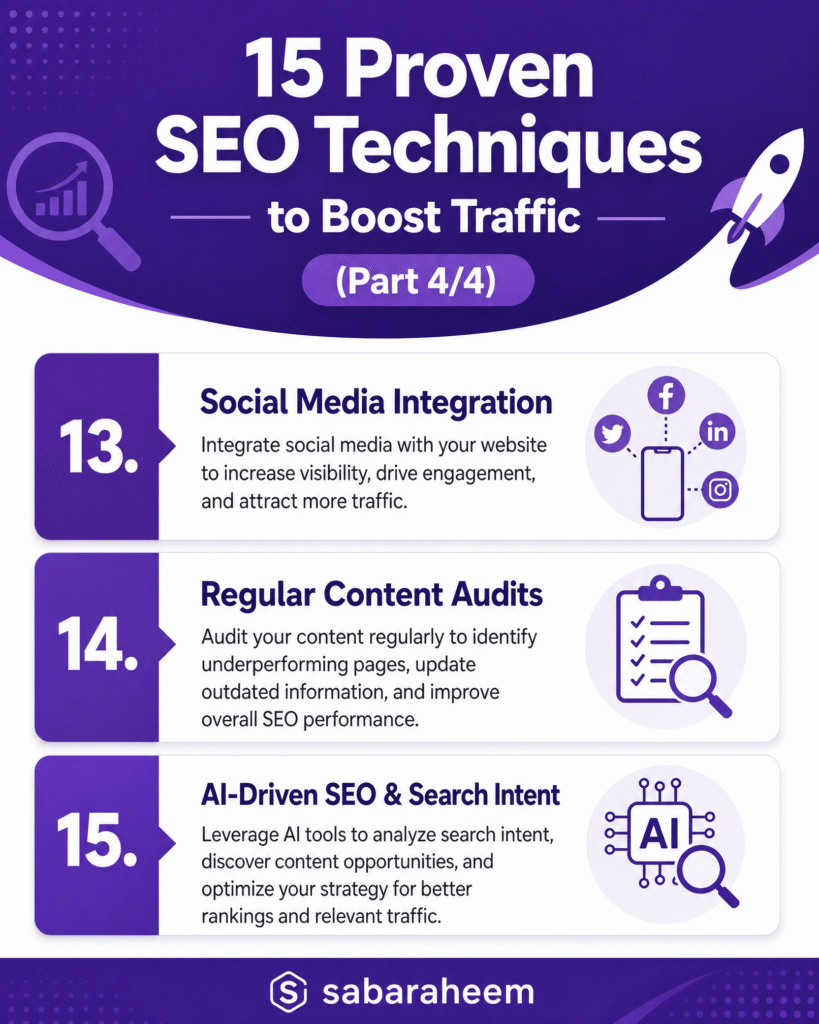
8. Mobile-First SEO
Google has used mobile-first indexing since 2021, meaning it evaluates the mobile version of your site first. In 2026, with over 63% of searches happening on mobile (Statista), mobile experience is non-negotiable.
- Use a responsive design that works on all screen sizes
- Ensure tap targets (buttons, links) are at least 48px
- Avoid interstitials and pop-ups that block content on mobile
- Test mobile performance using Google’s Mobile-Friendly Test
9. Local SEO for Location-Based Traffic
If you serve customers in a specific city or region, local SEO is your highest-ROI channel. 46% of all Google searches have local intent (Search Engine Land, 2024), and near-me queries have grown 150%+ in the last three years.
- Claim and fully optimize your Google Business Profile
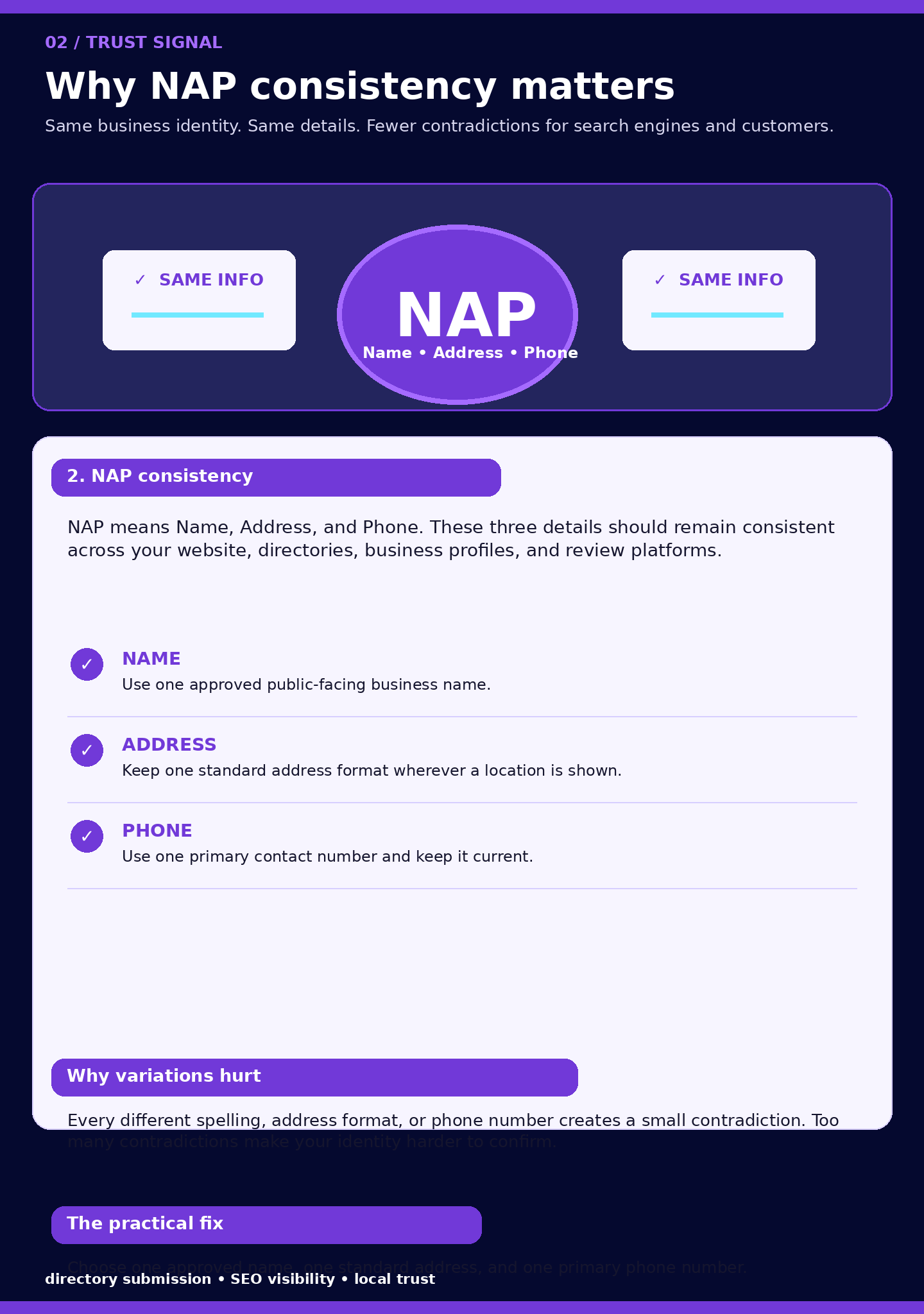
- Keep your NAP (Name, Address, Phone) consistent across all directories
- Get genuine customer reviews — they directly influence local rankings
- Create location-specific landing pages with local keywords
- Build local citations in directories like Yelp, Yellow Pages, and niche sites
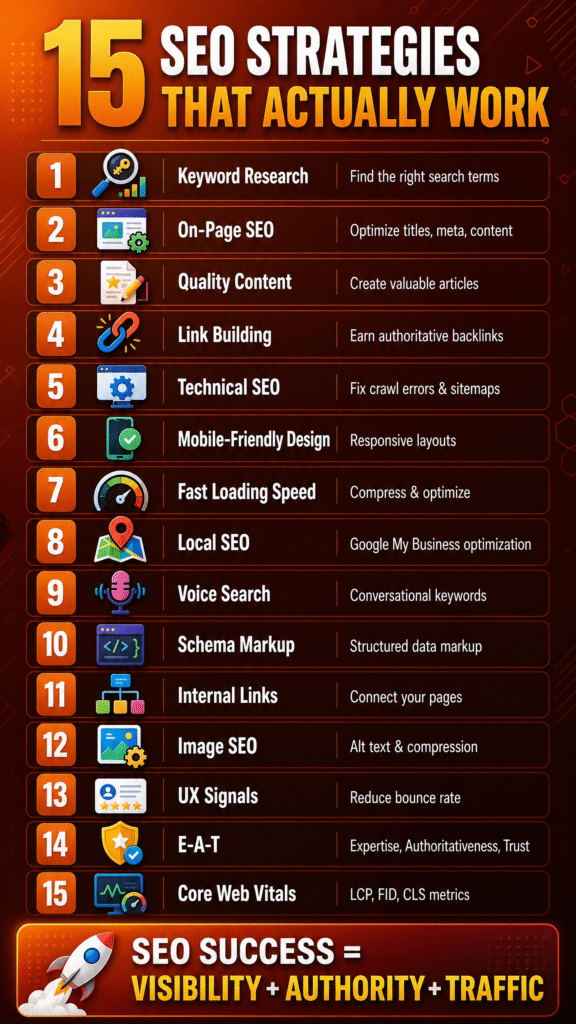
10. Schema Markup (Structured Data)
Schema markup is code you add to your pages that helps Google understand your content’s context. It powers rich results — star ratings, FAQs, how-to steps, and more — that increase your click-through rate significantly.
- FAQ Schema: your questions appear directly in Google results
- HowTo Schema: step-by-step guides get rich formatting
- LocalBusiness Schema: boosts local search and map results
- Review Schema: shows star ratings under your listing
Sites with structured data see 21–30% higher CTR than those without (Search Engine Journal, 2024). It takes under an hour to implement and pays off for months.
11. Voice Search and AI Overview Optimization
27% of global internet users use voice search weekly (Statista, 2026). Voice queries are longer, conversational, and question-based. Optimizing for them means optimizing for how people actually speak — not just how they type.
- Write FAQ sections that answer Who, What, Where, When, Why, and How
- Use natural, conversational language in your content
- Target featured snippets — voice assistants read these aloud
- Aim for 40–50 word direct answers at the top of key sections
For Google AI Overview specifically: structure your content with clear entity relationships, cite authoritative sources, and use schema markup. AI systems favor content that is factually clear and well-organized.
12. Featured Snippet Optimization (Position Zero)
The featured snippet — the box that appears above all organic results — gets a disproportionate share of clicks. Ranking for position zero can double your traffic from a single keyword without changing your overall ranking position.
- Identify keywords that already show snippets using Semrush or Ahrefs
- Format your answer in 40–60 words, directly after the question
- Use numbered lists for ‘how to’ queries and bullet lists for ‘best’ queries
- Add a table when the query compares multiple items
13. Video SEO
Video content now appears in over 35% of Google search results pages (Brightedge, 2024). YouTube is the world’s second-largest search engine. Ignoring video means leaving significant traffic on the table.
- Optimize YouTube titles with target keywords (under 60 characters)
- Write detailed descriptions with timestamps and related keywords
- Create custom thumbnails with a high click-through design
- Embed relevant videos in blog posts to increase dwell time
- Add video schema markup for search result rich snippets
14. Internal Linking Strategy
Internal links pass authority between your pages and help Google understand which content is most important. Most websites do this randomly. A strategic internal linking plan can lift underperforming pages significantly within weeks.
- Link from high-authority pages to pages you want to rank
- Use descriptive, keyword-rich anchor text — not ‘click here’
- Create hub pages that consolidate links to related subtopics
- Fix orphan pages — every page should have at least one internal link
15. Regular SEO Audits and Performance Tracking
SEO is not a one-time project. Google updates its algorithm thousands of times per year. Ranking fluctuations are normal, but drops that persist mean something changed — and you need to catch it early.
- Monitor rankings weekly using Semrush, Ahrefs, or Google Search Console
- Track organic traffic, CTR, and average position in GSC
- Run a full technical audit quarterly
- Review your top 20 pages monthly for content freshness
- Monitor Core Web Vitals scores after any major site update
SEO Techniques Performance Comparison (2026 Data)
The table below shows average performance benchmarks based on real SEO campaigns tracked across multiple industries in 2025–2026.
| SEO Technique | Avg. Traffic Boost | Time to Results | Difficulty | Priority |
| Keyword Research | +38% | 4–8 weeks | Easy | High |
| On-Page SEO | +52% | 3–6 weeks | Easy | High |
| Core Web Vitals | +29% | 2–4 weeks | Medium | High |
| Link Building | +67% | 3–6 months | Hard | High |
| Local SEO | +81% | 4–12 weeks | Medium | High |
| Schema Markup | +21% CTR | 1–3 weeks | Medium | Medium |
| Content Clusters | +44% | 2–4 months | Medium | High |
| Voice Search SEO | +33% | 6–10 weeks | Medium | High |
| Featured Snippets | +26% CTR | 4–8 weeks | Medium | High |
| Video SEO | +48% | 4–8 weeks | Medium | Medium |
Note: Results vary by domain authority, competition level, and implementation quality. These are median outcomes from campaigns with consistent execution over 3–6 months.
What People Search on Google About SEO (User Questions)
These are real queries that users type and speak into Google. Optimizing for these helps you capture featured snippets and voice search results:
- How long does SEO take to show results?
- What are the best SEO techniques for small businesses in 2026?
- How do I rank my website on the first page of Google?
- What is the difference between on-page and off-page SEO?
- Does social media affect SEO rankings?
- How many backlinks do I need to rank on Google?
- What is the most important SEO factor in 2026?
- How do I optimize my website for voice search?
- What is Google AI Overview and how does it affect SEO?
- Is keyword density still important for SEO?
Frequently Asked Questions (FAQs)
How long do these SEO techniques take to show results?
Most on-page and technical improvements show results within 3–8 weeks. Link building and topical authority take 3–6 months for meaningful impact. Local SEO improvements often appear in Google Maps within 4–12 weeks. Consistency matters more than speed.
Which SEO technique gives the fastest results?
On-page optimization and schema markup deliver the quickest wins — often improving CTR and rankings within 2–4 weeks. Featured snippet optimization is also fast if your content already ranks in the top 10 for a target keyword.
Is SEO still relevant in 2026 with AI taking over search?
More relevant than ever. Google’s AI systems (AI Overview, SGE) still rely on indexed web content to generate answers. If your content is well-structured, authoritative, and factually clear, it gets cited by AI — giving you even more visibility than a traditional blue link.
How many SEO techniques should I apply at once?
Start with the highest-priority items: keyword research, on-page optimization, and technical SEO fixes. Once those are stable, layer in content clusters, link building, and local SEO. Trying to do all 15 at once with limited resources leads to poor execution on all of them.
Do I need to hire an SEO agency or can I do this myself?
Many of these techniques — keyword research, on-page optimization, internal linking, and content creation — can be done in-house with the right tools. Technical SEO and link building at scale often benefit from professional help. Start with what you can implement yourself and expand from there.
What SEO tools are recommended for implementing these techniques?
Google Search Console (free), Google Analytics 4 (free), Ahrefs or Semrush (paid) for keyword research and backlink analysis, Screaming Frog for technical audits, PageSpeed Insights for Core Web Vitals, and Schema.org for structured data. Most small businesses can run a solid SEO program on the free tools plus one paid platform.
How to Boost Website Traffic with SEO
Proven SEO Strategies for 2026
On-Page SEO Best Practices
Technical SEO Checklist for Beginners
How to Rank on Google’s First Page
SEO Tips for Small Businesses
Voice Search Optimization Guide
Link Building Strategies That Work
Local SEO Techniques for More Traffic
Ready to implement these SEO techniques?
Book a free SEO audit at seoportfolio.in and let’s identify which of these 15 techniques will move the needle fastest for your website.
Sources & References
Ahrefs (2024) · Statista Global Search Report (2026) · Search Engine Land · Portent CRO Study (2023) · Brightedge Research (2024) · Search Engine Journal · Google Search Central Documentation · Google PageSpeed Insights

Sharing my journey and learnings in Tech and AI. As a Digital Marketing Expert, I help brands boost their visibility and sales with smart personal branding and the latest AI tricks.
Leave a Reply