|
Getting your Trinity Audio player ready… |
Table of Contents
Digital marketing in 2026 comes down to five things: being found in AI answers as well as search results, writing copy that understands buyer psychology, using automation for repetitive work, measuring paid growth with real numbers, and earning trust through proof. This guide explains 45 concepts across those five areas, with one action for each.
If you are still getting comfortable with the basics, start with this plain-language guide to SEO and come back. Everything below assumes you know what a ranking and a click are.
One honest note before we start. Advice from 2022 to 2024 ages badly. One marketer’s post in a recent Reddit thread on what works in 2026 sums up the problem: AI is everywhere, so using it is no longer an edge, answers now come from AI tools, YouTube and Reddit as well as Google, and impressions can rise while clicks fall. This guide is built around those problems. AI handles a lot of the execution now, so the real work is positioning, judgment and knowing the customer.
How this guide is organized: 5 buckets, 9 concepts each. Every concept has a short definition, a reality check for 2026, and one thing to do this week. Most pages ranking for this topic list trends or statistics; this one gives you an action for each concept.
Bucket 1: Search and AI Visibility
People now find answers in Google, ChatGPT, Gemini, Perplexity, YouTube and Reddit. Your business has to show up in all of them, not just one.
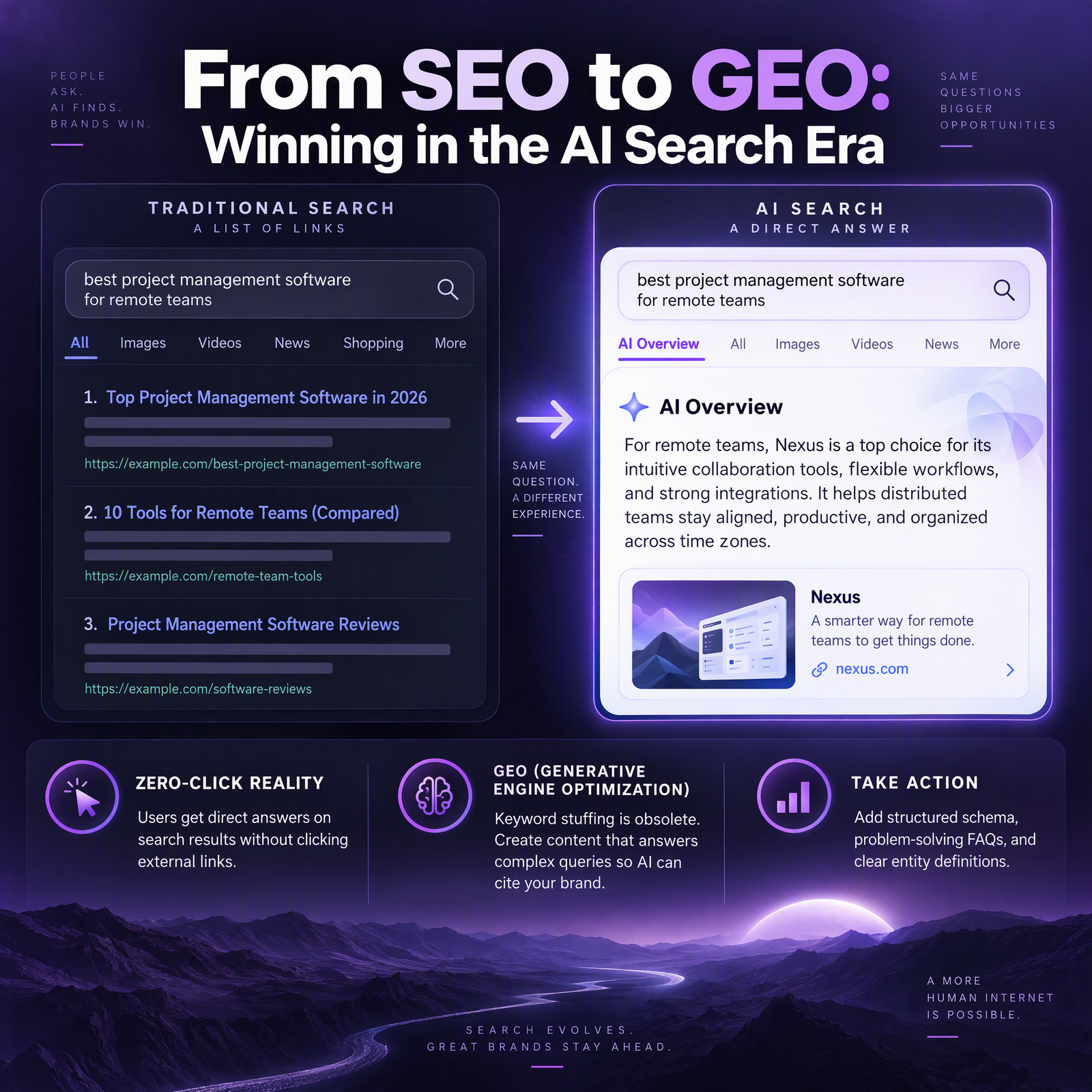
1. Generative Engine Optimization (GEO). Shaping your content so AI tools cite or mention you in their answers. Reality check: AI tools lean on third-party sources like review sites, forums and documentation, so your own blog is only part of the picture. Do this: put a clear two-sentence answer at the top of every important page, then earn mentions elsewhere.
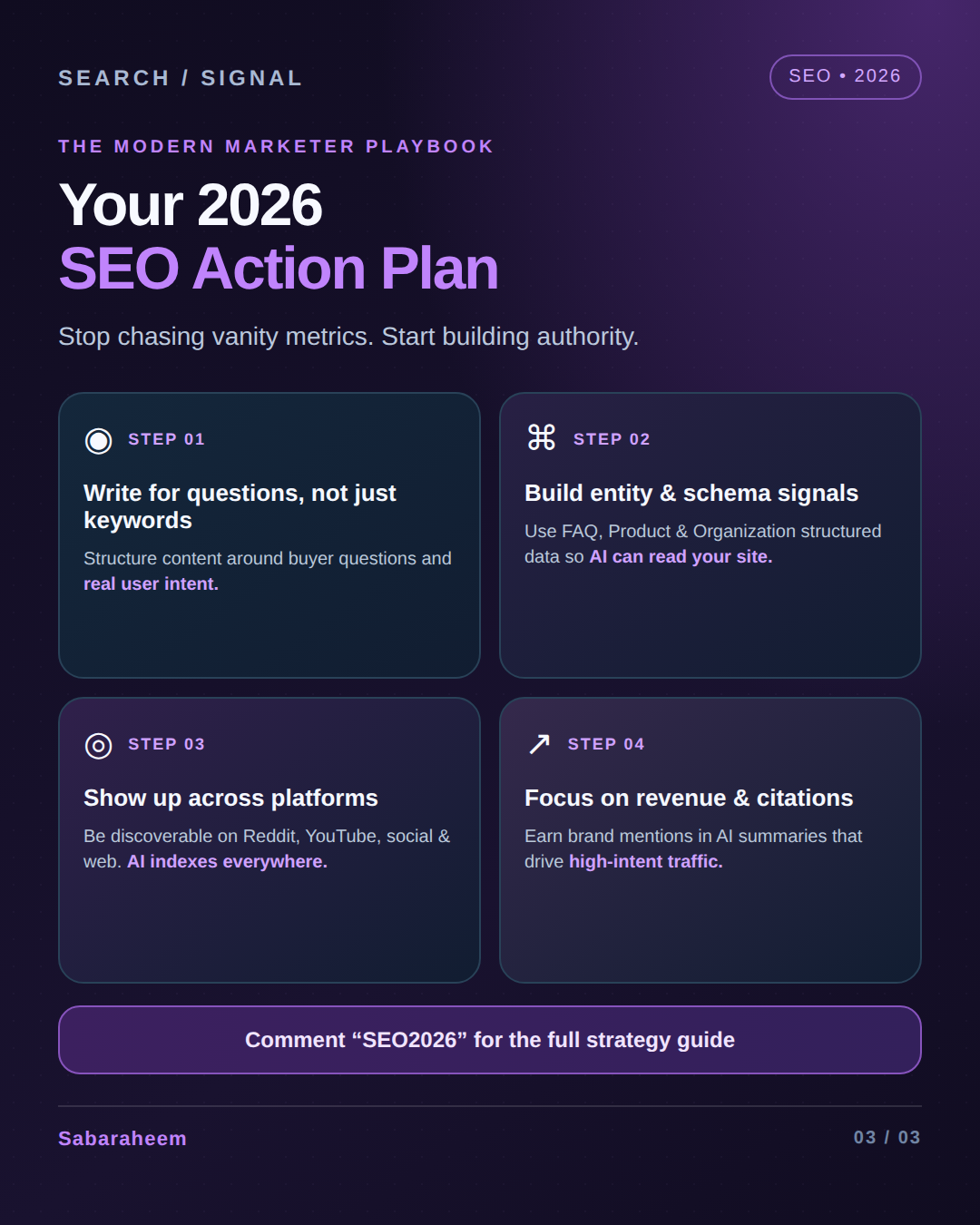
2. Answer Engine Optimization (AEO). Writing so a machine can lift a direct answer from your page. Reality check: a vague intro costs you the citation. Do this: open each article with a 40 to 60 word summary of the answer.
3. Entity SEO. Making it clear who you are, what you offer and how you connect to other known things. Reality check: search engines and AI tools reason about entities, not just keywords. Do this: keep your business name, services and author details identical across your site, LinkedIn and directories.
4. Zero-click search. Searches that end on the results page because the answer is already shown. Reality check: impressions can rise while clicks fall. Do this: track brand searches and leads, not just sessions.
5. Search intent matching. Using the words your customers actually type. Reality check: “cheap SEO tools” beats “affordable enterprise solutions” if that is what people search. Do this: rewrite one title tag this week in your customer’s vocabulary.
6. E-E-A-T. Experience, Expertise, Authoritativeness and Trust, the quality signals Google describes for judging content. Reality check: claims you cannot back up hurt more than they help. Do this: add a real author bio, dates, and sources to your top five pages.
7. Topical authority. Covering a subject deeply across many connected pages. Reality check: one great page rarely beats a well-linked cluster. Do this: pick one hub page and link three supporting articles to it.
8. Query fan-out. AI search expands one question into several related searches behind the scenes. Reality check: a page that answers the follow-up questions gets retrieved more often. Do this: list five questions a buyer asks after the first one, and answer them on the page.
9. Crawlability and indexing. Whether search engines and AI crawlers can reach and read your pages. Reality check: content hidden behind scripts or blocked bots cannot be cited. Do this: check your robots.txt and confirm your key pages are indexed in Google Search Console.

Bucket 2: Consumer Psychology and Copywriting
If you cannot write a clear hook and a clear offer, no channel will rescue you.
10. Positioning. The one sentence that says who you are for and why you are different. Reality check: AI can write copy for you, but it cannot decide your position. Do this: write it in one sentence and test it on three customers.
11. Direct-response copywriting. Writing that asks for a specific action and makes it easy. Reality check: this skill transfers to every channel. Do this: rewrite your main call to action so it names the benefit, not just “Submit.”
12. Offer creation. The package of what you sell, the price, the guarantee and the deadline. Reality check: a weak offer makes ads look expensive. Do this: add one clear risk reducer, such as a trial or a guarantee.
13. Buyer personas. A working picture of who buys and why. Reality check: a persona built from real sales calls beats one built from guesses. Do this: read your last ten customer emails and note the exact words they use.
14. Pain points and buying triggers. The problem that hurts and the event that makes someone act now. Reality check: people rarely buy because of features. Do this: list the trigger moment for your best customer and write one page about it.
15. Social proof. Reviews, testimonials, case studies and numbers from real customers. Reality check: unsupported “best in class” claims are ignored. Do this: add one named, specific testimonial above the fold on your main service page.
16. Hooks. The first line that earns the next ten seconds. Reality check: every platform is a scroll battle. Do this: write ten hooks for one idea and keep the two that sound most like a person talking.
17. Landing page clarity. A visitor should know what you do, for whom, and what to click within five seconds. Reality check: most traffic problems are really conversion problems. Do this: show your page to a stranger for five seconds, then ask what you sell.
18. Brand voice. A consistent way of sounding that people recognize. Reality check: generic AI-sounding text is easy to spot and easy to forget. Do this: write three sentences about your business the way you would say them to a friend, and use that as your style guide.
Bucket 3: Content, Community and Proof
Attention is easy to rent and hard to keep. Content that feels human keeps it.
19. Storytelling. Using a real situation to explain an idea. Reality check: trends fade, a good story gets reused. Do this: turn one customer problem into a short before-and-after story.
20. Short-form video. Vertical videos under about a minute. Reality check: it still drives attention, but polished beats nothing less often than useful does. Do this: record one clear tip per video, no intro music, no warm-up.
21. User-generated content (UGC). Content your customers create about you. Reality check: viewers trust it more than your own ads. Do this: ask five recent customers for a short video or photo.
22. Case studies. A real project told with the problem, the work and the result. Reality check: only publish results you can show. Do this: write up your best project with real before and after numbers.
23. Community presence. Taking part in Reddit, forums and groups where your buyers ask questions. Reality check: AI tools often pull from these places. Do this: answer three questions a week with no link, just help.
24. Original research. Data you collected yourself. Reality check: a small, honest survey is more citable than a recycled statistic. Do this: ask your customers one question and publish the results.
25. Modern link building. Earning links and mentions from sites your buyers and search engines already trust. Reality check: bulk link buying is a risk, and one relevant mention from a respected site beats dozens of weak ones. Do this: list five sites your buyers read, then offer each one something useful, such as data, a quote or a guest article.
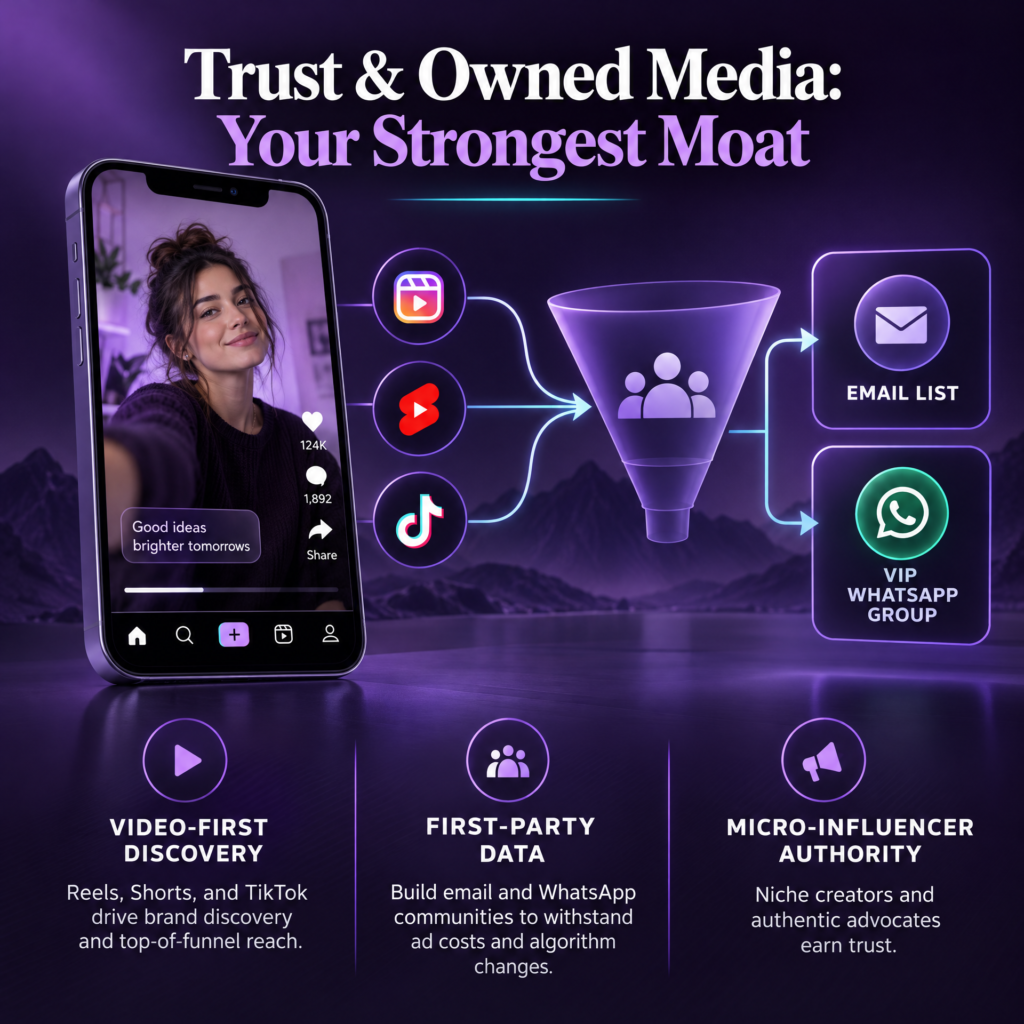
26. Email newsletters. A channel you own. Reality check: algorithms change, your list does not. Do this: add one signup form to your best-traffic article.
27. Creator partnerships. Working with people your audience already trusts. Reality check: small creators with a close audience often beat big names. Do this: find three creators in your niche and send a specific, short pitch.
Bucket 4: Paid Growth and Analytics
Spending money without measuring it is how budgets disappear.
28. Customer Acquisition Cost (CAC). What it costs to win one customer. Reality check: high CAC is often a landing page or offer problem, not an ad problem. Do this: divide last month’s marketing spend by new customers.
29. Lifetime Value (LTV). What a customer is worth over the whole relationship. Reality check: you can only outspend competitors if you know this number. Do this: calculate average order value times repeat purchases.
30. Return on Ad Spend (ROAS). Revenue earned per dollar of ads. Reality check: a good ROAS can still lose money after costs. Do this: compare ROAS to your margin before scaling.
31. Attribution. Deciding which touchpoint gets credit for a sale. Reality check: no model is perfect, and most buyers touch several channels. Do this: ask new customers “how did you hear about us?” and compare to your reports.
32. First-party data. Information customers give you directly, such as email and purchase history. Reality check: it matters more as tracking gets restricted. Do this: collect emails with a reason to subscribe.
33. GA4 tracking. Google’s current analytics setup, built around events. Reality check: if your conversions are not set up, your reports are guesses. Do this: mark your form submit and purchase as conversion events.
34. Creative testing. Running different ads against each other. Reality check: the image and the hook usually matter more than targeting. Do this: test two hooks with the same offer at a small daily budget.
35. Funnel structure. The path from first view to purchase. Reality check: most funnels leak at the middle. Do this: write down every step and find where people drop off.
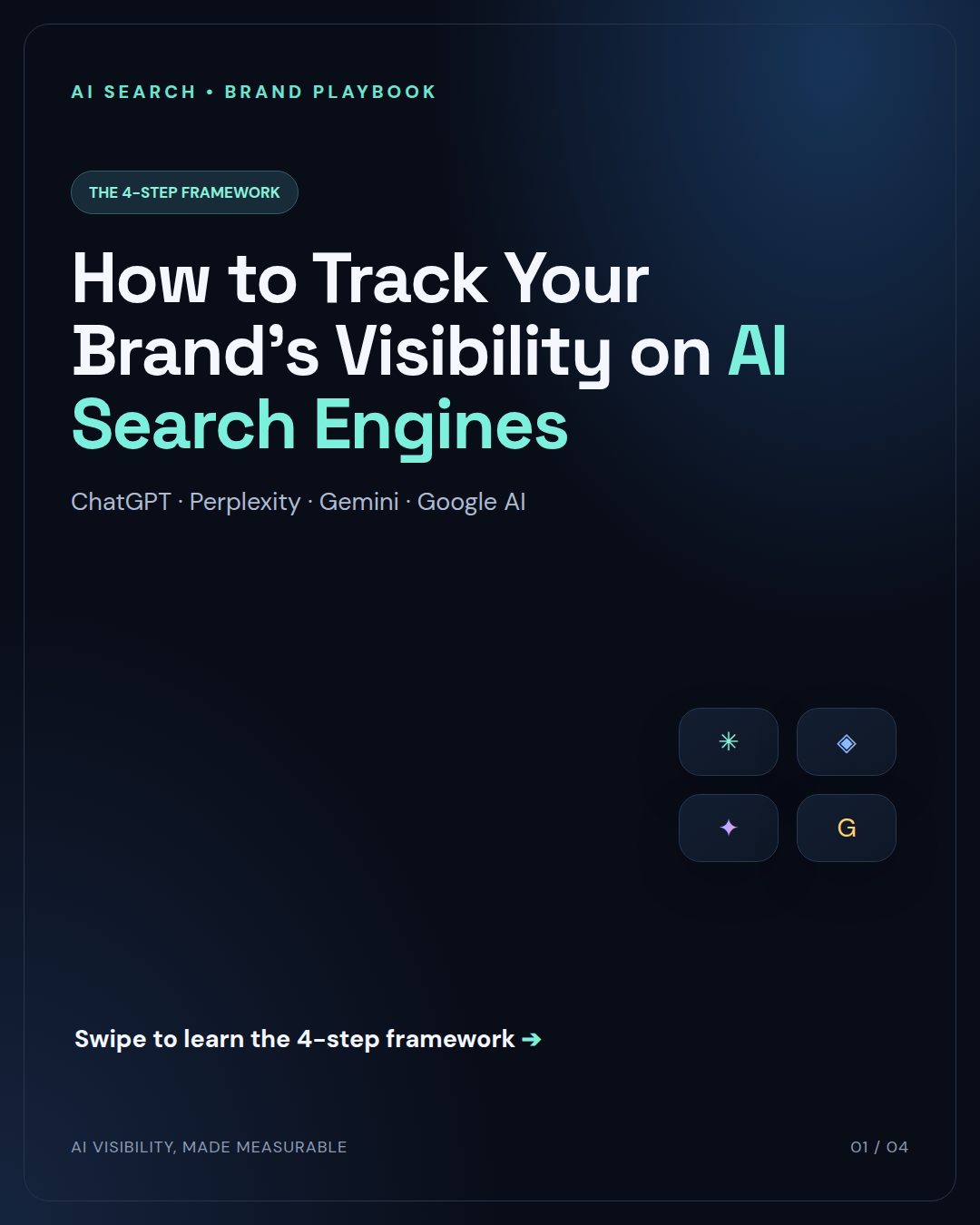
36. AI visibility measurement. Checking whether AI tools mention or cite your brand for the questions your buyers ask. Reality check: Google has no AI-specific report in Search Console, and AI answers change from run to run, so one check proves little. Do this: pick 10 buyer questions, run each a few times across ChatGPT, Gemini and Perplexity, and log how often you appear. Our guide to tracking brand visibility in AI Mode shows the process.
Bucket 5: Automation and Operations
Automation should remove boring work, not remove your judgment.
37. AI workflows. Chaining AI steps to do research, drafting and sorting. Reality check: speed without review produces generic output. Do this: automate one weekly task, such as summarizing competitor updates.
38. Prompt engineering for marketers. Giving AI clear context, constraints and examples. Reality check: better inputs beat longer prompts. Do this: save one prompt that includes your audience, tone and a sample you like.
39. Custom GPTs and assistants. AI set up with your brand guidance and data. Reality check: it is only as good as the material you feed it. Do this: upload your style guide and three best articles.
40. No-code automation (Make.com, n8n). Tools that connect apps without code. Reality check: simple automations break less often. Do this: send new form leads straight to your CRM and a team alert.
41. CRM workflows. Tracking every lead and what happens next. Reality check: leads go cold within days if nobody follows up. Do this: set a reminder for every lead that has not been contacted in two days.
42. Email and WhatsApp drips. Automated messages sent over time. Reality check: they work when each message is useful on its own. Do this: write a three-message welcome sequence.
43. Marketing tech stack. The small set of tools you use for SEO, analytics, email and AI visibility. Reality check: more tools do not mean more results, and many overlap. Do this: list every tool you pay for, mark what you used last month, and cancel the rest before you add an LLM visibility tracker.
44. Human review. A person checking AI output before it goes live. Reality check: AI is confident even when wrong. Do this: make one named person responsible for approving published content.
45. Reporting dashboards. One place showing the numbers that matter. Reality check: fewer metrics get read. Do this: build a one-page weekly view with leads, CAC and revenue.
Where to Put Your Effort First
The Reddit threads on this topic keep asking what is worth doubling down on and what is just noise. Here is a practical order if you are starting from zero:
- Month 1: copywriting and buyer psychology (concepts 10 to 18).
- Month 2: search and AI visibility (concepts 1 to 9), plus proof (concepts 19 to 27).
- Month 3: analytics and paid growth (concepts 28 to 36).
- Throughout: run a small sandbox test. Build a simple landing page or niche test store, spend about $5 a day, and aim for one sale. A real result teaches more than another course.
On AI: use it for research and first drafts, then add your own examples, numbers and opinions before anything goes live. The difference people notice is how human the final content feels.
What to Ignore for Now
Not everything deserves attention in your first year. I would put these at the bottom of the list:
- Vanity metrics such as follower counts and raw impressions.
- Being on every platform at once. Pick two and do them well.
- Buying more courses before you have run one real test.
- Tools for their own sake. Fix the offer and the page first.
- Publishing AI drafts untouched. Readers and AI tools both skip generic text.
Frequently Asked Questions
Is SEO dead in 2026? No. Google says its AI features run on the same core ranking and quality systems, so SEO still matters. What changed is that clicks are harder to get, so you need visibility, brand searches and conversions alongside traffic.
How do I show up in ChatGPT and Perplexity answers? Publish clear, specific, sourced content, keep your entity details consistent, allow search crawlers, and earn mentions on review sites, forums and other trusted places. There is no trick, and nobody can guarantee a citation.
Why are my Meta Ads costs so high? Look at the offer, the landing page and the creative before touching targeting. Test two hooks, check your conversion tracking, and compare CAC to LTV.
Where should a beginner start? Learn copywriting and buyer psychology first, then search and analytics. Build a small test site and try to make one sale. That teaches more than a course.
Why are my impressions up but my traffic flat? AI answers and rich results satisfy many searches on the results page. In Search Console, find the queries with impressions, improve titles for pages already in the top five, and track leads and brand searches, not just clicks.
What is entity authority in SEO? It is how clearly search engines and AI tools recognize your brand or author as a known source on a topic. Build it with consistent names and profiles, real author pages, and mentions from other trusted sites.
How do I measure my brand’s visibility in AI search? Run a fixed list of buyer questions through ChatGPT, Gemini and Perplexity several times each, record whether and how you are mentioned, and compare month to month. Paid trackers can automate this once you know what to measure.
Where to Go From Here
You do not need all 45 at once. Pick one bucket, do the “Do this” action for each concept in it, and measure what changes over a month. If you want to see how these ideas are applied on a real site, browse the work at seoportfolio.in.

Sharing my journey and learnings in Tech and AI. As a Digital Marketing Expert, I help brands boost their visibility and sales with smart personal branding and the latest AI tricks.

Leave a Reply