Table of Contents
There are six main types of SEO used in digital marketing today: on-page SEO (optimising content and HTML elements), off-page SEO (building authority through backlinks and mentions), technical SEO (site speed, crawlability, and indexing), local SEO (ranking for location-based searches), e-commerce SEO (optimising product and category pages), and the newest category, AI/GEO (Generative Engine Optimisation, which targets visibility inside AI Overviews, ChatGPT, and Perplexity). Most successful campaigns combine at least four of these at once.
Why Knowing the Types of SEO Actually Matters
Most beginners hear “SEO” and picture one single activity, maybe stuffing keywords into a blog post. In reality, SEO is closer to six separate disciplines running in parallel, each solving a different problem.
This matters because a site can be excellent at one type of SEO and still fail to rank. A perfectly written blog post sitting on a slow, uncrawlable website is invisible to Google no matter how good the content is. A well-optimised local business page means nothing if broken internal links stop search engines from finding it.
Below is a breakdown of each type, what it actually involves, and a real example for each so the difference is obvious rather than theoretical.
The 6 Types of SEO in Digital Marketing
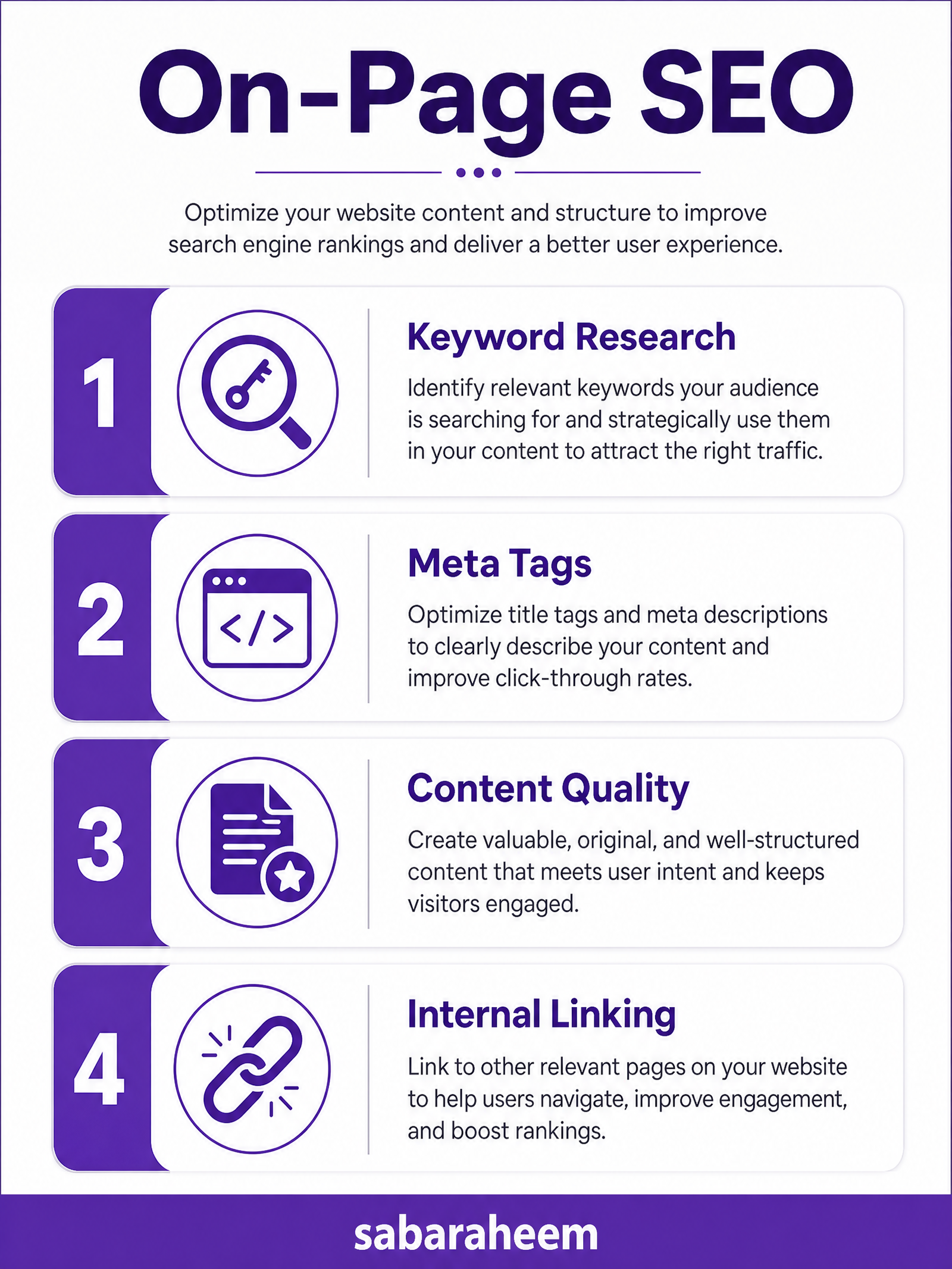
| 1. On-Page SEOWhat it covers: title tags, meta descriptions, header structure, keyword placement, internal linking, image alt text, and content quality.Example: rewriting a blog title from “Our Services” to “Digital Marketing Services for Small Business Owners in 2026” so it matches actual search intent. |
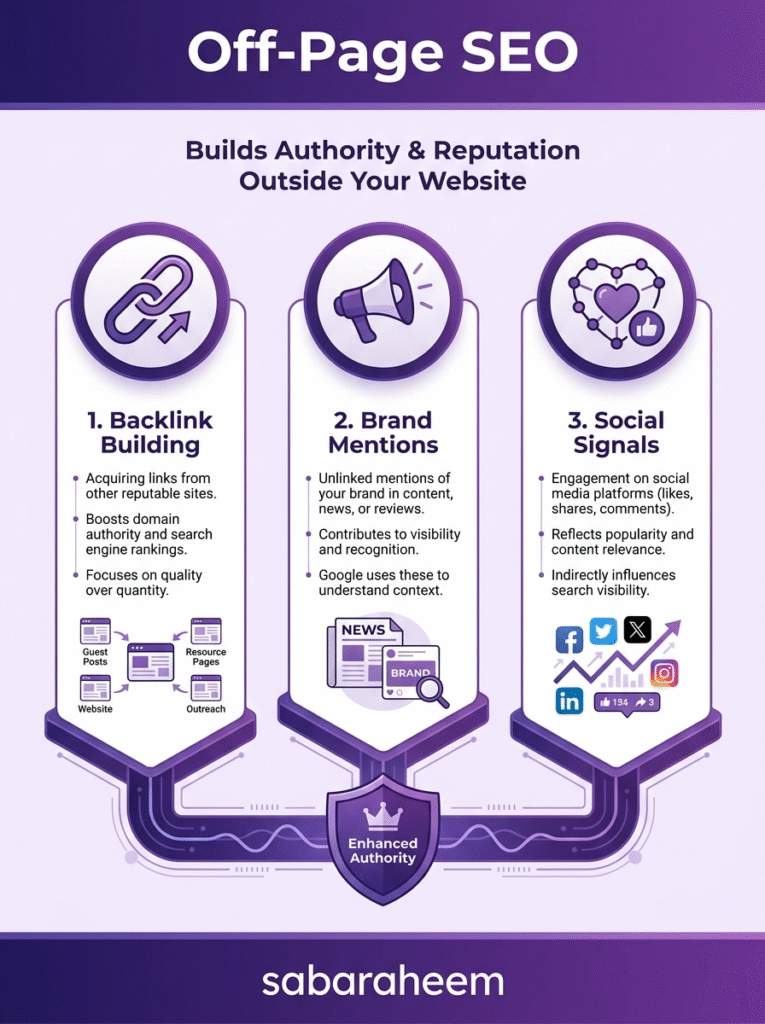
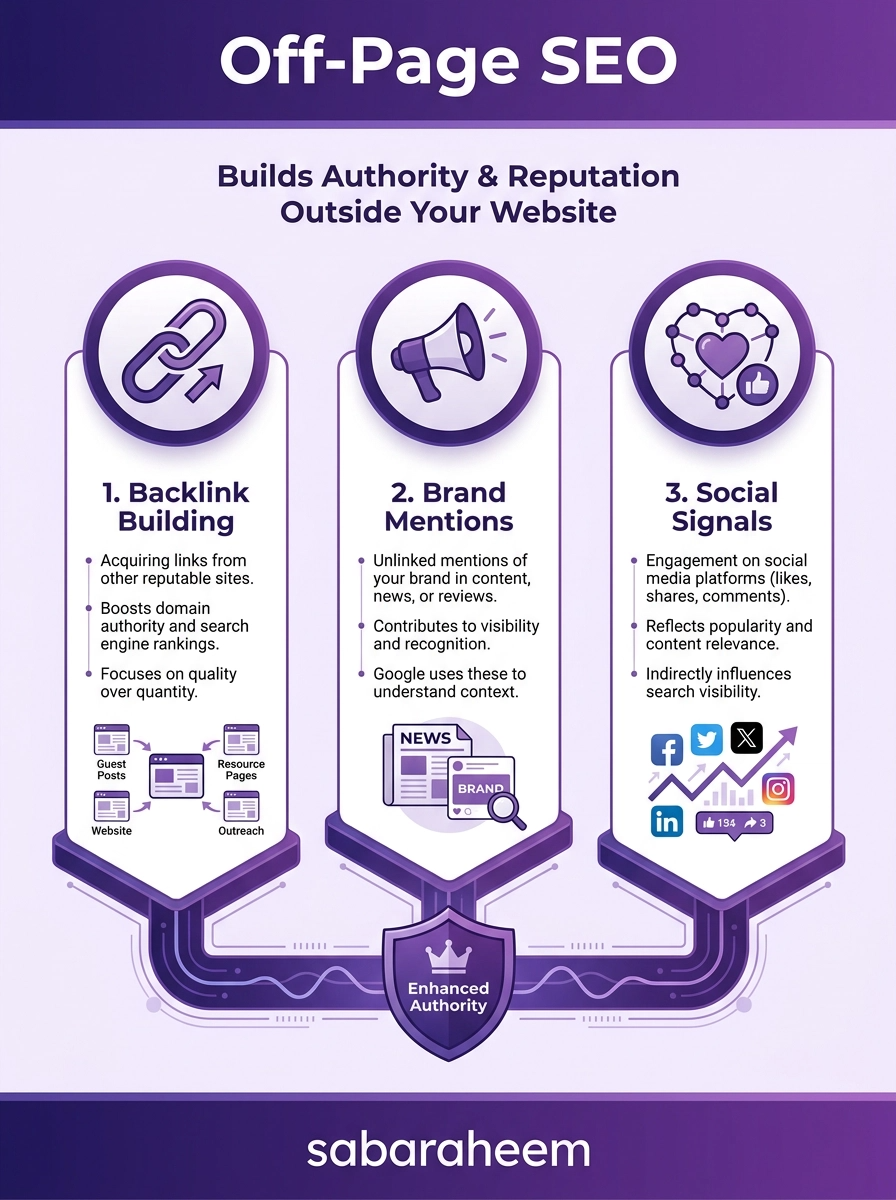
| 2. Off-Page SEOWhat it covers: backlinks from other websites, brand mentions, guest posts, digital PR, and social signals that build domain authority.Example: getting quoted in an industry publication with a link back to your site, which signals to Google that other trusted sources vouch for you. |
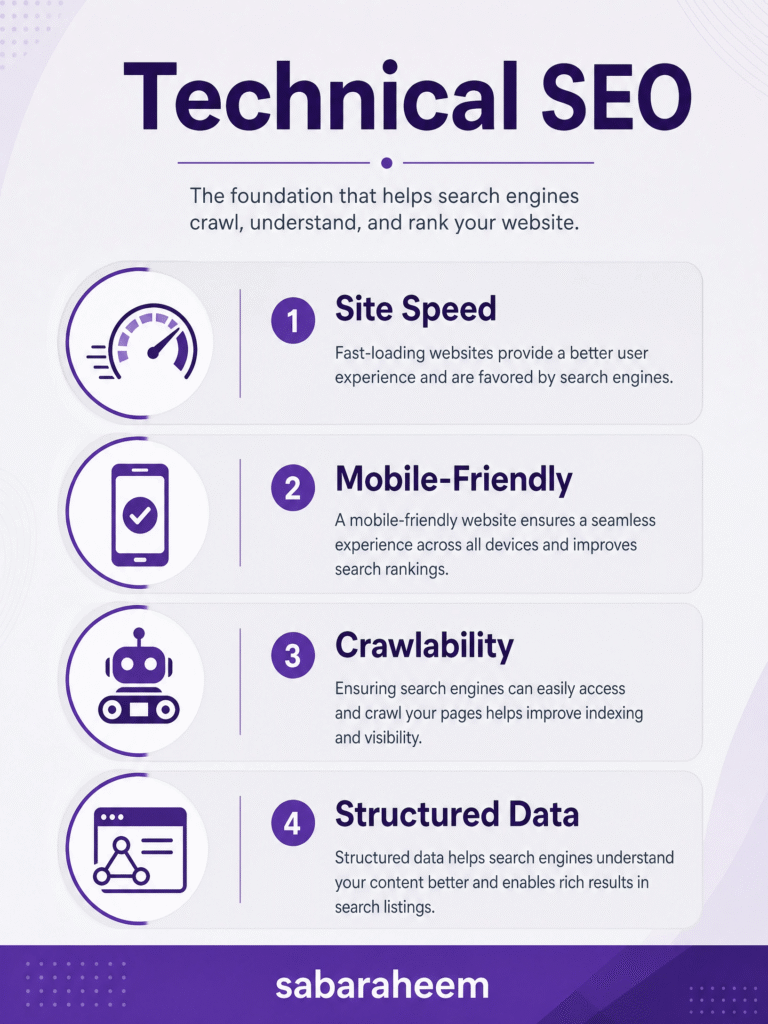
| 3. Technical SEOWhat it covers: site speed, mobile-friendliness, XML sitemaps, robots.txt, structured data (schema markup), HTTPS, and crawl budget management.Example: fixing a bloated JavaScript file that was slowing page load time from 4.2 seconds to 1.1 seconds, directly improving Core Web Vitals scores. |
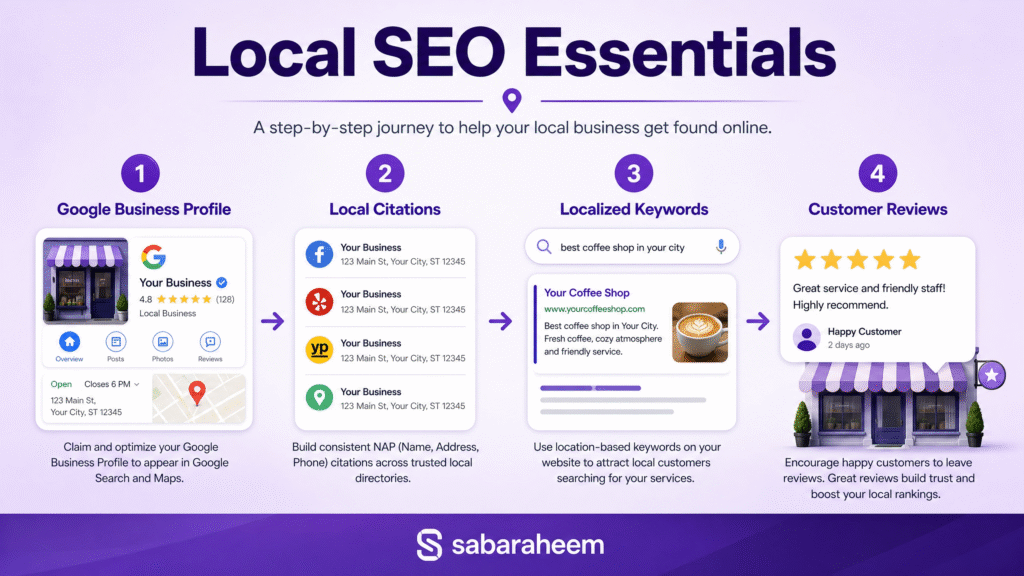
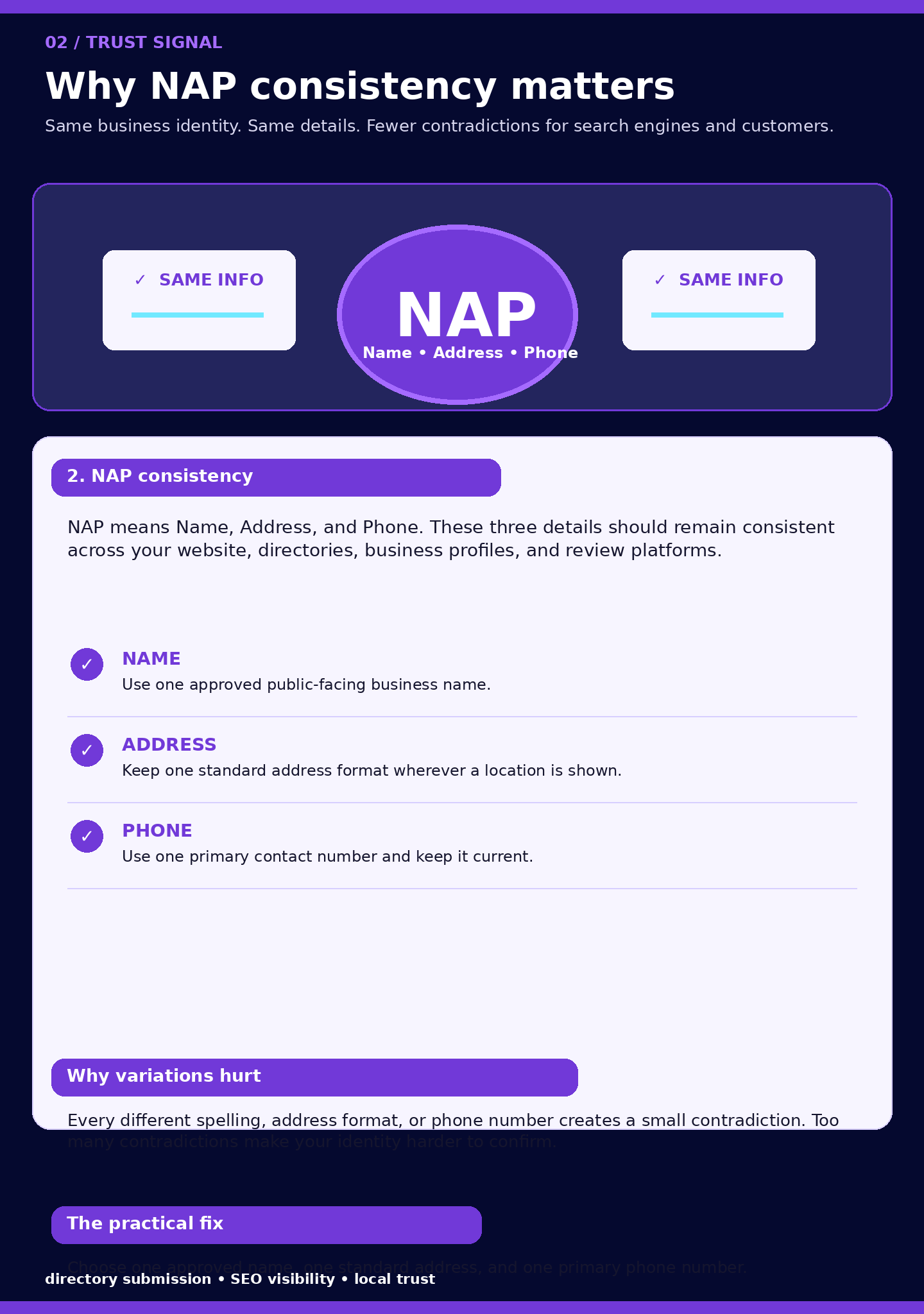
| 4. Local SEOWhat it covers: Google Business Profile optimisation, NAP consistency (name, address, phone), local citations, and location-specific landing pages.Example: a dental clinic optimising its Google Business Profile so it shows up in the “map pack” for “dentist near me” searches. |
| 5. E-commerce SEOWhat it covers: product page optimisation, category page structure, faceted navigation, product schema, and duplicate content management across variants.Example: adding unique product descriptions instead of manufacturer copy-paste text, which was causing hundreds of near-duplicate pages to compete against each other. |
| 6. AI SEO / GEO (Generative Engine Optimisation)What it covers: structuring content so it gets cited inside Google AI Overviews, ChatGPT, Perplexity, and Copilot, rather than only ranking in traditional blue links.Example: adding a direct 40 to 60 word answer at the top of an article, which increases the odds an AI engine quotes and cites the page as a source. |
Comparison Table: What Each Type of SEO Actually Fixes
| Type of SEO | Primary Goal | Example Fix |
|---|---|---|
| On-Page | Content and intent match | Rewriting titles and headers around real search queries |
| Off-Page | Authority and trust | Earning backlinks from relevant, high-authority sites |
| Technical | Crawlability and speed | Reducing page load time and fixing broken redirects |
| Local | Location-based visibility | Optimising Google Business Profile and local citations |
| E-commerce | Product discoverability | Writing unique product descriptions, fixing duplicate URLs |
| AI SEO / GEO | AI Overview citations | Adding direct-answer summaries and clear entity signals |
How These Types Work Together
These six types are not competing strategies, they are layers. A typical audit checks technical SEO first, since a slow or uncrawlable site undermines every other effort. On-page and content work comes next, followed by off-page authority building. Local and e-commerce SEO apply only when relevant to the business model, and AI/GEO now sits on top of all of them as a newer, additional layer.
For a deeper look at how AI-focused SEO fits into this picture, our guide on how AI Overviews and zero-click search are reshaping ranking strategy breaks down the newest layer in more detail.
Read: AI Overviews vs. Your Website — Winning the Zero-Click Search Game
Which Type of SEO Should You Prioritise First?
- Brand-new website: start with technical SEO to make sure the site is even crawlable, then move to on-page content.
- Local business: prioritise local SEO and Google Business Profile before anything else.
- Online store: e-commerce SEO and technical SEO (site speed, duplicate content) come first.
- Established site with steady traffic: off-page authority building and AI/GEO optimisation usually offer the biggest remaining gains.
Frequently Asked Questions
Is GEO a real type of SEO or just a buzzword?
It’s real and measurable. GEO (Generative Engine Optimisation) targets visibility inside AI-generated answers rather than traditional search result links, and it uses different signals such as direct-answer formatting, entity clarity, and third-party citations. It sits alongside, not instead of, traditional SEO.
Do I need to do all six types of SEO at once?
No. Most sites only need local or e-commerce SEO if that matches their business model. Technical and on-page SEO are close to universal requirements, while off-page and AI/GEO become more important as a site matures.
Which type of SEO gives the fastest results?
Technical SEO fixes, like resolving broken pages or slow load times, often show the fastest measurable improvement because they remove barriers that were actively blocking existing content from ranking.
What’s the difference between on-page and technical SEO?
On-page SEO deals with content and what’s visible to a reader (titles, headings, keyword placement). Technical SEO deals with the underlying infrastructure a search engine needs to crawl and index the page at all (speed, code, sitemaps, structured data).
The Bottom Line
SEO in digital marketing isn’t a single task, it’s six interconnected disciplines: on-page, off-page, technical, local, e-commerce, and AI/GEO. Knowing which category a problem falls into is the first step to actually fixing it, rather than guessing at random tactics.
| Not Sure Which Type of SEO Your Site Needs Most?Most sites are weak in one or two of these areas without realising it. A free audit shows you exactly which type of SEO will move the needle fastest for your specific site.Get Your Free SEO Audit → |
Related Reading
- What Is SEO in Digital Marketing? (With Real Examples)
- What Is Schema Markup and How Does It Help Local Businesses Rank?
- Why Is Your Business Not Ranking on Google Maps?
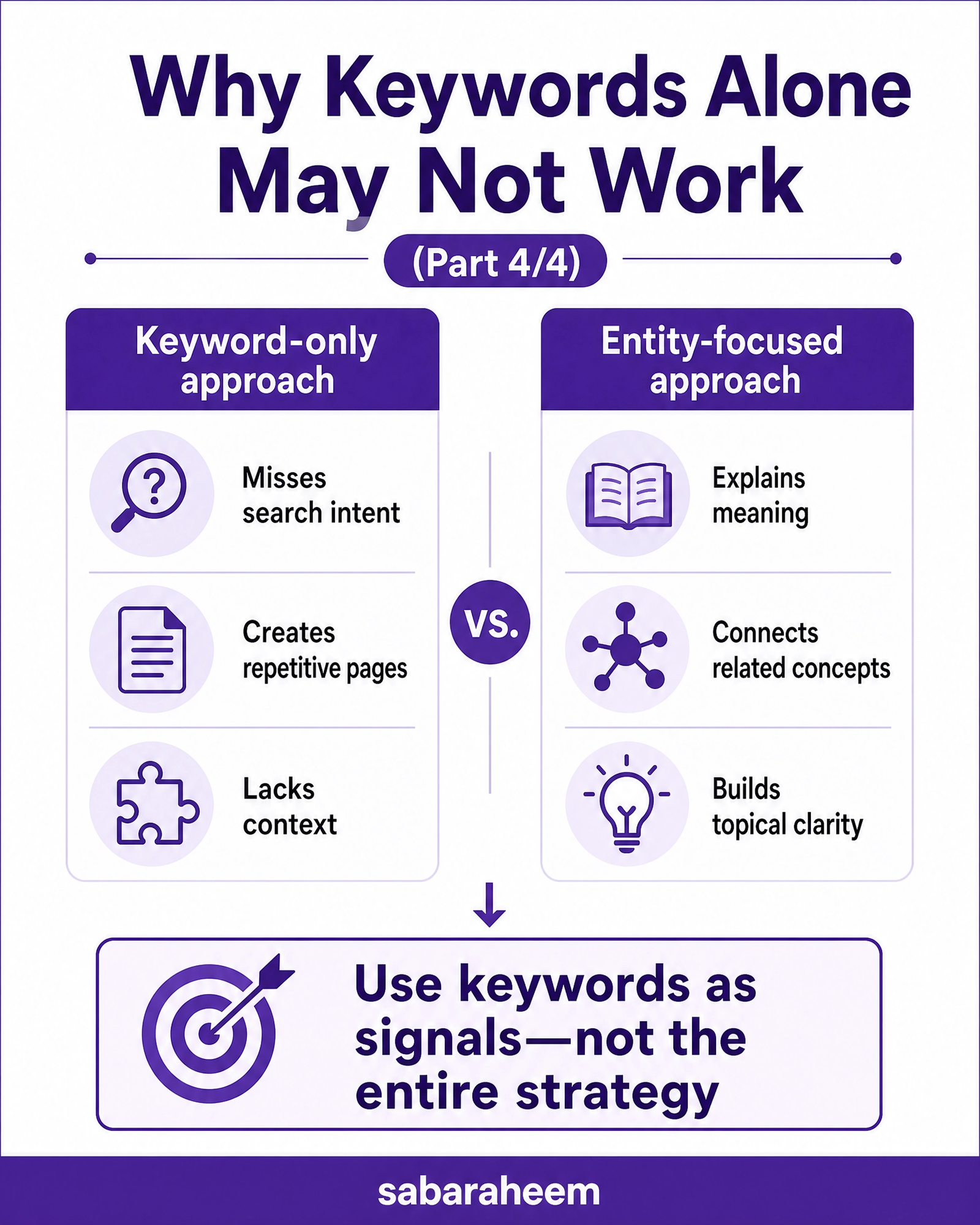
- What Is Entity SEO and Why It Matters More Than Keywords in 2026
- The Future of Search: Mastering 2026 SEO Changes
- AI Overviews vs. Your Website: Winning the Zero-Click Game
- How to Track Brand Visibility in AI Mode
- Free SEO Audit Formula
- Work With Me

Sharing my journey and learnings in Tech and AI. As a Digital Marketing Expert, I help brands boost their visibility and sales with smart personal branding and the latest AI tricks.

Leave a Reply