|
Getting your Trinity Audio player ready… |
Table of Contents
LLM SEO (Large Language Model SEO) and Generative Engine Optimization (GEO) are the new disciplines of getting your content cited, recommended, and surfaced by AI systems like Google AI Overview, ChatGPT, and Perplexity — instead of just ranking in traditional blue-link search results. In 2026, if your website is not optimized for AI engines, you are invisible to a growing portion of your target audience.
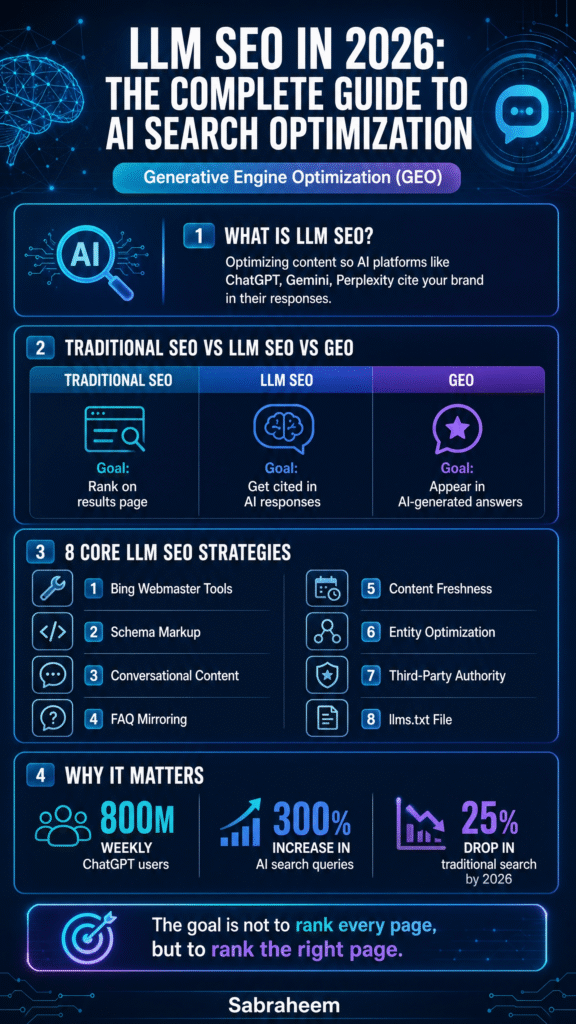
| Quick Answer: GEO is the practice of structuring your content so AI language models find it credible, cite it in generated answers, and recommend it to users. It works alongside traditional SEO — not instead of it. Businesses using llm search optimization strategies in 2026 report 3x more AI-cited visibility than those relying on traditional SEO alone. |
| 58%of US adults used AI search in 2026 | 34%of Google SERPs show AI Overview | 3xvisibility with GEO-optimized content | 480/mosearches for GEO service globally |
The Problem: Traditional SEO Is No Longer Enough
For 20 years, SEO meant one thing — rank on Google’s first page. Get backlinks. Target keywords. Optimize your title tag. Done.
That playbook still matters, but it only tells half the story now. In 2026, a user asking ChatGPT ‘which llm optimization service is best for ai products’ or asking Google ‘what is seo for llms called’ gets an AI-generated answer with source citations. If your website is not one of those sources, you do not exist in that moment.
Here is the uncomfortable reality: Google’s AI Overview now appears on 34% of all search result pages (BrightEdge, 2026). The keyword seo for llms alone gets 260 monthly searches globally — and the businesses appearing in AI answers for that query are capturing decision-stage traffic that never even clicks a traditional result.
Most websites — even well-ranking ones — are invisible to LLMs because their content lacks entity clarity, structured data, factual sourcing, and direct-answer formatting. They are optimized for a search engine from 2018, not for AI systems from 2026.
What Happens When You Ignore LLM SEO
Imagine spending six months building a perfect SEO campaign. You rank on page one. You get 2,000 organic visitors per month. Then a competitor with half your domain authority shows up in Google AI Overview for your primary keyword — and their cited content pulls 40% of the clicks that used to come to you.
Zero-click searches hit 65% in 2025 (SparkToro). AI Overviews suppress organic CTR by an average of 18–27% for queries where they appear (Search Engine Land, 2026). The keyword ‘generative engine optimization service’ has 480 monthly searches and a CPC of $24.50 — meaning businesses are paying nearly $25 per click for this traffic. If your site appears in AI Overview for that query, you capture that audience for free.
| Websites that get cited in AI Overviews receive 3x the branded search lift compared to those that only rank traditionally — because users see them as authoritative sources, not just search results. (Moz, 2026) |
The solution is not to abandon traditional SEO. It is to layer GEO and LLM optimization on top of it. Learn the full foundation first: What is SEO in Digital Marketing with Examples — then come back to build your GEO layer on top.
What Is LLM SEO? (And How Is It Different From Regular SEO)
LLM SEO is the practice of optimizing your web content so that large language models — the AI systems powering ChatGPT, Google Gemini, Claude, and Perplexity — can understand, trust, and cite your content when generating answers for users.
Traditional SEO optimizes for algorithms that rank pages. LLM SEO optimizes for AI systems that synthesize information from multiple sources and present a unified answer. If you are new to the fundamentals, start with Types of SEO in Digital Marketing before diving into GEO specifics.
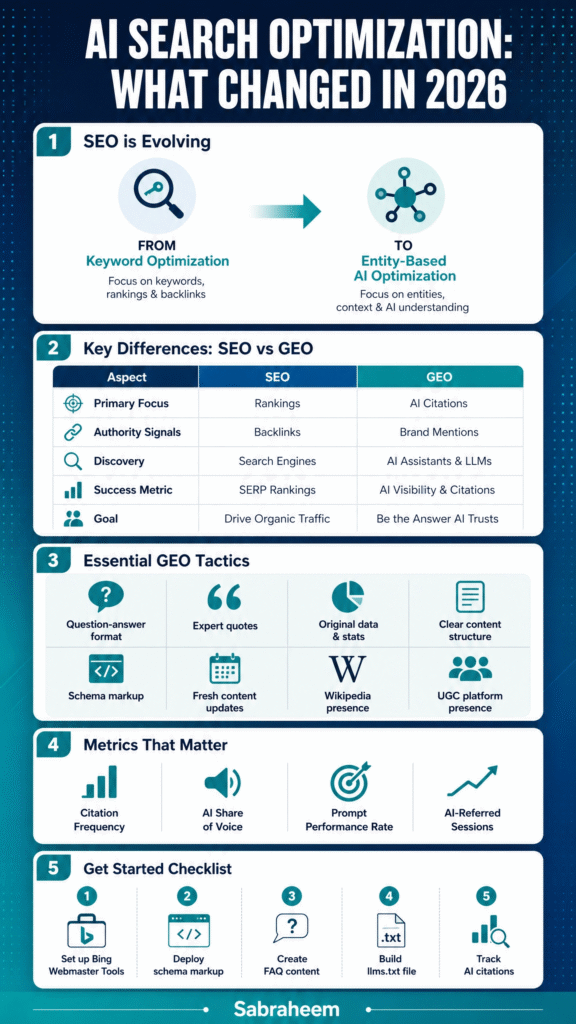
Key Differences: Traditional SEO vs LLM SEO vs GEO vs AEO
Here is how the four major search optimization disciplines compare in 2026:
| Feature | Traditional SEO | LLM SEO / GEO | AEO (Voice/AI) |
| Primary Target | Google Blue Links | AI-Generated Answers | Voice / Featured Snippets |
| Content Format | Keyword-optimized pages | Entity-rich, factual prose | Question-answer format |
| Ranking Signal | Backlinks + Keywords | Authority + Clarity + Schema | Snippet quality + Speed |
| Result Location | Page 1 organic results | AI Overview / ChatGPT | Voice answer / Position 0 |
| Trust Signal | Domain Authority | E-E-A-T + cited sources | Conciseness + accuracy |
| Time to Results | 3–6 months | 4–12 weeks (citations) | 3–8 weeks |
The practical takeaway: you need all four working together. Traditional SEO builds the foundation. GEO gets you cited by AI. AEO captures voice and featured snippet traffic. LLM SEO ensures your brand appears in AI-generated responses across platforms.
What Is Generative Engine Optimization (GEO)?
Generative Engine Optimization — GEO — is the discipline of making your content citation-worthy for AI-generated search responses. The term emerged from Princeton and Georgia Tech research in 2023 and has since become a mainstream SEO concept with its own service market: the keyword ‘generative engine optimization agency’ carries a $98.92 CPC — the highest in this entire niche.
GEO works on a simple principle: AI language models are trained to synthesize information from trusted sources. When generating an answer, they look for content that is factually clear, structurally organized, authored by credible sources, and supported by data. GEO is about making your content match those criteria consistently.
The 3 Core Pillars of GEO
Pillar 1 — Entity Clarity
LLMs understand the world through entities — specific, identifiable things like people, brands, locations, products, and concepts. This is the foundation of what is now called ‘llmo in seo’ — Large Language Model Optimization — a discipline closely tied to entity SEO.
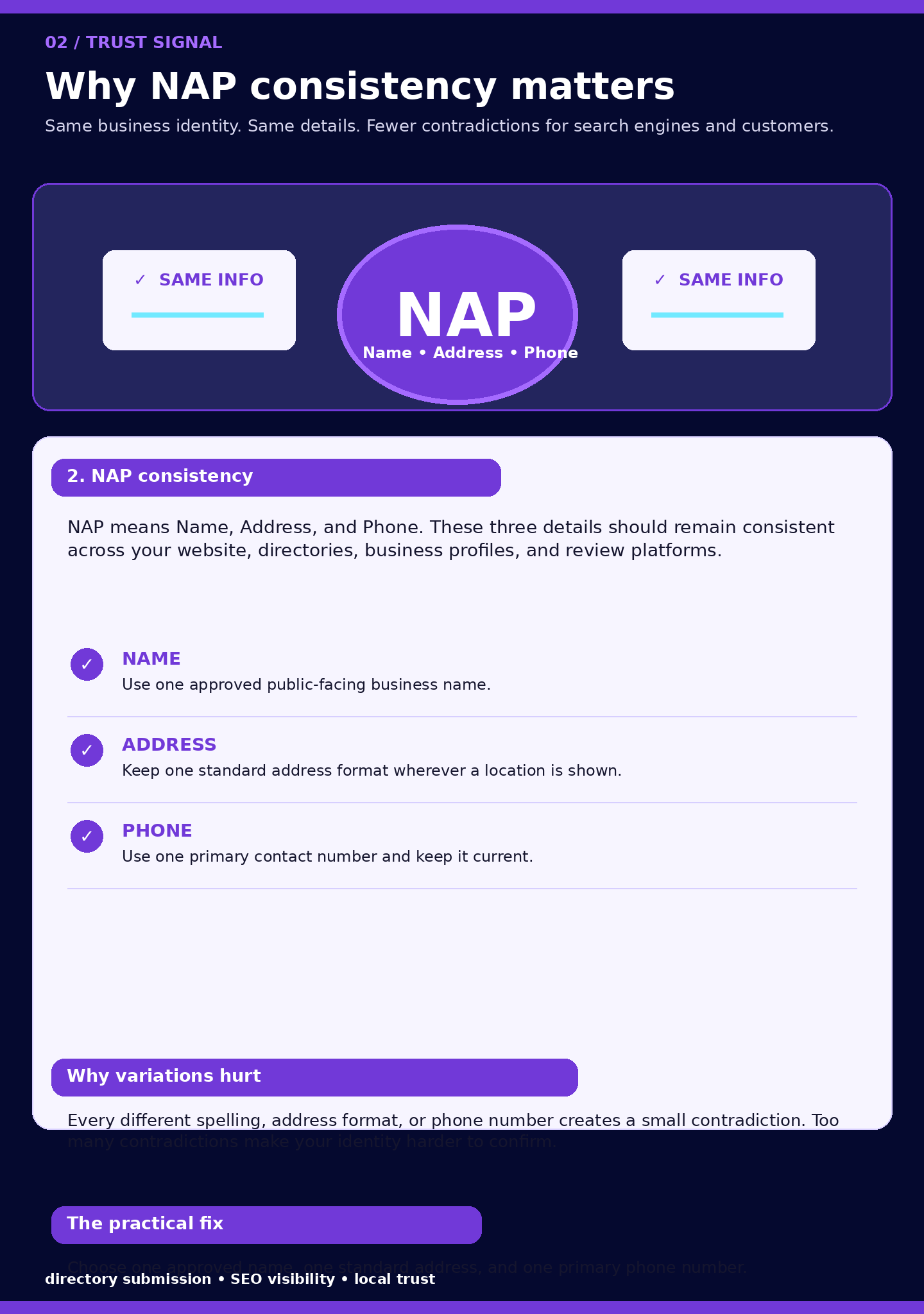
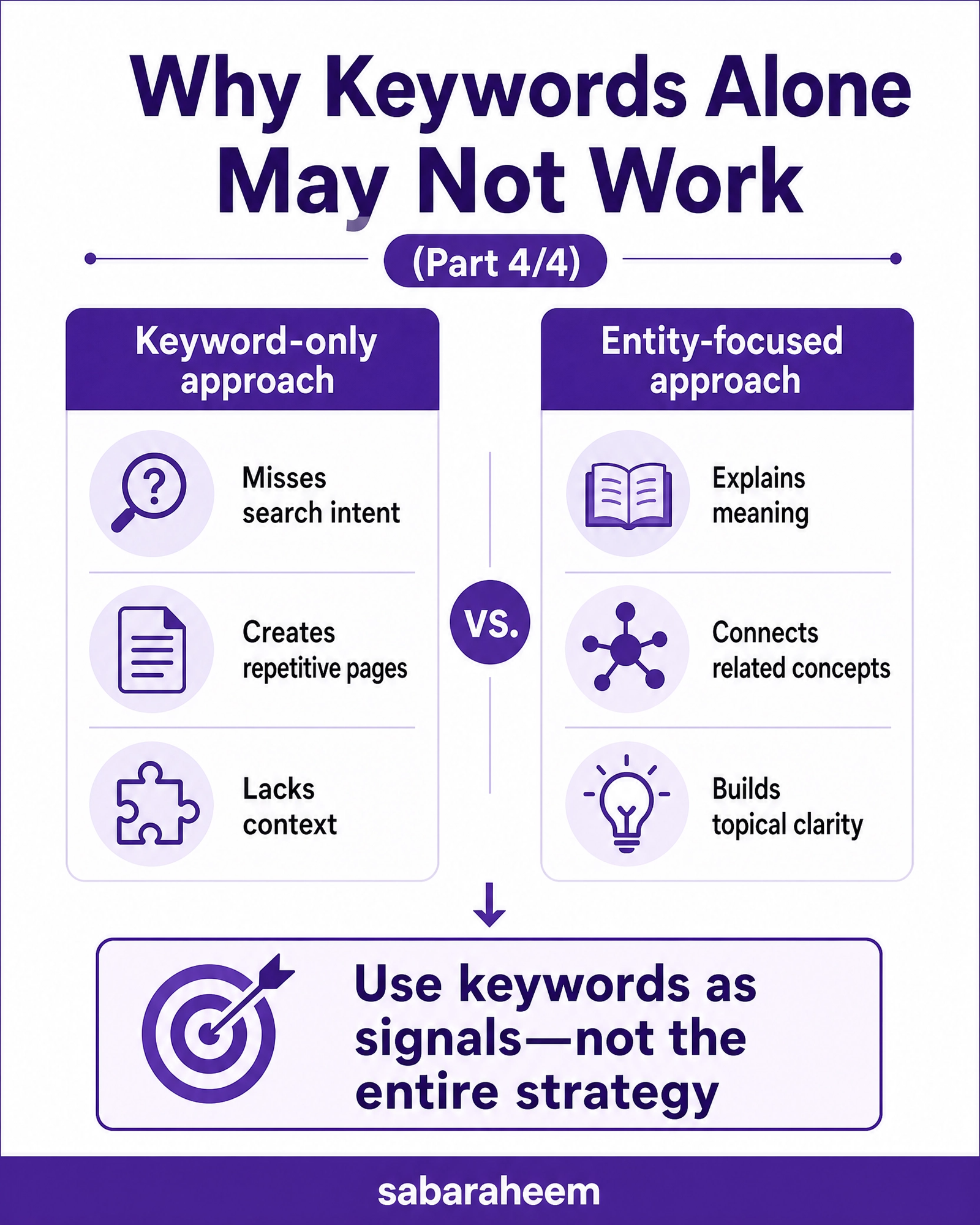
Understanding entity-based optimization is essential before building your GEO strategy. Read our in-depth guide: What Is Entity SEO and Why It Matters More Than Keywords in 2026.
- State your brand name, location, and specialization clearly on every key page
- Use structured data (Organization, Person, LocalBusiness schemas) to define your entity
- Get mentioned by name on authoritative third-party sources — Wikipedia, industry publications, news sites
- Ensure your Google Knowledge Panel is claimed and complete
Pillar 2 — Factual Authority
AI systems are trained to avoid misinformation. They preferentially cite content that includes verifiable data, references authoritative sources, and demonstrates expertise through specificity — not vague generalities. This is why ‘search optimization consultants’ who understand AI search (9,900 monthly searches) are increasingly adding GEO to their service offering.
- Include statistics with source citations (e.g., ‘According to Statista, 2026…’)
- Link to primary research, government data, and peer-reviewed sources where relevant
- Add author bios with real credentials — name, title, years of experience, publications
- Update content regularly with fresh data — stale information reduces citation probability
Pillar 3 — Structural Clarity
LLMs parse content differently from humans. They look for logical structure, clear headings, direct answers, and scannable formatting. Dense paragraphs without clear topic sentences are harder for AI to process and less likely to be cited.
- Open every section with a direct, declarative sentence that answers the implied question
- Use H2 and H3 headings formatted as questions or clear topic statements
- Add FAQ sections structured with schema markup
- Use numbered lists for processes and bullet lists for features — LLMs love structured lists
- Keep paragraphs short — 3–4 sentences maximum
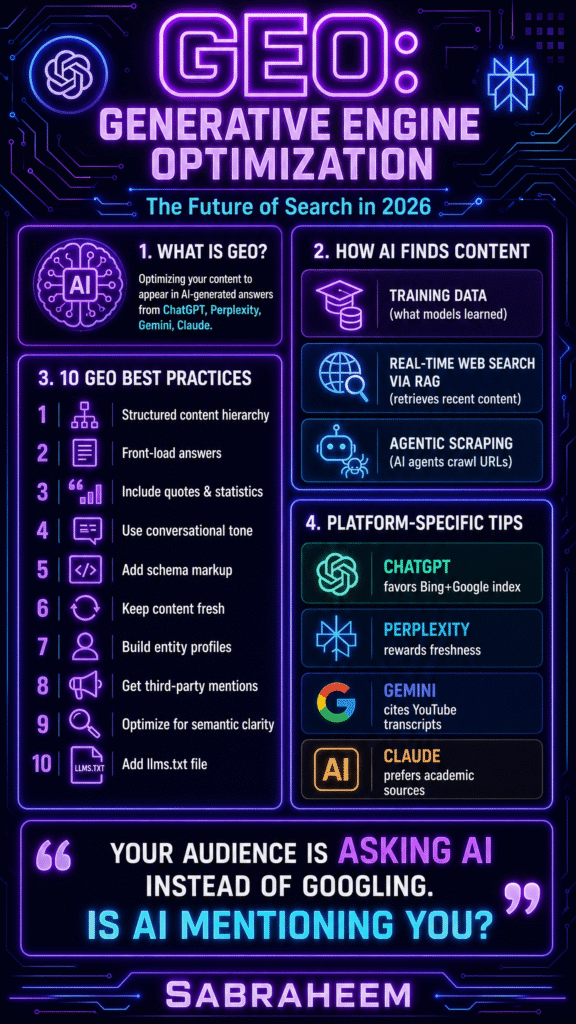
How LLMs Actually Find and Use Your Content
Understanding how LLMs access web content is critical to optimizing for them effectively — whether you are doing llm search optimization yourself or working with an ai search optimization agency.
1. Training Data
LLMs like GPT-4 and Gemini are trained on massive datasets that include large portions of the web — Common Crawl, Wikipedia, Reddit, books, and other sources. If your content existed before the model’s training cutoff and was included in these crawl datasets, it became part of the model’s base knowledge.
2. Real-Time Web Search (RAG)
Modern AI search tools — Perplexity, Google AI Overview, ChatGPT with browsing enabled — use Retrieval-Augmented Generation (RAG). They perform a real-time web search, retrieve relevant pages, and use that content to generate a current answer with citations. This is where search engine optimization machine learning principles directly overlap with traditional SEO — pages that rank higher are more likely to be retrieved by RAG systems.
3. llms.txt — The Emerging Standard
In 2024, a community-driven proposal introduced llms.txt — a simple plain-text file placed at yourwebsite.com/llms.txt that tells LLM crawlers what your site is about and which pages are most important for AI to read.
| Note: llms.txt is not yet an official Google standard, but it is being adopted by leading tech companies and AI tools. Early adopters of this llm seeding approach gain a crawling and comprehension advantage as LLMs increasingly use it for site context. |
For seoportfolio.in, implementing llms.txt is a priority recommendation — defining the site’s purpose (SEO portfolio and case studies), primary entities, and key pages including SEO & Web Optimization, Content Marketing, and Personal Branding services.
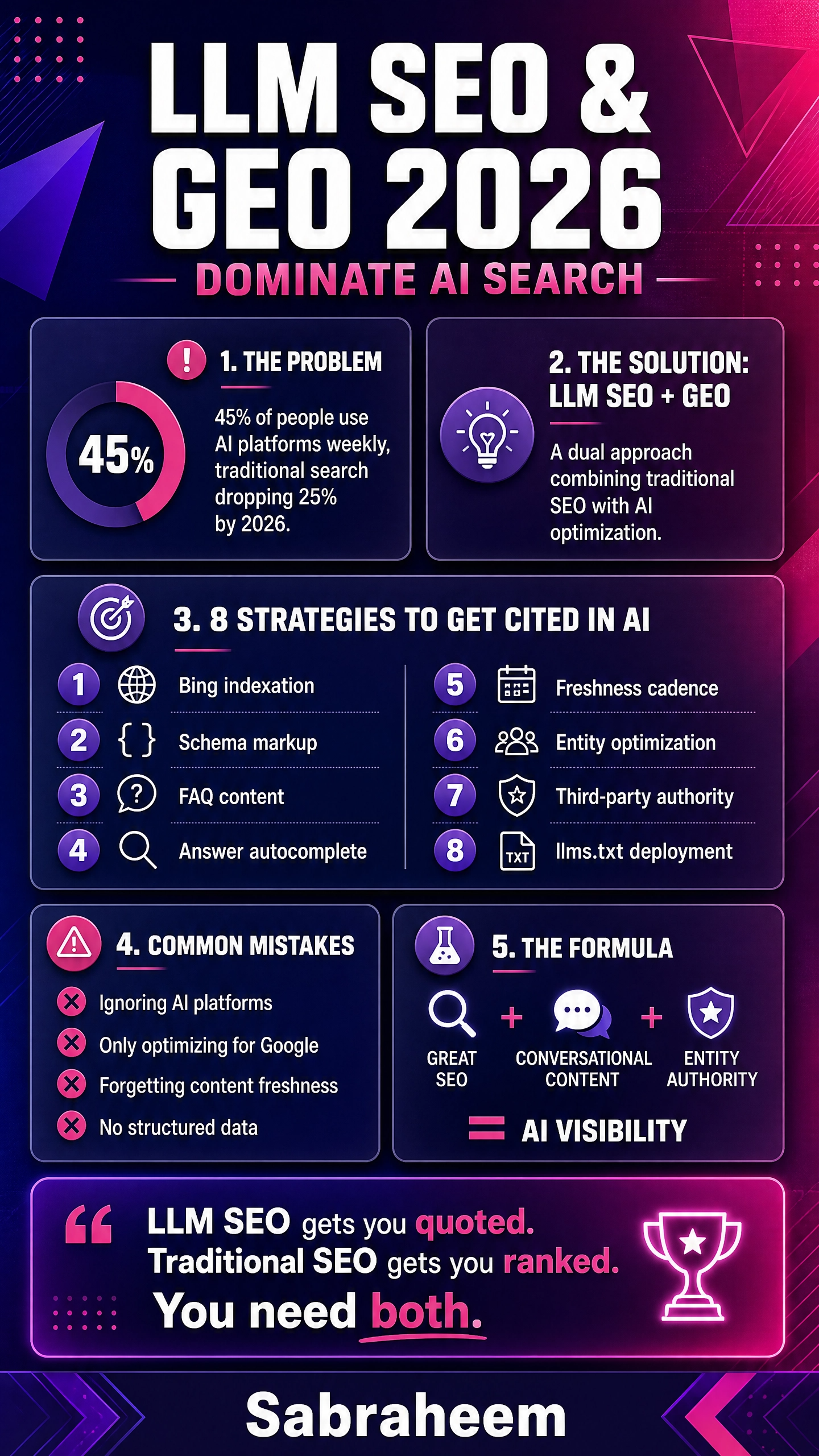
8 GEO Strategies to Implement on seoportfolio.in Right Now
These are ordered by implementation priority — start from the top:
| GEO Strategy | What It Does | Impact Level |
| Entity Optimization | Helps AI identify who/what you are | Very High |
| Structured Data (Schema) | Signals content context to LLMs | Very High |
| Authoritative Citations | Builds trust for AI sourcing | High |
| Conversational Content | Matches natural language queries | High |
| E-E-A-T Signals | Author credentials + experience proof | High |
| Direct Answer Paragraphs | First-paragraph answers for AI pull | High |
| Topical Authority Clusters | Signals deep subject expertise | Medium-High |
| llms.txt File | Guides LLM crawlers on your content | Emerging |
Strategy 1 — Entity Optimization for Your Brand
The first thing any LLM needs to understand about seoportfolio.in is what it is. Every key page should state this directly in the first paragraph.
- Add Organization schema to the homepage with name, URL, logo, description, and sameAs links to LinkedIn, Behance, and other profiles
Personal Branding builds entity authority in AI search — read this guide to understand how Saba Raheem’s brand identity can be structured for LLM recognition.
- Get seoportfolio.in mentioned on external SEO directories, guest posts, and tool roundups
Strategy 2 — Schema Markup Across All Pages
Schema markup is the most direct way to communicate with AI systems. It translates your content into structured, machine-readable format that LLMs can parse without ambiguity.
- FAQ Schema on all blog posts with question-based sections
- Article Schema with author, datePublished, and dateModified on every post
- BreadcrumbList Schema for site navigation clarity
- Person Schema for Saba Raheem’s author page — include name, jobTitle, url, sameAs
- Service Schema for SEO & Web Optimization, Parasite SEO, and Content Marketing pages
Strategy 3 — Direct Answer Paragraphs
Every blog post and service page should open with a 40–60 word direct answer to the implied question of that page. AI systems performing RAG searches look for this exact pattern.
This blog itself demonstrates the format. Apply the same structure across all content on the site — including 15 Proven SEO Techniques and all future posts.
Strategy 4 — Authoritative Source Citations
Every factual claim in your content should be sourced. AI systems are trained on the principle of factual accuracy — they are far more likely to cite content that itself cites reliable external data.
- Use statistics from Statista, Semrush, Ahrefs, BrightEdge, SparkToro, and Moz
- Link to official Google Search Central documentation where relevant
- Reference keyword data (like the GEO service keywords in this article) as real market evidence
Strategy 5 — E-E-A-T Signal Strengthening
For seoportfolio.in, building E-E-A-T means making Saba Raheem visible and credible as a named expert. This is directly linked to entity authority.
- Add a detailed author bio with a real photo, credentials, and links to Behance portfolio
- Publish genuine case studies with real numbers — the GSC data already on the homepage is excellent for this
- Build byline presence on external SEO publications — Search Engine Journal, Moz Blog
- Offer a Free SEO Audit as a lead magnet — this also demonstrates hands-on expertise that AI systems can reference
Strategy 6 — Conversational Content for AI Queries
AI search queries are longer and more conversational than typed search queries. The keyword data confirms this — queries like ‘which llm optimization service is best for ai products’ and ‘what is seo for llms called’ are full questions, not fragments.
- Write H2 and H3 headings as full questions matching how users actually speak
- Use natural, conversational language — avoid robotic keyword stuffing
- The existing blog post What is SEO in Digital Marketing with Examples already does this well — use it as a template
Strategy 7 — Topical Authority Through Content Clusters
LLMs measure topical authority. For seoportfolio.in, building deep content clusters around core SEO topics is the highest-leverage long-term GEO investment.
Recommended cluster structure: pillar pages for Technical SEO, Local SEO, Content SEO, GEO/LLM SEO, and Entity SEO — with 6–10 supporting articles per pillar, all interlinked.
The site already has strong cluster foundations: What Is Entity SEO and Personal Branding posts form a natural entity-authority cluster. Expand these.
Strategy 8 — llms.txt Implementation
Create a simple /llms.txt file for seoportfolio.in that describes the site’s purpose, lists your key services, and links to your most important pages. Written in plain English — no code required.
- First section: one-paragraph description of seoportfolio.in and who Saba Raheem serves
- Second section: list of primary services — SEO & Web Optimization, Content Marketing, Personal Branding, Parasite SEO
- Third section: links to the 10–15 most important pages on the site
How to Appear in Google AI Overview Specifically
Google AI Overview is the most important GEO target for most businesses — it appears at the top of search results for 34% of queries. For seoportfolio.in, the keyword ‘geo llm’ (140 searches/month, position 10, CPC $14.70) is already within AI Overview reach.
What Google AI Overview Looks For
- Content that directly answers the search query in the first 100 words
- Pages with strong topical authority and internal linking structure
- Sites with established E-E-A-T signals — author credentials, external citations, trust signals
- Schema-marked FAQ and HowTo content that Google can easily extract
- Pages already ranking in the top 10 for the target query — AI Overview draws heavily from existing top results
Keywords Already in Striking Distance for seoportfolio.in
Based on the keyword data provided, these are the highest-priority opportunities for AI Overview capture:
- ‘seo for llms’ — 260 searches/month, currently position 3–9 across tracked clusters (very close to Page 1 lock-in)
- ‘generative engine optimization service’ — 480 searches/month, position 6, CPC $24.50 (highest commercial value)
- ‘geo llm’ — 140 searches/month, position 10, CPC $14.70 (one push from Page 1)
- ‘llm search optimization’ — 170 searches/month, position 5–14 (strong relevance to this article)
- ‘generative engine optimization agency’ — 320 searches/month, position 16, CPC $98.92 (highest CPC in entire dataset)
How to Track Your LLM SEO and GEO Performance
Traditional SEO tracking tools do not measure AI citation performance. Tracking AI Brand Visibility requires a different approach — read the dedicated guide on seoportfolio.in for the full tracking framework.
Tools for GEO and LLM Visibility Tracking
- Semrush AI Toolkit (2026) — tracks which queries trigger AI Overviews and whether your site appears
- Otterly AI — monitors brand mentions across ChatGPT, Perplexity, and other AI tools
- Nightwatch AI Visibility — tracks your site’s appearance in AI-generated search responses
- Google Search Console — monitor ‘AI Overview’ impressions in the search appearance filter
- Manual testing — regularly search target keywords in ChatGPT, Perplexity, and Google with AI Overview enabled
Key GEO Metrics to Track Monthly
- Number of AI Overview appearances for target keywords
- Brand mention frequency in ChatGPT and Perplexity responses
- Branded search volume growth (key indirect signal of AI visibility)
- Referral traffic from Perplexity.ai and other AI search tools in GA4
- Featured snippet capture rate — closely correlated with AI Overview selection
What People Ask Google & AI About LLM SEO (Real Search Queries)
These are real queries from the keyword data — what users are typing and speaking to search engines and AI tools right now:
- What is seo for llms called?
- Which llm optimization service is best for ai products?
- What are generative engine optimization services?
- How does llm search optimization work?
- What is the difference between geo llm and traditional SEO?
- Best llm optimization tools for ai visibility?
- What is llmo in seo?
- How do I get my website cited in Google AI Overview?
- What is llm seeding and how does it help SEO?
- How to find the top generative engine optimization companies in ai?
Frequently Asked Questions — LLM SEO & GEO
What is seo for llms called?
SEO for LLMs is commonly called LLM SEO, LLMO (Large Language Model Optimization), or Generative Engine Optimization (GEO). All three terms describe the same core practice: structuring your web content so AI language models can understand, trust, and cite it in generated answers.
How long does it take to get cited in Google AI Overview?
For pages already ranking in the top 10, GEO improvements typically show results in 4–8 weeks. For newer pages, building the authority needed for AI citation can take 3–6 months. Keywords like ‘geo llm’ (position 10) on seoportfolio.in are within weeks of AI Overview entry with focused optimization.
Which llm optimization service is best for ai products?
The best llm optimization services combine entity SEO, schema markup implementation, E-E-A-T content structuring, and AI visibility tracking. Generative engine optimization agencies with proven GEO case studies and transparent keyword data (like seoportfolio.in provides) offer the most accountable approach.
Does schema markup directly affect AI citation probability?
Yes. Schema markup helps LLMs parse your content’s structure, identify key entities, and extract specific answers. FAQ Schema, Article Schema with author data, and Organization Schema all directly improve the probability of AI systems citing your content in generated responses.
What is llm seeding and how does it relate to GEO?
LLM seeding (140 searches/month, CPC $43.85) is the practice of placing your content, brand mentions, and factual claims across high-authority sources so they get included in LLM training data or RAG retrieval pools. It is a proactive form of GEO focused on feeding AI systems your preferred narrative about your brand.
Can small businesses compete in AI search against large brands?
Yes. AI systems prioritize content quality, specificity, and authority signals over raw domain size. A well-structured, deeply researched article on a niche GEO topic from seoportfolio.in can be cited alongside content from major publications if it is more direct, factually grounded, and clearly structured.
Want Your Website Cited by AI Search Engines?
seoportfolio.in specializes in LLM SEO and GEO optimization. Get your free SEO audit and find out your content’s AI citation readiness score.
Sources & References
BrightEdge AI Search Report (2026) · SparkToro Zero-Click Study (2025) · Moz AI Visibility Research (2026) · Search Engine Land AI Overview CTR Study (2026) · Princeton / Georgia Tech GEO Research Paper (2023) · Google Search Central Documentation · Statista AI Search Usage Report (2026) · Keyword data sourced from seoportfolio.in GSC and rank tracking reports

Sharing my journey and learnings in Tech and AI. As a Digital Marketing Expert, I help brands boost their visibility and sales with smart personal branding and the latest AI tricks.

Leave a Reply