|
Getting your Trinity Audio player ready… |
Table of Contents
Okay, let me be honest with you.
I’ve asked myself this question probably a hundred times in the last six months. And every time I think I have the answer, something shifts. A Google update drops. ChatGPT changes how it cites sources. Perplexity starts pulling from a completely different set of pages than last week.
But I finally have a clear answer — and it’s not the one most SEO guides will give you.
Getting cited in AI answers is harder. Not slightly harder. Fundamentally harder. And here’s the thing — it’s also worth more.
Let me walk you through exactly why I think that, what the data actually says in 2026, and more importantly, what you should actually do about it.
Let me start with a real story
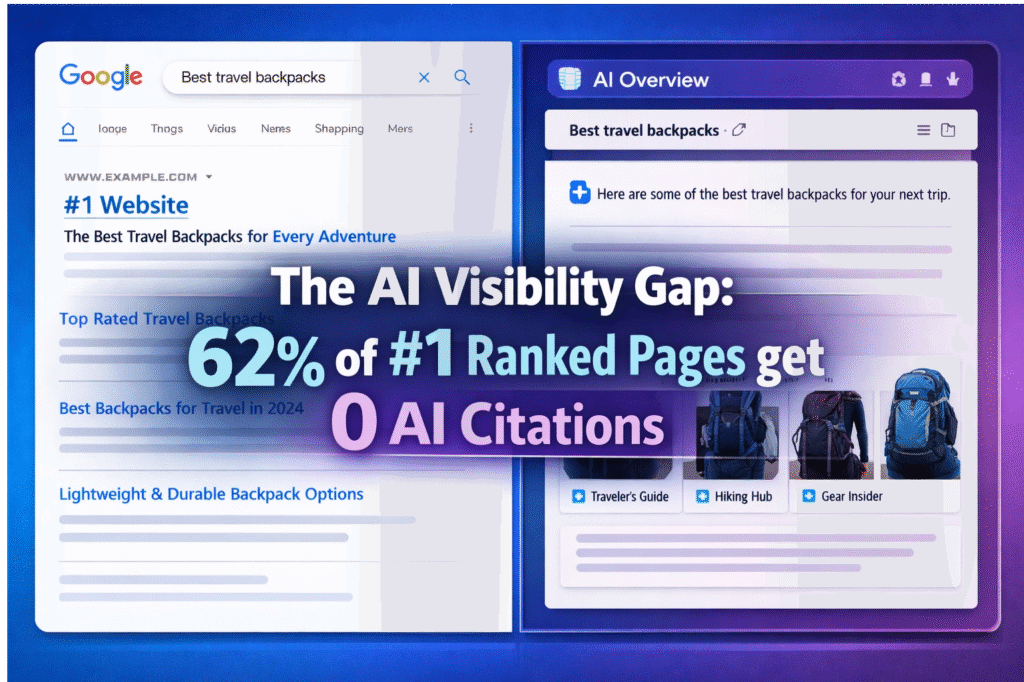
The Day I Realized Google Rankings Don’t Equal AI Visibility
A few months ago, I was checking a piece of content I’d published — ranked #3 on Google for a decent keyword, solid traffic, good engagement. I was happy with it.
Then I typed the same query into ChatGPT. And into Google AI Overviews. And into Perplexity.
My article? Nowhere. Not a mention. Not a citation. Not even a reference.
Instead, three other sites — two of which ranked below me on Google — were being cited as the authoritative answers. One of them had a domain authority lower than mine. But their content was structured completely differently. Direct answer in the first paragraph. Specific statistics with named sources. Clean H2 headings that matched the query exactly.
Here’s the data that backed up what I experienced: only 38% of Google’s top-ranked pages now appear in AI Overviews (Search Engine Journal, 2026). That means 62% of #1-ranked pages get zero AI visibility. None.
This is what made me completely rethink my content approach. I wrote about this shift in detail when Anthropic hired an SEO Lead — even the company behind Claude was acknowledging that traditional search visibility isn’t enough anymore. That was a signal I couldn’t ignore.
So what actually makes AI citation harder?
Google vs AI: They’re Playing Completely Different Games
Here’s how I think about it now. Google asks: ‘Is this page authoritative and relevant?’ AI asks: ‘Can I extract a clean, complete, verifiable answer from this content right now?’
Those two questions sound similar. They are not.
Google will rank a 4,000-word comprehensive guide even if the answer to the main query is buried in paragraph 12. AI won’t touch that content. If your answer isn’t in the first 30–50% of the page, most AI platforms skip you entirely.
The Four Real Differences (Not the Ones You’ve Read Before)
1. Fewer spots. Way fewer.
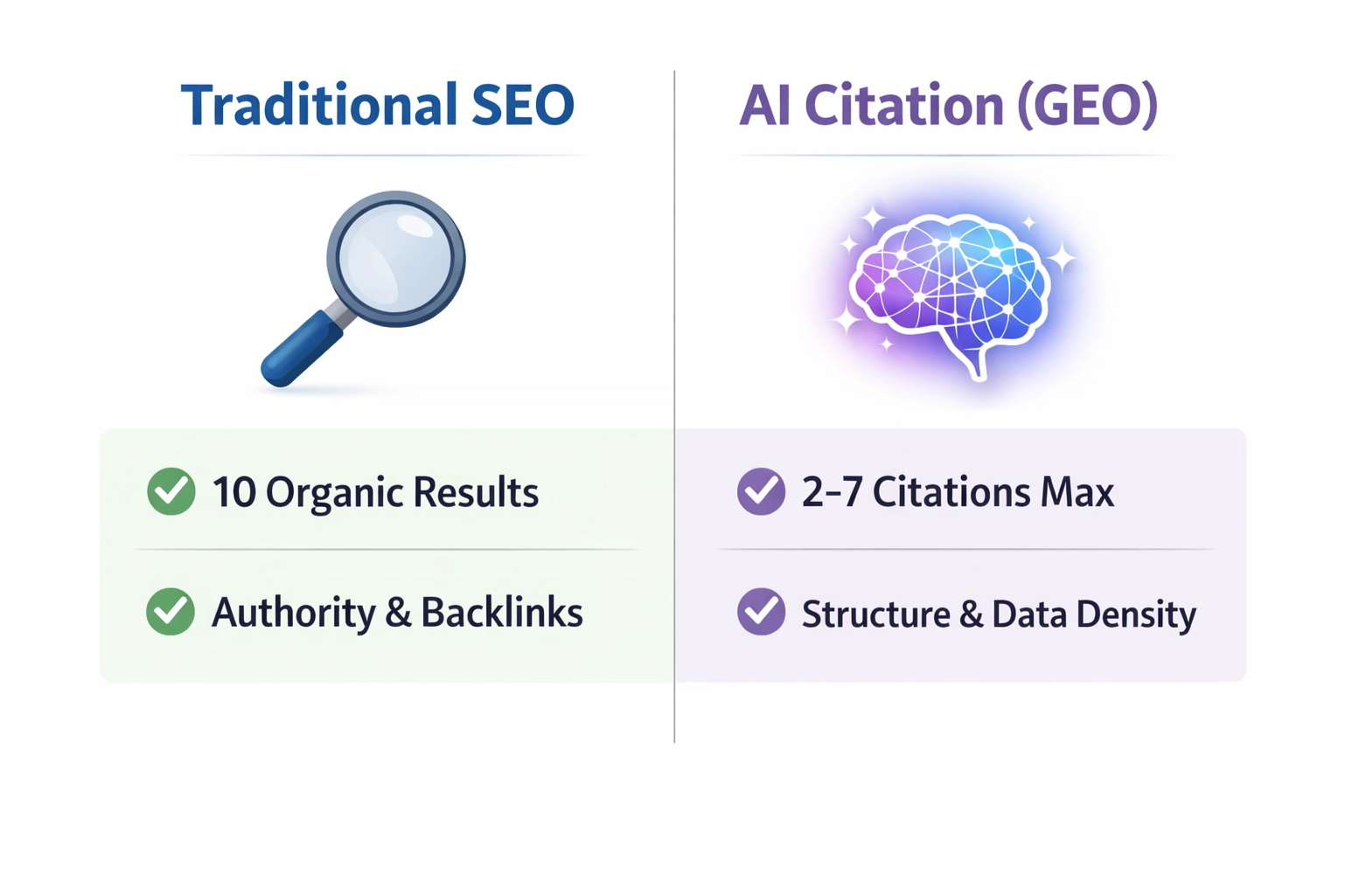
Google shows 10 results per page. You need to crack the top 10. AI answers cite 2 to 7 sources maximum. You need to be in the top 2–7. Mathematically, AI citation is 2–5x more competitive per query than traditional page-one Google rankings. That’s not a marketing claim — it’s just the math.
2. The rules change constantly — and nobody tells you.
With Google, I know the core rules. Build authority. Create genuinely useful content. Fix technical issues. Get good backlinks. The rulebook changes, but slowly. I wrote about this in what the new SEO strategy actually looks like in 2026 — and the fundamentals still hold. But AI citation? 70% of AI Overview answers change every time the same query is run. 45% of citations get swapped out regularly. You can be cited today and invisible tomorrow with zero changes on your end.
3. Structure matters more than authority.
This one still surprises people. A page with a domain rating of 30 can outperform a DR 80 site in AI citations — if its content is structured better. Direct answer first. Specific data with named sources. FAQ blocks. Clean H2/H3 headings that match the query exactly. I’ve seen it happen multiple times now.
4. Your brand mentions on other sites matter more than your own content.
This is the one that really messes with traditional SEO thinking. Brands are 6.5x more likely to be cited by AI through third-party sources than through their own domain. Which means PR, YouTube mentions, Reddit threads, and guest content on authoritative sites carry more GEO weight than adding another blog post to your own site. Link building has completely evolved because of this — it’s not just about backlinks anymore. It’s about brand mentions everywhere.
25.11% of all Google searches now trigger an AI Overview — up from 13% in early 2025. One in four searches. That’s not a niche feature anymore. That’s mainstream. (Conductor, 21.9M searches analyzed, 2026)
Side-by-side: Google vs AI Citations
Google SEO vs AI Citation — The Real Comparison
| What We’re Comparing | Google Ranking (SEO) | AI Citation (GEO/AEO) |
|---|---|---|
| Spots available per query | 10 organic results | 2–7 citations max |
| Main ranking signal | Authority + backlinks + relevance | Answer clarity + data density + structure |
| Where your answer needs to live | Anywhere in the article | First 30–50% of the page — or it gets missed |
| How stable is it? | Slow to change — weeks or months | 70% of answers change per query; volatile |
| Can you measure it? | Yes — GSC, Ahrefs, Semrush are mature | Sort of — tools are still early stage |
| Traffic when you win | High click volume | Low clicks but 2–4x higher conversion rate |
| Does the other channel help? | SEO helps GEO — 99% of AI-cited pages rank top 20 | GEO alone isn’t enough without SEO foundation |
Data: Conductor 2026, Brandlight 2025, Ahrefs 2025, SEJ 2026, Semrush 2025
⚖️ Neither is dead. Both are necessary. Here’s why.
Why I’m Not Abandoning Google SEO for GEO — And You Shouldn’t Either
Look, I know the temptation. You hear about AI search taking over, you see the stats about AI Overviews eating into click-through rates, and you think maybe I should just optimise for AI and forget about the blue links.
Don’t do that. Here’s why.
99% of URLs that appear in Google’s AI Mode also rank in the top 20 organic results. Strong SEO is the prerequisite for GEO — not its replacement. (Semrush AI Search Report, 2025)
Think of it as a two-layer system. Layer one is everything I’ve written about in what actually works for SEO in 2026 — technical health, content depth, backlinks, domain authority. Without this layer, AI models won’t trust your content enough to cite it. Layer two is GEO optimisation — BLUF structure, fact density, FAQ blocks, freshness. Without layer two, even a #1 ranking produces zero AI citations.
You need both. The good news is that the tactics that make AI cite your content also improve your Google rankings. They’re not competing — they’re compounding.
And honestly, the biggest mindset shift I needed was understanding what AI actually did to SEO — it didn’t kill it. It killed the lazy version of it. The ‘more content = more traffic’ thinking. The keyword stuffing. The backlink schemes. What survived is genuinely useful, well-structured, expert content. Which, if you were doing SEO properly, you were already building.
What I actually changed in my own content to win AI citations
The 7 Changes That Made My Content Get Cited in AI Answers
I’m going to be specific here because vague advice is useless. These are the exact things I changed, in the order that made the biggest difference.
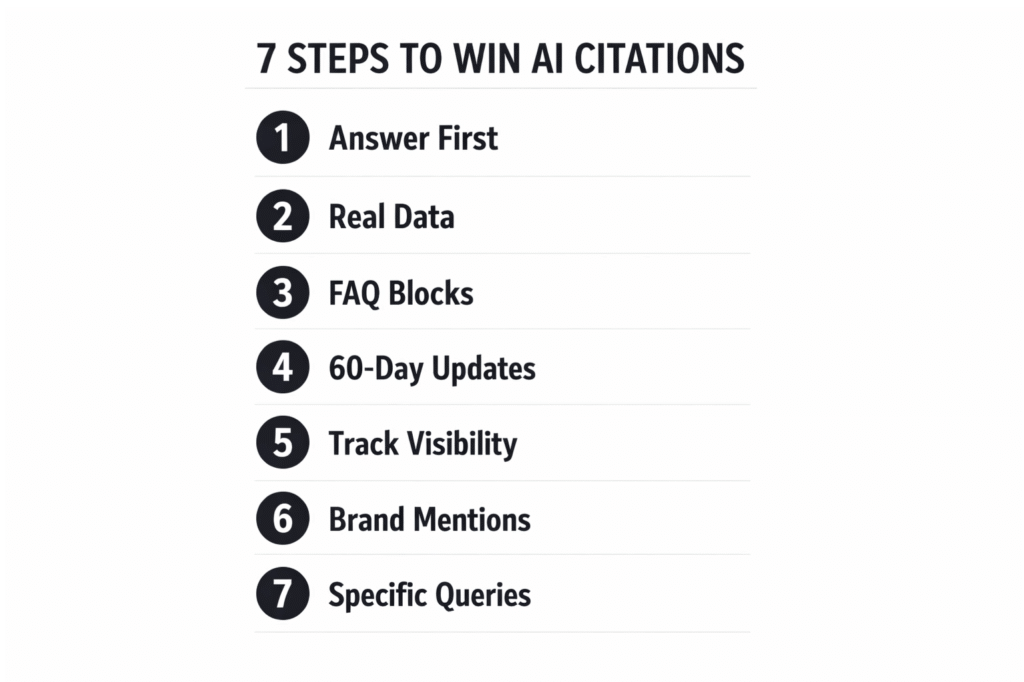
Change 1: I rewrote every intro to answer first
44% of all LLM citations come from the first 30% of a page. So I stopped writing context-heavy intros and started writing BLUF intros — Bottom Line Up Front. Answer the query in the first 50 words. Then explain it. This single change is responsible for most of my early GEO wins. If you want to understand the full strategy behind this, building topical authority through semantic content clusters is where the content architecture thinking all connects.
Change 2: I added real data to everything
Not ‘studies show.’ Specific study names, specific numbers, specific years. Content with verifiable data gets cited 30–40% more in AI answers than equivalent content without it. I went back through my top 10 articles and added at least one hard statistic with a named source to every major section. Time-consuming? Yes. Worth it? Completely.
Change 3: FAQ blocks with schema markup
I added FAQ sections to every major article — minimum 3 questions, structured with proper FAQ schema markup. BrightEdge data shows this produces a 44% average increase in AI citations. And it also improved my featured snippet appearances on Google. One change, two wins.
Change 4: I updated stale content every 60 days
Pages updated within the last 60 days are 1.9x more likely to appear in AI answers. This is a new operational requirement. Content decay kills AI visibility faster than it kills Google rankings.
Change 5: I started tracking AI visibility, not just rankings
You can’t improve what you don’t measure. I set up a simple weekly audit — run my top 20 target queries in ChatGPT, Perplexity, and Google AI Overviews, document who’s cited, and track changes over time. The full framework for how to do this is in how to actually track your AI brand visibility — it’s one of the most practical things I’ve written.
Change 6: I invested in third-party brand mentions
Once I understood that 6.5x more AI citations come from third-party sources than from my own site, I changed how I thought about link building. I started pitching guest content to authoritative publications specifically for GEO impact. I started participating genuinely in Reddit discussions. I created a YouTube video for every major topic I wrote about. Each of those mentions feeds AI visibility with a 4–8 week lag.
Change 7: I stopped writing for search volume alone
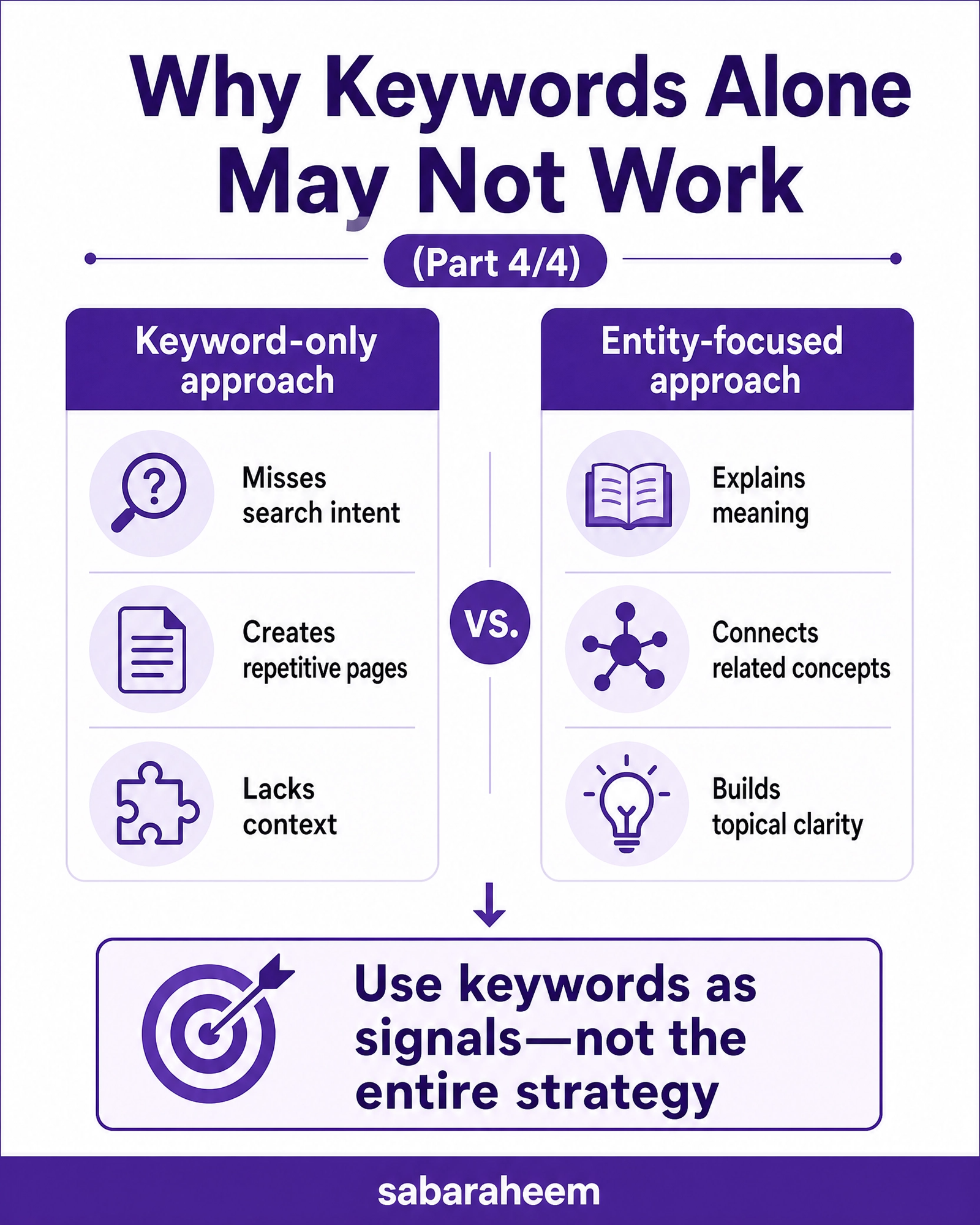
I used to obsess over search volume. Now I think about query specificity. A narrow, precise query with 500 monthly searches that I can answer with absolute authority beats a broad 10,000-search query where I’m competing against 50 established sites. Keyword research has completely changed in the AI era — it’s about intent depth and answer completeness, not just volume.
Which one is actually worth more?
Google Traffic vs AI Citations: What Actually Moves the Needle for Business
Okay so here’s the part people don’t talk about enough — what does winning actually get you?
AI referral traffic converts at 2–4x the rate of organic search traffic. In marketing-intent queries specifically, that conversion premium reaches 4.4x. (Conductor 2026, Semrush 2025)
Why? Because when ChatGPT or a Google AI Overview cites you as the answer to someone’s question, that person arrives at your site with a level of pre-established trust that a traditional click doesn’t give you. The AI has essentially vouched for you before they landed.
I’ve been talking about this shift in personal brand building for a while — your personal story and how you position yourself online matters way more in the AI era because AI models are looking for named experts, specific credentials, and real experience signals. Generic brand content gets skipped. Expert human voices get cited.
When a brand is cited in a Google AI Overview, organic CTR on that page increases 35%. Paid clicks from that SERP increase 91%. Being in the AI answer literally makes your other channels more effective. (Search Engine Land, 2025)
So no, AI citation isn’t just a vanity metric. It’s a multiplier. And it’s only going to matter more as the percentage of searches triggering AI answers keeps climbing past 25%.
How to actually track whether you’re winning
The Simple AI Visibility Tracking System I Use Every Week
Most people don’t have a measurement framework for GEO yet. Which is understandable — the tools are still maturing. But you don’t need fancy software to start. Here’s my basic weekly process:
- Pick your top 20 target queries — the ones you most want to own in your niche
- Run each one in ChatGPT, Perplexity, and Google AI Overviews
- Screenshot or note who gets cited and what format their content uses
- Track your own citation rate week over week in a simple spreadsheet
- When competitors appear and you don’t — go read their content and understand why
For more sophisticated tracking, tools like Otterly.ai and Profound are worth looking at once you’ve established your baseline manually. Google Search Console also now shows AI Overview impression data in the Performance report.
Quick win: Start with just ChatGPT. Type in your 5 most important queries and see what comes back. If you’re not cited, look at what IS cited and reverse-engineer the content structure. That 30-minute exercise will tell you more about your GEO gaps than most audits.
Questions I Get Asked About This All the Time
Is traditional SEO still worth doing in 2026?
Yes. Absolutely. I can’t say this enough. 99% of AI-cited content also ranks in the top 20 organic results. SEO is the foundation — GEO is the layer on top. If you’re wondering where to start, this beginner’s guide to how SEO actually works is the clearest explainer I’ve seen.
How long does it take to start appearing in AI answers?
With structural content changes — BLUF intro, data density, FAQ schema — early AI citation appearances can happen within 8–12 weeks. Consistent citation for target queries typically takes 4–6 months. The third-party brand mention strategy takes longer — 3–6 months to build enough signal volume. SEO results timelines have always required patience, and GEO is no different.
Does my domain authority help with AI citations?
Indirectly, yes — because DA is part of the E-E-A-T signal that AI models assess. But it’s not the dominant factor the way it is in Google rankings. I’ve seen pages from sites with DR 25 outrank DR 80 sites in AI citations because the content structure was better. The role of authority is changing across all three channels — SEO, AEO, and GEO.
Why does my #1-ranked page not appear in AI answers?
Usually one of five reasons: (1) The answer is buried past the 30% mark of your article. (2) No specific statistics with named sources. (3) No FAQ schema markup. (4) Content hasn’t been updated recently. (5) The page is too broad — AI prefers narrow, precise answers. Check all five before concluding something else is wrong. And do a proper content and technical audit first to rule out basic issues.
What’s GEO vs AEO vs SEO — in plain language?
SEO = getting found in Google’s blue links. AEO = getting featured in Google’s own direct answer boxes (featured snippets, knowledge panels). GEO = getting cited by AI-generated answers from ChatGPT, Perplexity, and Google AI Mode. All three share the same foundation. I broke down exactly how GEO works if you want the full picture — it’s the clearest explanation I know of.
Should I focus on ChatGPT or Google AI Overviews first?
ChatGPT first — it drives 87% of all AI referral traffic and has the largest user base. Then Google AI Overviews — because they’re integrated into the world’s highest-traffic search engine and directly affect your existing organic SERP performance. Perplexity is smaller but worth monitoring for research-intent queries where it’s particularly active.
FAQ — Straight Answers
Q: What’s the single most important change I can make today?
A: Rewrite the first paragraph of your most important article to directly answer the main query in 50 words or fewer. Don’t warm up. Don’t set context. Answer first. This is the highest-ROI GEO change available and takes about 20 minutes per article.
Q: Do I need to be on all AI platforms?
A: Start with two — ChatGPT and Google AI Overviews. Together they cover 90%+ of AI search behavior. Once you’re tracking consistently on both, add Perplexity. Don’t spread yourself thin chasing every emerging AI platform before you’ve established baseline visibility on the major ones.
Q: How is GEO different from what I was already doing for featured snippets?
A: Featured snippet optimization is actually excellent GEO preparation. The content formats that win featured snippets — direct answers, numbered lists, comparison tables, FAQ sections — are the same formats that get cited in AI answers. If you’ve been doing featured snippet optimization properly, you’re already halfway to GEO readiness. The additions are data density and content freshness.
Q: Is it worth hiring someone just for GEO?
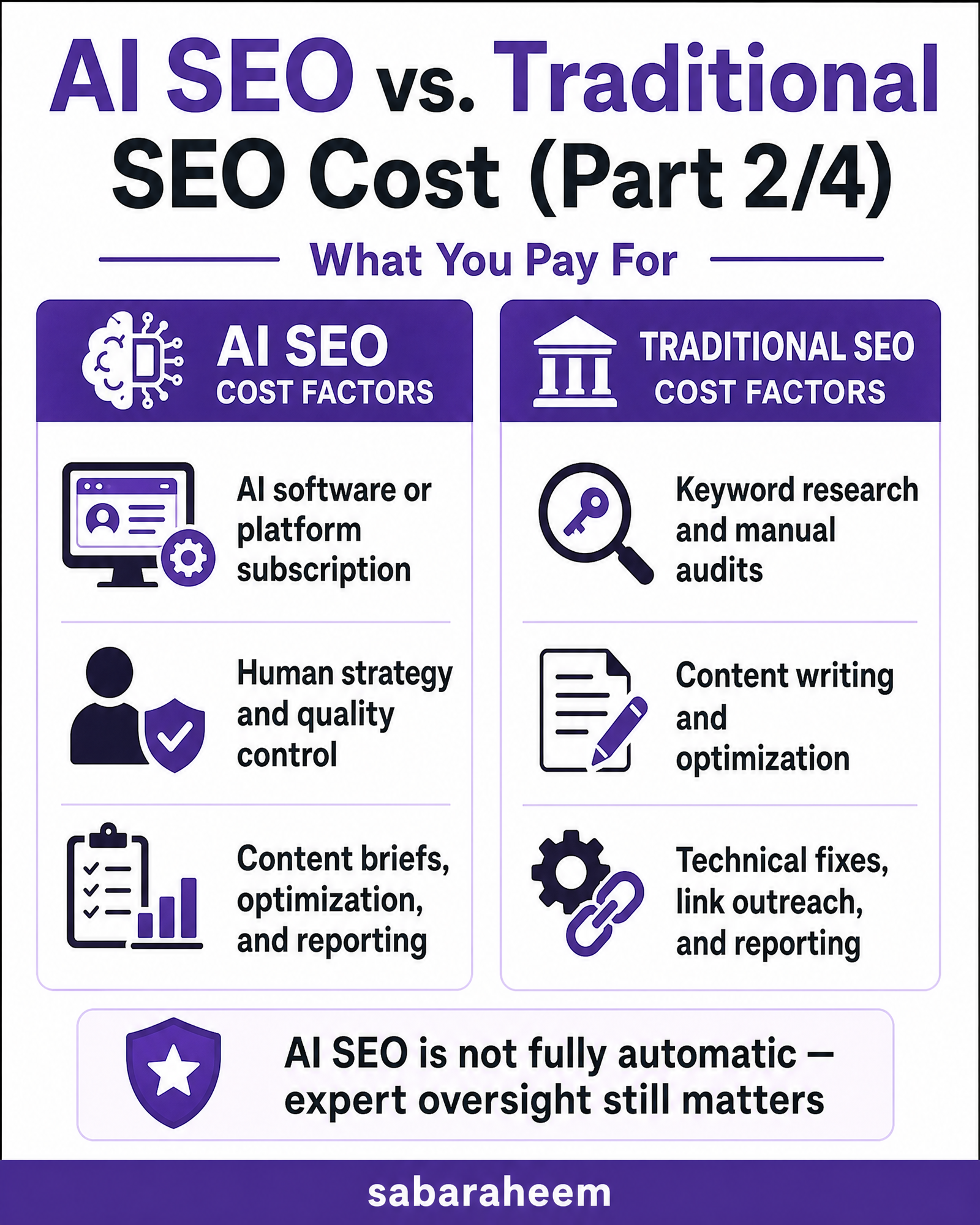
A: At most stages, no. GEO is an optimization layer on top of your existing content strategy — not a separate channel requiring a dedicated hire. It’s skills and mindset, not headcount. The exception is if AI visibility is a primary growth channel for your business and you need systematic monitoring across hundreds of queries. For most people, working with a strategist who understands both SEO and GEO is more efficient than adding a full-time resource.
Q: What’s the quickest way to know if my SEO foundation is solid enough for GEO?
A: Run a basic audit. Check: are your pages indexed properly? Are there technical errors? Is your site speed acceptable? Is your E-E-A-T clear — named authors, credentials, real expertise signals? The free SEO audit formula is the fastest way to identify whether your foundation is GEO-ready or whether you need to fix fundamentals first.
What to do next — your 30-day sprint
My Actual 30-Day Plan if I Were Starting This Today
If I were rebuilding my GEO strategy from scratch right now, here’s exactly what I’d do:
- Days 1–3: Audit. Run my top 20 queries in ChatGPT, Perplexity, and Google AI Overviews. Document what’s being cited and what format those pages use. Build a gap list.
- Days 4–7: Fix my top 5 articles. Rewrite the intros to BLUF format. Add 2–3 specific statistics with named sources to each article. Restructure into 140-word semantic answer units.
- Days 8–14: Add FAQ blocks with schema markup to every major article. Minimum 3 Q&As per article, written as standalone complete answers.
- Days 15–18: Update any article that hasn’t been refreshed in 60+ days. Add a ‘Last Updated’ date. Add a new data point or example. Even minor updates count.
- Days 19–24: Start 3 third-party brand mention initiatives. Pitch one guest article. Post one YouTube video answering a target query. Engage in 3 relevant Reddit threads with genuine expertise.
- Days 25–30: Set up tracking. Create a simple spreadsheet. Run weekly citation audits. Set a reminder. Measure for 90 days before drawing conclusions.
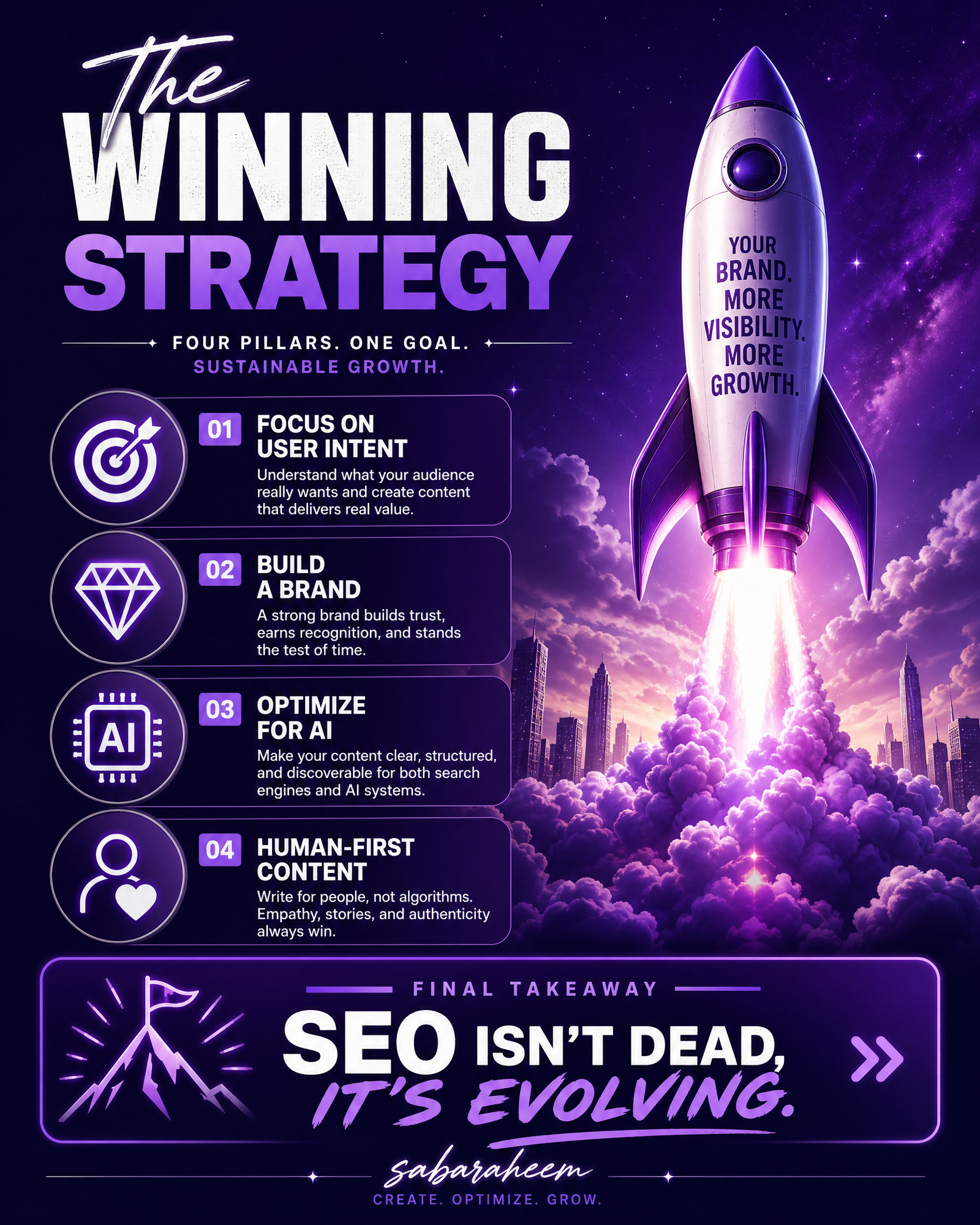
The brands winning both Google rankings and AI citations in 2026 aren’t doing two separate things. They’re creating content that is clear, specific, data-backed, and freshly maintained. The channel that surfaces that content varies. The quality standard doesn’t.
Before any of this — if you don’t know where your biggest gaps are, get a free SEO audit first. Fix the foundation before building on top of it.
Everything Else I’ve Written That Connects to This Topic
| Article | Why It Connects |
|---|---|
| Google AI Overviews Just Changed How Citations Work | Where SEO and GEO meet — read this first |
| How to Track AI Brand Visibility | The measurement system for GEO in 2026 |
| Anthropic Hiring an SEO Lead — The GEO Signal | Why even AI companies need traditional SEO |
| ChatGPT Ads Changed the Rules of Marketing Forever | How AI advertising affects content visibility |
| How GEO Works — 8 Steps to Dominate Brand Visibility | The clearest GEO explainer on this site |
| Mastering SEO, AEO, and GEO for Maximum Visibility | How all three channels work together in 2026 |
| What Is the New SEO for AI? | The mindset shift from keyword SEO to AI-era SEO |
| AI Didn’t Kill SEO — It Killed Bad SEO | What actually survived the AI disruption |
| What Is the New SEO Strategy for 2026? | The updated playbook — start here if you’re rebuilding |
| The Best Strategy to Increase Website Traffic Today | Topical authority + semantic clusters explained |
| How Long Do SEO Results Actually Take? | Real case study — Ocean Massage Spa, 28 days to #1 |
| Beginner’s Guide to SEO: How It Works | The clearest SEO explainer for anyone starting fresh |
| Free SEO Audit Formula | Fix your foundation before building on top of it |
| The 3-Second Rule in Web Design and SEO | Why your first impression also affects AI crawlability |
| SEO in 2026 — What’s Different | The AI-first search world and what it means for rankings |
| Why Your Personal Story Is Your Best SEO Strategy | E-E-A-T, named authorship, and AI citation signals |
| Link Building Strategies That Actually Work in 2026 | Third-party brand mentions + traditional backlinks |
| Link Building for SaaS Startups — High-Authority Backlinks | How to earn links that also build AI citation authority |
| Keyword Research for SaaS — Beyond Search Volume | Intent-based keywords for GEO content strategy |
| Content Marketing Funnels for SaaS | How content maps to buyer stages + AI citation formats |
| Best AI SEO Certifications and Tools in 2026 | The toolstack for GEO practitioners |
| Parasite SEO — Rank Fast on High-Authority Sites | Using third-party platforms to build AI citation signals |
| Work With Me — SEO & GEO Strategy | Need hands-on help? Start here |

Sharing my journey and learnings in Tech and AI. As a Digital Marketing Expert, I help brands boost their visibility and sales with smart personal branding and the latest AI tricks.

Leave a Reply