|
Getting your Trinity Audio player ready… |
Table of Contents
| To track brand visibility in AI Mode in 2026: manually query your 10 to 20 target keywords weekly in Google AI Mode, ChatGPT Search, and Perplexity log whether your brand appears, in what context, and which competitors are cited alongside you. Measure four KPIs: Answer Inclusion Rate (how often you’re cited), Branded Search Volume lift (Google Search Console), AI Referral Traffic (GA4), and AI Share of Voice vs competitors. Free method works; paid tools like Semrush AI Toolkit, BrandMentions, and Otterly.ai automate it at scale. |
Introduction: The Visibility Gap Nobody Is Measuring
Here’s a question that should make every business owner and SEO professional uncomfortable: right now, while you’re reading this, someone is asking ChatGPT, Perplexity, or Google AI Mode a question directly related to your business. Is your brand part of the answer they’re getting?
Most businesses have no idea. They’re watching their Google Analytics dashboards, tracking keyword rankings, measuring bounce rates and completely missing the fact that a parallel search ecosystem has emerged where millions of their potential customers are finding answers every day without clicking a single organic result.
AI Mode in Google, ChatGPT Search, Perplexity AI, and Gemini are not future threats. They are current, active channels where brand visibility is being won and lost right now. The brands that are tracking this systematically are building compounding advantages. Those that aren’t are accumulating a visibility deficit they may not notice until it shows up as lost pipeline.
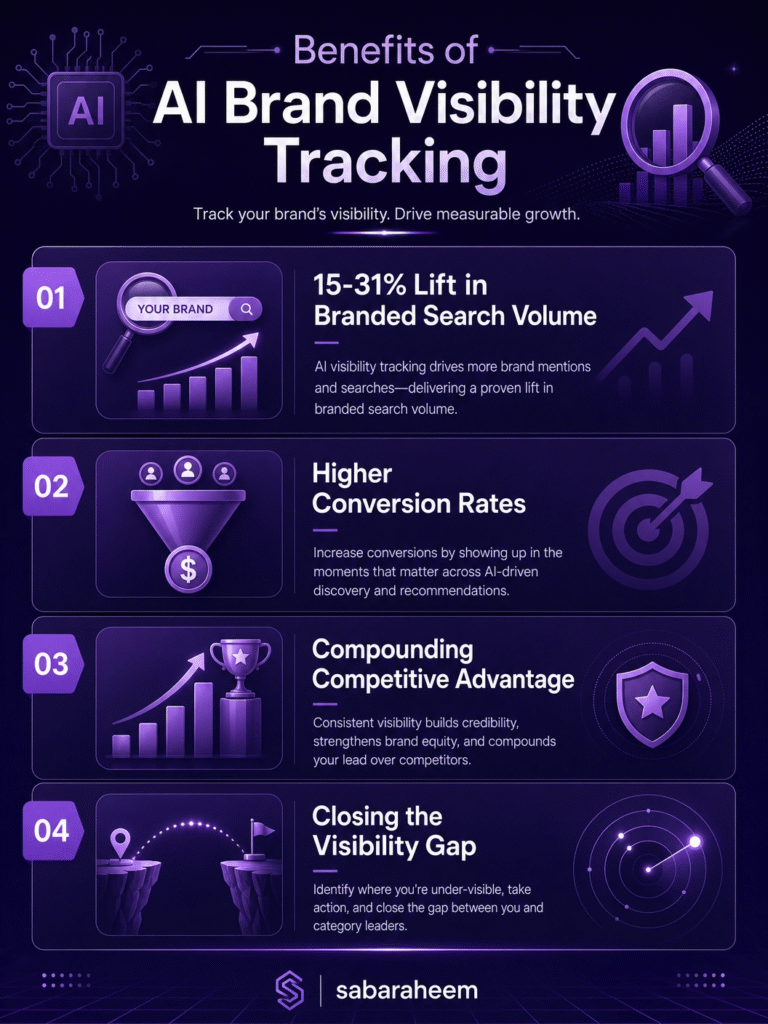
I’ve been tracking my own brand visibility across AI platforms since early 2025, and the patterns are clear: brands that optimize for AI citation consistently see 15 to 31% lifts in branded search volume within 8 to 12 weeks. The full context for why this matters is in how AI Overviews and zero-click search are reshaping SEO. This guide focuses specifically on the tracking and measurement side because you can’t improve what you don’t measure.

1. Why AI Mode Brand Visibility Is Different From Traditional SEO Visibility
Traditional SEO visibility is binary and measurable: you either rank in the top 10 for a keyword or you don’t. You can check your position daily with any rank tracker. AI Mode visibility is more nuanced and that’s why most people aren’t tracking it.
| Dimension | Traditional SEO Visibility | AI Mode Brand Visibility |
|---|---|---|
| What it measures | Your position in the ranked list of blue links | Whether your brand is cited, mentioned, or referenced in AI-generated answers |
| How to check it | Rank tracking tools (Ahrefs, Semrush, SERPWatcher) | Manual query testing + specialized AI monitoring tools |
| Frequency of change | Days to weeks after content updates | Can change with each query AI responses vary dynamically |
| Metric for success | Position 1 to 10, CTR, impressions | Answer Inclusion Rate, Branded Search Lift, AI Share of Voice |
| User awareness of your brand | User sees your title and meta in a list | User reads your brand name embedded in a trusted AI answer |
| Competitive context | You see competitor positions separately | You and competitors are cited in the same answer context matters |
| Traffic generated | Direct click to your site | May generate zero clicks but significant brand awareness |
The last row is the most important. AI Mode visibility often generates zero direct clicks but it consistently drives branded search growth, which converts at significantly higher rates than cold organic traffic. This is the ‘assisted conversion’ reality of AI search that the Google vs AI citations comparison documents with real data.
2. The 5 AI Platforms You Need to Track in 2026
Brand visibility in ‘AI Mode’ is not a single channel it’s five distinct platforms with different citation algorithms, different user bases, and different levels of importance for different industries. Here’s what to track on each.
| Google AI Mode (AI Overviews)AI Type: Retrieval-Augmented Generation pulls from Google’s live index | Frequency: Daily for your top 5 keywords, weekly for full 20-keyword list | Difficulty: Easy no paid tool required to startWhat to Track: Whether your domain is cited as a source, how often your brand name appears in the generated summary, which queries trigger AI Overviews in your nicheHow to Track It: Manual: Search your 20 target keywords in Google incognito mode screenshot every AI Overview appearance. Note the source URL cited (bottom of the Overview box). Log in a Google Sheet: keyword, date, cited or not, competitor citations |
| Perplexity AIAI Type: Real-time web crawling fetches and cites live content for every query | Frequency: Weekly Perplexity results update in real time with every query | Difficulty: Easy free Perplexity account sufficientWhat to Track: Source citations in Perplexity answers (shown as numbered footnotes), how prominently your brand is referenced vs competitors, whether your content appears in the Sources panelHow to Track It: Manual: Query your 20 keywords in Perplexity weekly screenshot the Sources panel on the right. Note position (Source 1, 2, 3 etc.) and exact quote used from your content. Log citation rate by keyword |
| ChatGPT Search ModeAI Type: RAG via Bing index + web browsing pulls live results when search mode is active | Frequency: Weekly focus on 10 highest-intent queries | Difficulty: Easy ChatGPT Plus subscription needed for reliable web search accessWhat to Track: Whether ChatGPT cites your domain as a source, how your brand is described when mentioned, accuracy of AI’s representation of your brand and offeringsHow to Track It: Manual: Ask ChatGPT (with web search enabled) queries related to your brand and competitors check if your site appears as a cited source. Also test non-brand queries in your niche to see if your content is surfaced |
| Gemini (Google’s AI Assistant)AI Type: Google’s multimodal AI deeply integrated with Google’s index and Knowledge Graph | Frequency: Monthly Gemini responses tend to be more stable than Perplexity | Difficulty: Easy free Google account sufficientWhat to Track: Whether Gemini mentions your brand in direct responses, how it describes your business when users ask about your category, accuracy of business informationHow to Track It: Manual: Ask Gemini questions like ‘What is [your brand]?’ and ‘Who are the best [your service] providers?’ note position, description quality, and competitor mentions |
| Microsoft Copilot (Bing AI)AI Type: Bing-integrated AI uses Bing’s index and web search for citations | Frequency: Monthly important primarily if you have significant Bing traffic | Difficulty: Easy free Microsoft account sufficientWhat to Track: Source citations in Copilot answers, brand mentions in category-related queries, accuracy of brand representationHow to Track It: Manual: Query Copilot with your target keywords note which sources are cited and whether your brand is mentioned or attributed |
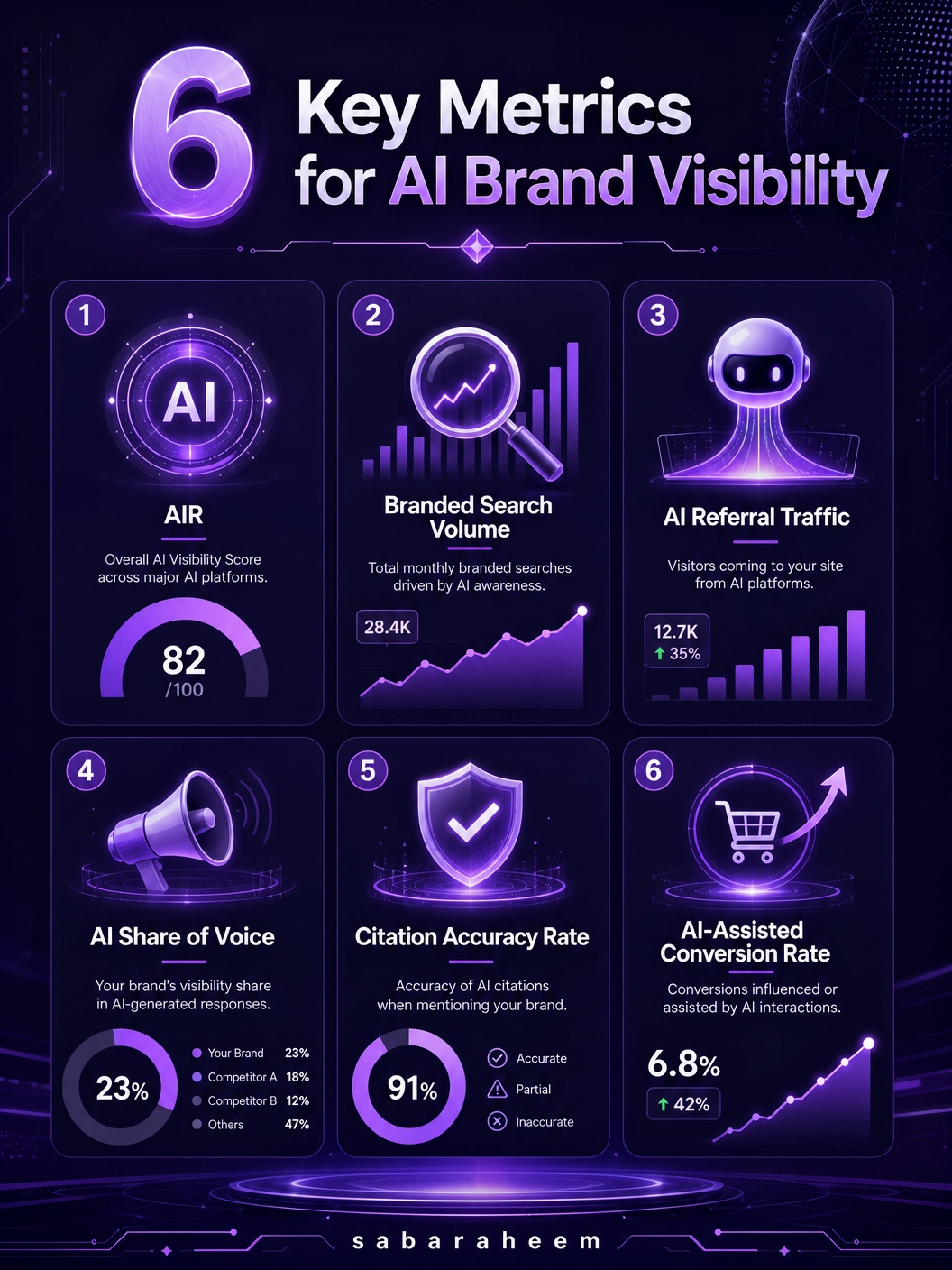
3. The 6 Key Metrics for AI Brand Visibility Tracking
Most businesses that start tracking AI visibility make one mistake: they measure the wrong things. Tracking whether you’re cited once is not useful. Tracking your citation rate over time, against a baseline, compared to competitors that’s actionable data.
| 1 | Answer Inclusion Rate (AIR)What it is: The percentage of your tracked keywords where your brand is cited in the AI-generated answerHow to measure: Count the number of queries (from your tracking list) where your brand appears in the AI answer. Divide by total queries tracked. Track weeklyTarget: Baseline in Week 1, then aim for 15%+ improvement quarter over quarter |
| 2 | Branded Search VolumeWhat it is: How many people are directly searching for your brand name in Google a reliable proxy for AI-driven brand awarenessHow to measure: Google Search Console Performance tab filter by queries containing your brand name. Track monthly trendTarget: If AI citations are working, branded search should grow 10 to 30% over 90 days |
| 3 | AI Referral TrafficWhat it is: Direct sessions to your website referred from AI platforms captured in GA4How to measure: GA4 Reports Acquisition Traffic Acquisition. Filter for sessions from perplexity.ai, chatgpt.com, and bing.com. Also check for dark social referrals using UTM tracking on AI-shared linksTarget: Set a baseline in Month 1. Expect 5 to 20% of your new referral traffic to come from AI platforms within 6 months of active optimization |
| 4 | AI Share of VoiceWhat it is: What percentage of AI citations in your category go to your brand vs competitorsHow to measure: Track 20 category keywords across all 5 platforms. For each query, count total brands cited. Calculate your brand’s appearances as a percentage of total. Compare against top 3 competitorsTarget: Aim to close the gap with your top competitor within 6 months. In most niches, the top brand has 30 to 50% AI Share of Voice |
| 5 | Citation Accuracy RateWhat it is: How accurately AI systems represent your brand, services, and claims when they do cite youHow to measure: When your brand is cited, read the AI’s description carefully. Flag inaccuracies (wrong pricing, outdated services, incorrect descriptions). Track % of citations that are accurate vs inaccurateTarget: Target 90%+ accuracy. Fix inaccuracies through entity optimization and structured data updates |
| 6 | AI-Assisted Conversion RateWhat it is: Conversions from users who were exposed to your brand via AI citations before converting through another channelHow to measure: GA4 multi-touch attribution configure ‘data-driven attribution’ model. Identify conversion paths that include AI referral touchpoints even when the final session came from a different channelTarget: Expect 5 to 15% of conversions in AI-optimized niches to have an AI touchpoint in the conversion path |

4. Free Method: Building Your AI Visibility Tracking System from Scratch
You don’t need expensive tools to start tracking AI brand visibility. This free system produces actionable data within the first week and scales into a proper monitoring dashboard over 30 days.
Step 1: Build Your Keyword Tracking List
Choose 20 keywords across three categories:
- Brand queries (5 keywords): Your brand name, your name + service, your brand name + review, your brand name + vs competitor
- Category queries (10 keywords): The terms your ideal customer searches when looking for what you offer not branded
- Problem queries (5 keywords): Questions your audience asks when they have the problem you solve
Use Google Trends to identify which queries in your niche are growing prioritize keywords with rising search interest for your tracking list.
Step 2: Create Your Tracking Spreadsheet
| Column | What to Record | Example Entry |
|---|---|---|
| Date | Date of query | 2026-05-15 |
| Keyword | The exact query tested | best SEO consultant for SaaS |
| Platform | Which AI platform queried | Google AI Mode |
| Brand Cited? | Yes / No / Mentioned indirectly | Yes |
| Citation Position | Where in the answer (1st, 2nd, 3rd source etc) | 2nd source |
| Competitor Citations | Which competitors appeared in the same answer | Competitor A, Competitor B |
| Accuracy | Is the AI’s description of your brand accurate? | Accurate |
| Notes | Any unusual observations | AI used our exact case study data |
Step 3: Weekly Query Routine 20 Minutes Every Monday
- Open Chrome incognito mode this prevents personalization from affecting AI results
- Query all 20 keywords in Google AI Mode screenshot every appearance, note non-appearances
- Query all 20 keywords in Perplexity note source citations and position
- Query your top 10 highest-intent keywords in ChatGPT with web search enabled
- Update your tracking spreadsheet calculate that week’s Answer Inclusion Rate
- Check Google Search Console update your branded search volume column. Full methodology in the complete AI brand visibility tracking guide
5. Paid Tools That Automate AI Visibility Tracking
Manual tracking works well up to 20 to 30 keywords. For agencies managing multiple clients, or brands tracking 100+ keywords, automation becomes essential. These tools are worth the investment.
| Tool | What It Automates | Best For | Price (USD/month) | AI Platforms Covered |
|---|---|---|---|---|
| Semrush AI Toolkit | AI Overview keyword tracking, brand mention monitoring, competitive AI share of voice | Agencies and mid-market brands | From $139 | Google AI Mode, some Perplexity |
| Otterly.ai | Brand mention tracking inside ChatGPT, Gemini, and Perplexity responses dedicated AI SOV tool | Brand teams focused on AI visibility | From $49 | ChatGPT, Gemini, Perplexity, Copilot |
| BrandMentions | Real-time brand monitoring across web + AI platforms alerts when brand is mentioned | Businesses needing immediate notification | From $49 | AI content mentions across web |
| Authoritas | Enterprise AI Share of Voice tracking multi-client, multi-platform dashboards | Large agencies, enterprise brands | From $250 | Google, Bing AI, Perplexity |
| Ahrefs AI Visibility | Content gap analysis for AI citations, domain-level AI appearance tracking | SEO teams optimizing content for AI | From $129 | Google AI Mode primarily |
| GoodieAI | AI search visibility scoring free tier available for small brands | SMBs and solopreneurs new to AI tracking | Free to $49 | Multiple AI platforms |
| Which Tool Should You Start With?Budget under $50/month: Start with the free manual method + Otterly.ai. It covers ChatGPT, Gemini, and Perplexity the three fastest-growing AI search platforms.Budget $100 to $200/month: Add Ahrefs AI Visibility for content optimization alongside Otterly.ai for platform monitoring.Agency / Enterprise: Authoritas for multi-client AI Share of Voice + Semrush AI Toolkit for integrated SEO and AI tracking in one platform. |
6. How to Interpret Your AI Visibility Data
Collecting data is only valuable if you know what it means and what to do about it. Here’s how to interpret the four most important patterns you’ll see.
Pattern 1: High Organic Rankings but Low AI Citation Rate
You rank well in traditional search but rarely appear in AI answers for the same keywords. This means your content structure is optimized for keyword algorithms but not for AI extraction.
Fix: Restructure your top 10 organic-ranking posts with direct 40-60 word answers under question-format H2 headings. Add FAQ Schema. This typically produces AI Overview appearances within 4 to 8 weeks. Full restructuring guide in how to optimize content for Google AI Overviews.
Pattern 2: Cited in AI Answers but Inaccurately Described
The AI mentions your brand but describes your services incorrectly, uses outdated information, or misattributes capabilities. This happens when your entity data is inconsistent or incomplete.
Fix: Update your Google Business Profile with precise, current service descriptions. Ensure your About page, LinkedIn company page, and website homepage all describe your brand identically. Add Organization Schema with a detailed description field. Inaccurate AI citations can actually harm your brand a user who follows an inaccurate AI answer and has a bad experience attributes the failure to you, not the AI.
Pattern 3: Competitors Consistently Cited Instead of You
Your competitors appear in AI answers for queries where you have equivalent or better content. This is a topical authority gap the AI considers your competitors more authoritative on that subject, even if individual pieces of content are comparable. Fix: Build a content cluster around the topic where you’re losing to competitors. The cluster architecture that establishes topical authority is covered in the content marketing funnel for topical authority.
Pattern 4: AI Citations Increasing but Branded Search Flat
You’re appearing in AI answers more frequently but your branded search volume isn’t growing. This suggests the AI is citing you but your brand name isn’t memorable enough in context users see your domain URL cited but don’t register it as a brand worth searching for.
Fix: Strengthen your brand entity presence. Publish more content under your personal name (the author, not just the company). Build a recognizable personal brand that users remember from AI answers. This is exactly why your personal story is your best SEO and brand strategy people search for people they remember, not URLs they half-noticed.
7. Improving Your AI Visibility Based on What You Track
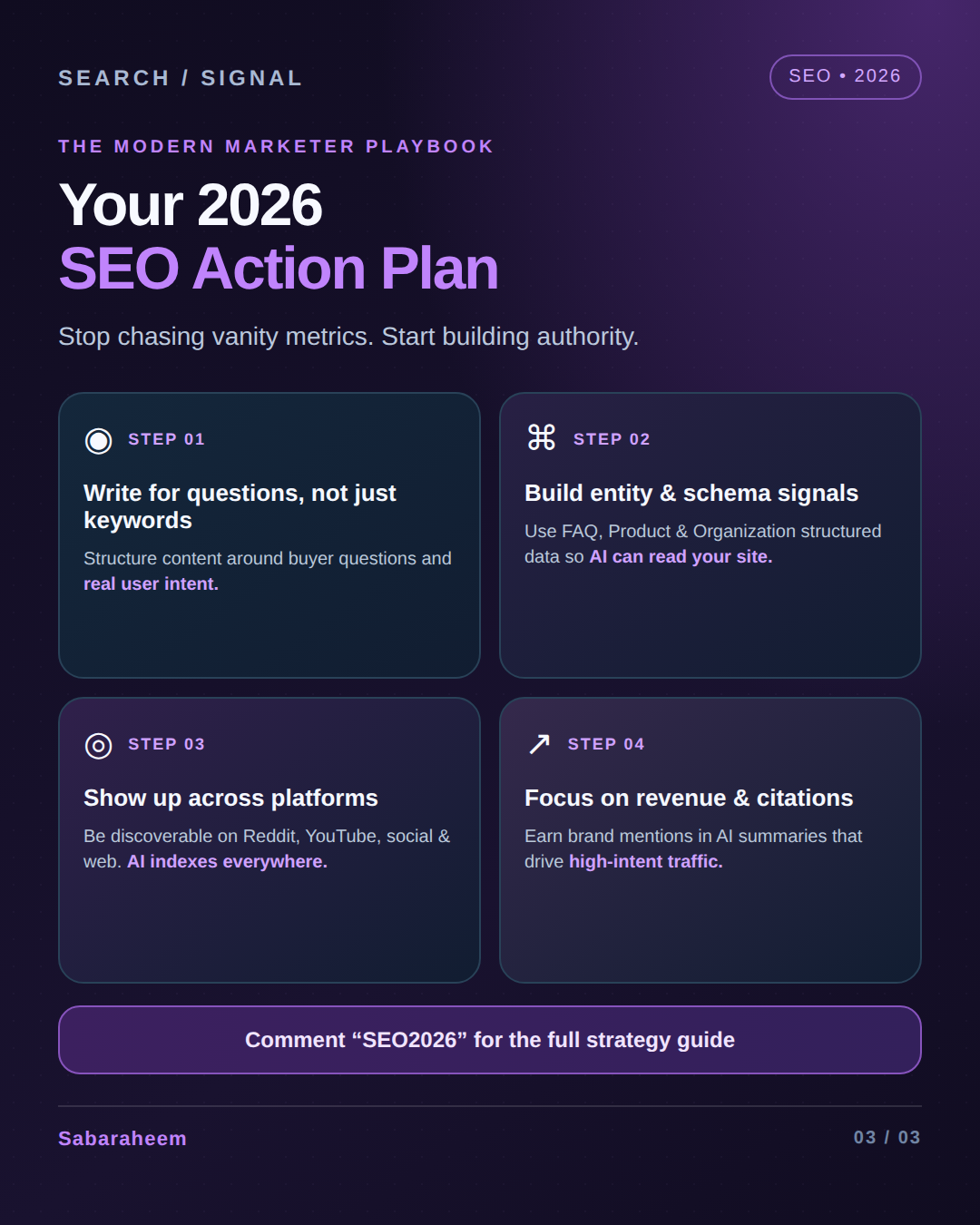
Tracking tells you where you are. This section tells you how to improve. The three levers for AI brand visibility improvement in order of impact:
Lever 1: Content Structure (Highest Impact, Fastest Results)
- Rewrite every H2 heading as a direct question that mirrors how users phrase queries
- Add a 40 to 60 word direct answer immediately after each H2 before any supporting detail
- Add FAQ Schema to every post the single highest-ROI technical action for AI citation
- Run a full SEO and AI readiness audit to identify which of your existing posts are closest to AI citation threshold and prioritize restructuring those first
Lever 2: Entity and Authority Building (Medium-Term, Compounding)
- Publish original research or data that can only be attributed to you AI systems cite original sources heavily
- Build your personal brand as a recognizable entity in your niche named authors with credentials earn more AI citations than anonymous corporate content
- Earn third-party citations: guest posts on DA 60+ sites, press mentions, and industry award appearances all build the external citation footprint that AI systems use as trust signals. See link building strategies that actually work in 2026
- Publish consistently on high-authority platforms like LinkedIn and Medium these are frequently cited by AI systems and build parallel visibility. The complete strategy is in parasite SEO 2026 ethical platform syndication
Lever 3: Technical AI Accessibility (Foundation, Must Not Be Ignored)
- Verify AI crawlers are not blocked in robots.txt: GPTBot, PerplexityBot, GoogleOther, CCBot
- Submit sitemap to both Google Search Console and Bing Webmaster Tools (ChatGPT uses Bing)
- Ensure pages load under 2.5 seconds slow pages are deprioritized by Perplexity’s real-time crawler. The 3-second rule in web design and SEO applies directly to AI crawler accessibility
- Add Author Schema and Organization Schema with complete sameAs links
8. Your 30-Day AI Visibility Tracking Sprint
Week 1: Set Up Your System
- Build your 20-keyword tracking list (5 brand, 10 category, 5 problem queries)
- Create your tracking spreadsheet using the template columns above
- Run your first full query session establish your Week 1 baseline across all 5 platforms
- Check robots.txt verify AI crawlers are not blocked
- Record your Google Search Console branded query volume as your Week 0 baseline
Week 2: First Optimizations
- Restructure your 3 highest-traffic posts with direct-answer format and FAQ Schema
- Run your second weekly query session note any changes from Week 1
- Set up BrandMentions or Otterly.ai for automated monitoring of your brand name
- Check GA4 set up a segment for sessions from perplexity.ai and chatgpt.com
Week 3: Expand and Analyze
- Run weekly query session 3 is your Answer Inclusion Rate changing?
- Identify your top competitor’s most-cited content what structure are they using?
- Publish or refresh one piece of content specifically targeting a query where a competitor is consistently cited over you
- Update your Google Business Profile and LinkedIn with consistent, current brand descriptions
Week 4: Measure, Report, and Plan
- Run weekly query session 4 calculate your 4-week Answer Inclusion Rate trend
- Check Google Search Console branded search volume any lift from Week 0 baseline?
- Check GA4 any AI referral traffic sessions?
- Set your 90-day AI visibility goals. If you want a professionally managed AI visibility tracking and optimization system, let’s work together
People Also Ask
What is AI Mode brand visibility?
AI Mode brand visibility refers to how frequently and accurately your brand is cited, mentioned, or referenced in AI-generated search answers across platforms like Google AI Mode (AI Overviews), ChatGPT Search, Perplexity AI, and Gemini. Unlike traditional SEO visibility (which measures your position in a ranked list), AI visibility measures whether AI systems choose to include your brand in synthesized answers.
How do I check if my brand appears in Google AI Overviews?
Search your target keywords in Google using an incognito browser window this removes personalization that could inflate your results. If an AI Overview box appears at the top of the results, check whether your domain is listed in the source citations (shown as small links at the bottom of the Overview). Log your appearances across 20 target keywords weekly to track your Answer Inclusion Rate over time.
Can I track brand mentions inside ChatGPT?
Yes, through two methods. Manual: Ask ChatGPT directly with web search enabled ‘What is [your brand]?’ and ‘[your category] service providers.’ Automated: Tools like Otterly.ai and BrandMentions specifically monitor AI platform responses for brand mentions and send alerts when your brand is referenced or misrepresented inside AI-generated content.
How long does it take to improve AI brand visibility?
For Perplexity AI (real-time crawling): improvements from content restructuring can appear within 48 to 72 hours of publishing. For Google AI Overviews: typically 4 to 8 weeks after content and schema optimization. For ChatGPT and Gemini (training data dependent): months to years for training data updates, though ChatGPT in search mode responds to content changes within weeks through Bing index updates.
What is AI Share of Voice?
AI Share of Voice measures what percentage of AI citations in your category or industry go to your brand versus competitors. To calculate it: track 20 category keywords across AI platforms, count total brand citations across all answers, and express your brand’s citations as a percentage of the total. A brand with 35% AI Share of Voice appears in AI answers for 35% of tracked queries, with the remaining 65% going to competitors or unbranded sources.
Frequently Asked Questions
Is AI brand visibility tracking worth it for small businesses?
Yes and it’s actually easier for small businesses to gain AI visibility quickly than large ones. AI systems, particularly Perplexity, don’t heavily weight domain authority. A well-structured, specific, locally-relevant post from a small business can earn Perplexity citations within days of publishing. For local businesses, tracking AI Mode visibility for local intent queries is especially valuable Google AI Mode increasingly synthesizes local business information and cites specific providers. Combine this with the Google Maps local ranking strategies for maximum local AI visibility.
What’s the difference between AI brand visibility and traditional brand monitoring?
Traditional brand monitoring tracks mentions of your brand across news, social media, forums, and review sites primarily for reputation management and PR. AI brand visibility tracking specifically monitors whether AI systems are citing your brand in their generated answers, how accurately they represent you, and how your citation rate compares to competitors. The two are complementary: strong traditional brand presence (media mentions, reviews, PR) feeds directly into better AI citation probability.
How do I fix inaccurate AI descriptions of my brand?
Inaccurate AI descriptions typically stem from inconsistent entity data across the web. Fix by: updating your Google Business Profile with accurate service descriptions, ensuring your About page and LinkedIn company profile use identical, precise language, adding Organization Schema with a detailed ‘description’ field, and publishing fresh content on your own site that accurately describes your current offerings. For Perplexity specifically, publishing a recent blog post with the accurate information often produces corrections within days.
Should I include competitor tracking in my AI visibility monitoring?
Absolutely competitive AI visibility data is as valuable as your own. When you track which competitors are consistently cited for queries where you aren’t, you’re identifying exactly where your content and authority gaps are. Analyze the structure of their cited content: are they using direct-answer format? More specific data? Stronger schema? This competitive intelligence directly informs your content optimization priorities. The competitive tracking methodology is part of the new SEO strategy for AI search in 2026.
What’s the quickest way to improve my Google AI Mode visibility?
The fastest path: identify a query where a competitor is consistently cited and you’re not. Visit their cited page and study the structure. They almost certainly have: a direct 40 to 60 word answer in the first paragraph, question-format H2 heading, and FAQ Schema. Publish or update your equivalent content with these elements. Submit to Google Search Console for re-crawl. This targeted approach, applied to 3 to 5 queries simultaneously, typically produces AI Overview appearances within 3 to 6 weeks. For the full optimization system, start with a free SEO and AI readiness audit.
| Start Tracking Your AI Brand Visibility TodayGet a free AI visibility audit discover where your brand stands in AI search right now.>>> Get Your Free AI Visibility Audit <<<Or book a strategy session build your AI visibility tracking system with expert guidance |

Sharing my journey and learnings in Tech and AI. As a Digital Marketing Expert, I help brands boost their visibility and sales with smart personal branding and the latest AI tricks.
Leave a Reply