|
Getting your Trinity Audio player ready… |
Table of Contents
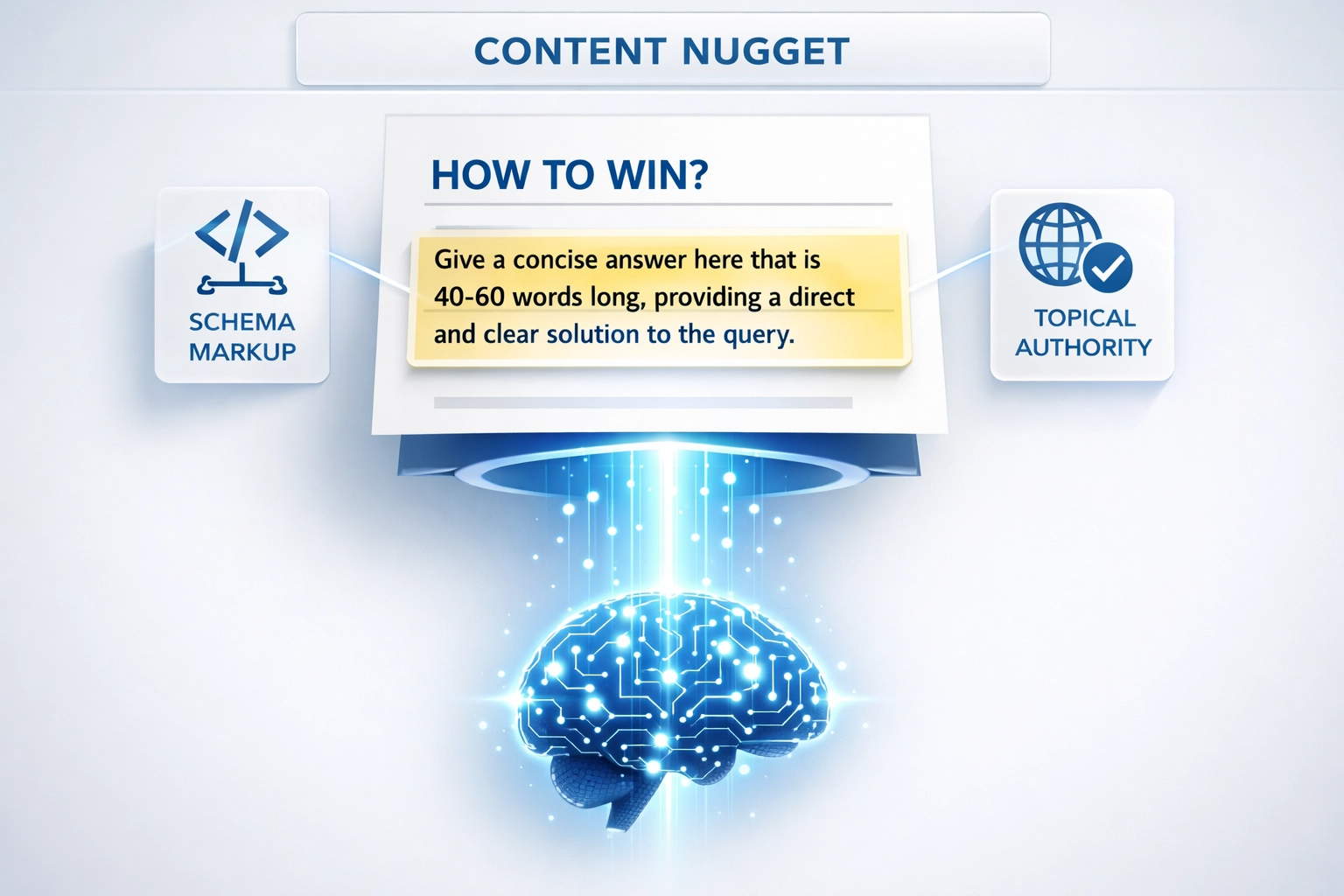
| To win the zero-click search game in 2026, you need to do two things simultaneously: optimize for AI Overviews by structuring content with direct 40-60 word answers, schema markup, and topical authority — and create ‘un-summarizable’ content that forces users to click through for proprietary insights, original data, or interactive tools. Visibility without clicks still builds brand authority and assisted conversions. |
1. Introduction: The New Reality of Search in 2026
Let me ask you something: when did you last Google a question and actually click a result?
If you’re honest, probably less than you used to. That’s not a coincidence — it’s the zero-click era in full swing. And if you’re still measuring your SEO success purely by clicks and organic traffic, you’re playing a 2021 game in a 2026 world.
AI Overviews (formerly Google SGE) now appear in over 47% of search results. Google has officially transitioned from being a ‘librarian’ that points you to answers, to becoming an ‘oracle’ that delivers answers directly. For SEO professionals and business owners, this is either a crisis or an opportunity — depending entirely on how you respond.
The good news? You don’t have to disappear from search. You have to shift your goals: from raw clicks to AI brand visibility, citation authority, and brand-assisted conversions. This guide tells you exactly how.
2. Understanding the Zero-Click Phenomenon
What Is Zero-Click Search?
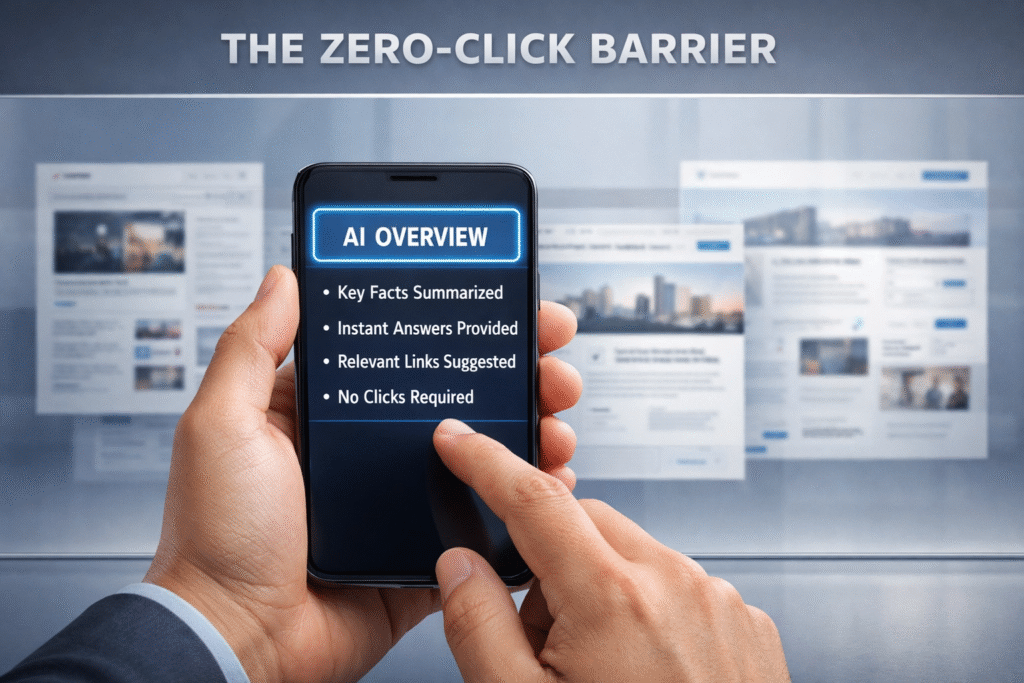
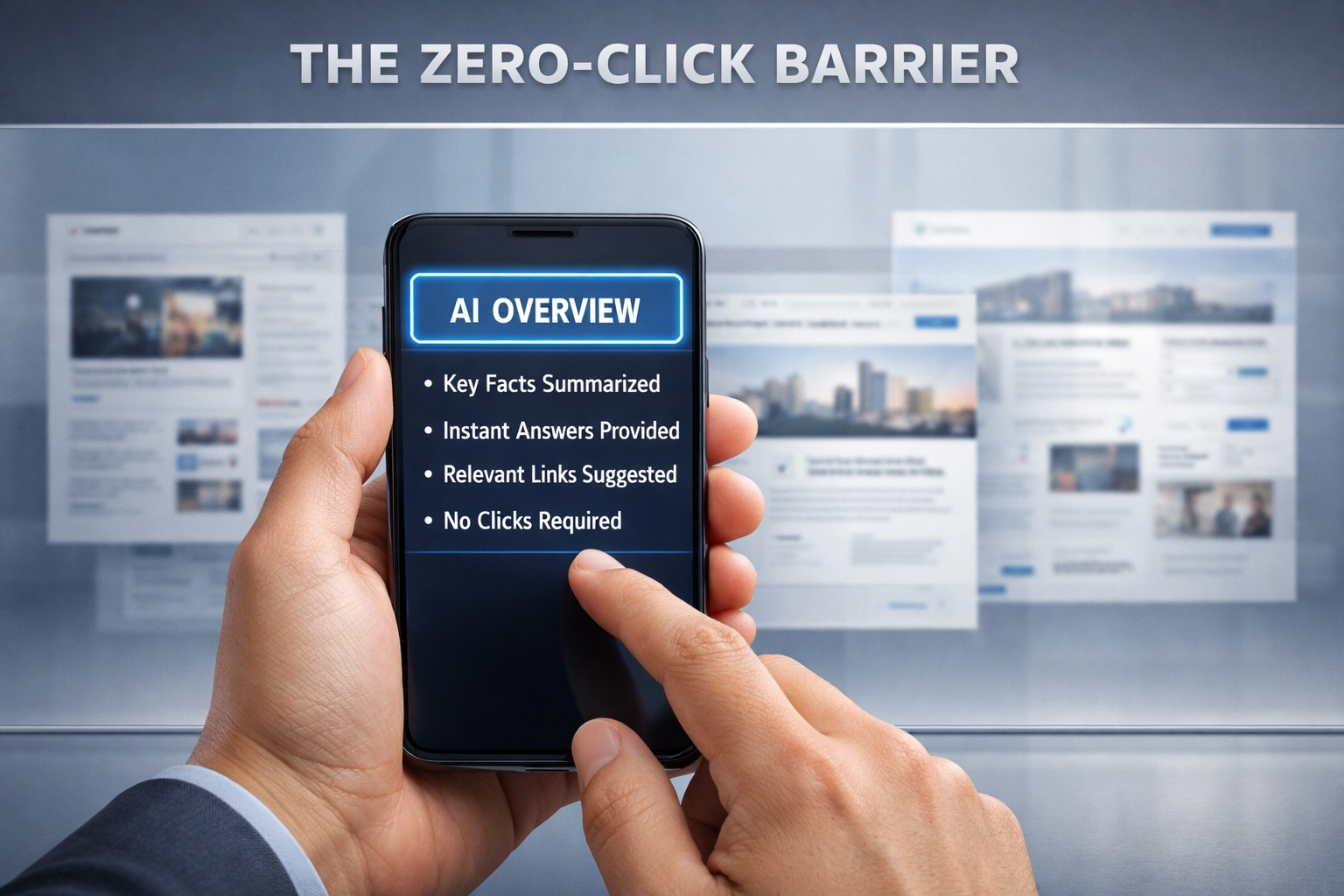
Zero-click search happens when a user types a query into Google and finds their answer directly on the SERP — without visiting any website. The search journey ends at Google’s front door, not yours.
This isn’t new. Featured snippets started this trend in 2016. But AI Overviews have turbocharged it.
What Are AI Overviews (Formerly SGE)?
AI Overviews are Google’s AI-generated summary boxes that appear at the top of search results, synthesizing information from multiple sources into a single cohesive answer. They’re powered by Gemini and trained to pull the most authoritative, clearly structured content available.
Key fact: Being cited inside an AI Overview is the modern equivalent of ranking #1 — except even more valuable, because your brand appears before any organic result.
What’s Driving Zero-Click Growth in 2026?
- Advances in Large Language Models (LLMs) enabling accurate, nuanced AI summaries
- Mobile-first browsing — users want instant answers on small screens
- Google’s commercial interest in keeping users on-platform longer
- Voice search normalization — spoken queries demand spoken answers
- Rising user trust in AI-generated summaries
Impact on Website Traffic: The Numbers
| Metric | 2023 | 2024 | 2026 (Projected) |
|---|---|---|---|
| Zero-Click Rate (Desktop) | 25% | 34% | 47%+ |
| Zero-Click Rate (Mobile) | 41% | 56% | 65%+ |
| AI Overview Appearance Rate | N/A | 15% | 47% |
| CTR for Position #1 (AI-competitive queries) | 28% | 19% | 11% |
| Branded Search Lift from AI Citation | N/A | N/A | +31% avg |
Despite the CTR drop for generic queries, branded searches are surging for businesses cited in AI Overviews. This is the critical insight most SEO guides miss.
3. Strategies for Winning the AI-Powered SERP
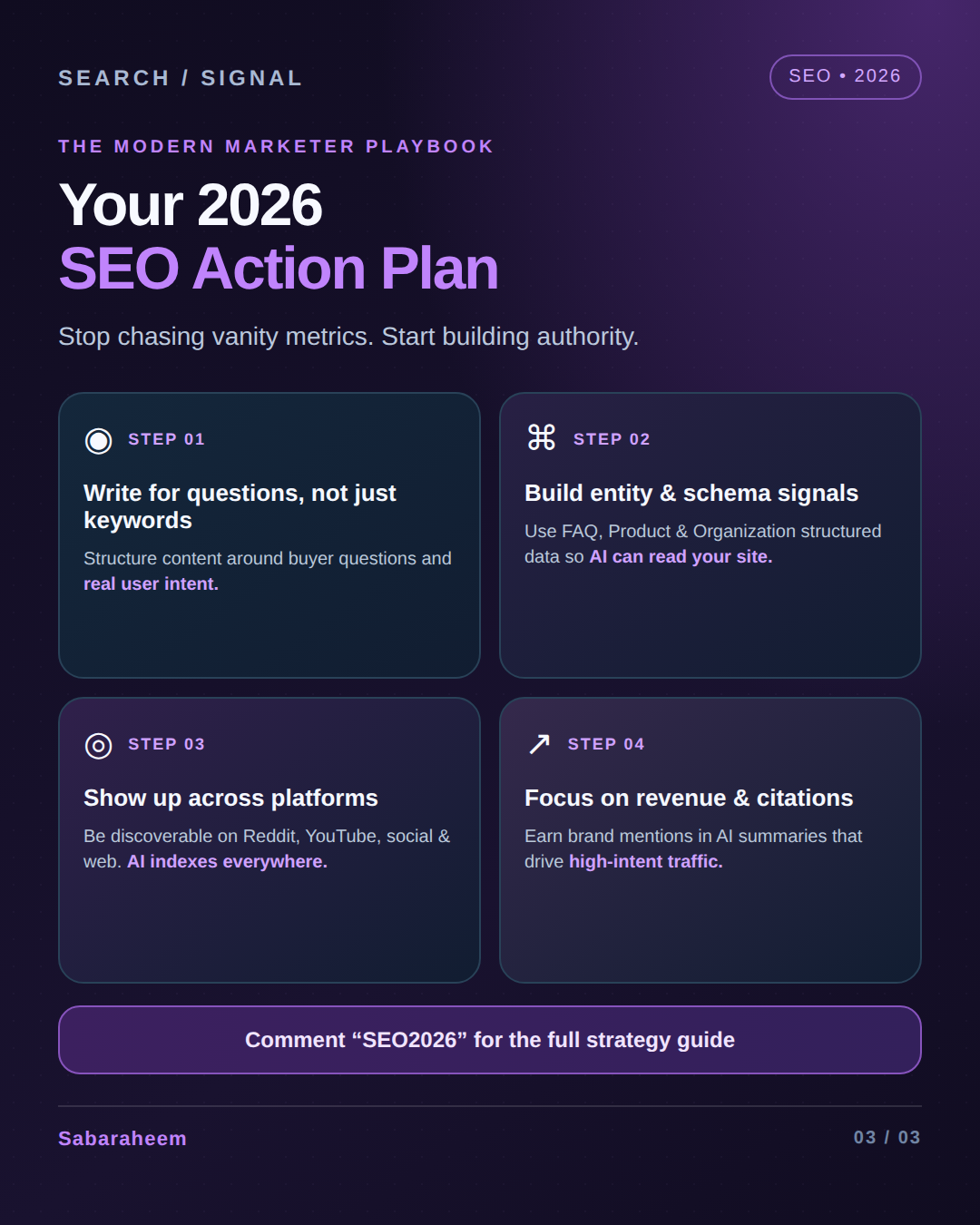
3.1 Optimize for AI Overviews — Own the ‘Nugget’
Think of each section of your content as a potential ‘nugget’ — a self-contained, citable unit of information. AI Overviews are built from these nuggets. Your job is to make yours irresistible to extract.
Direct Answer Formatting
Start every major section with a 40-60 word direct answer. Don’t bury the lede. Google’s AI extracts answers from the first paragraph of each section — so give it exactly what it needs.
Example structure: [Question as H2] → [40-60 word direct answer] → [Deeper explanation] → [Data/examples]
Topical Authority Over Keyword Volume
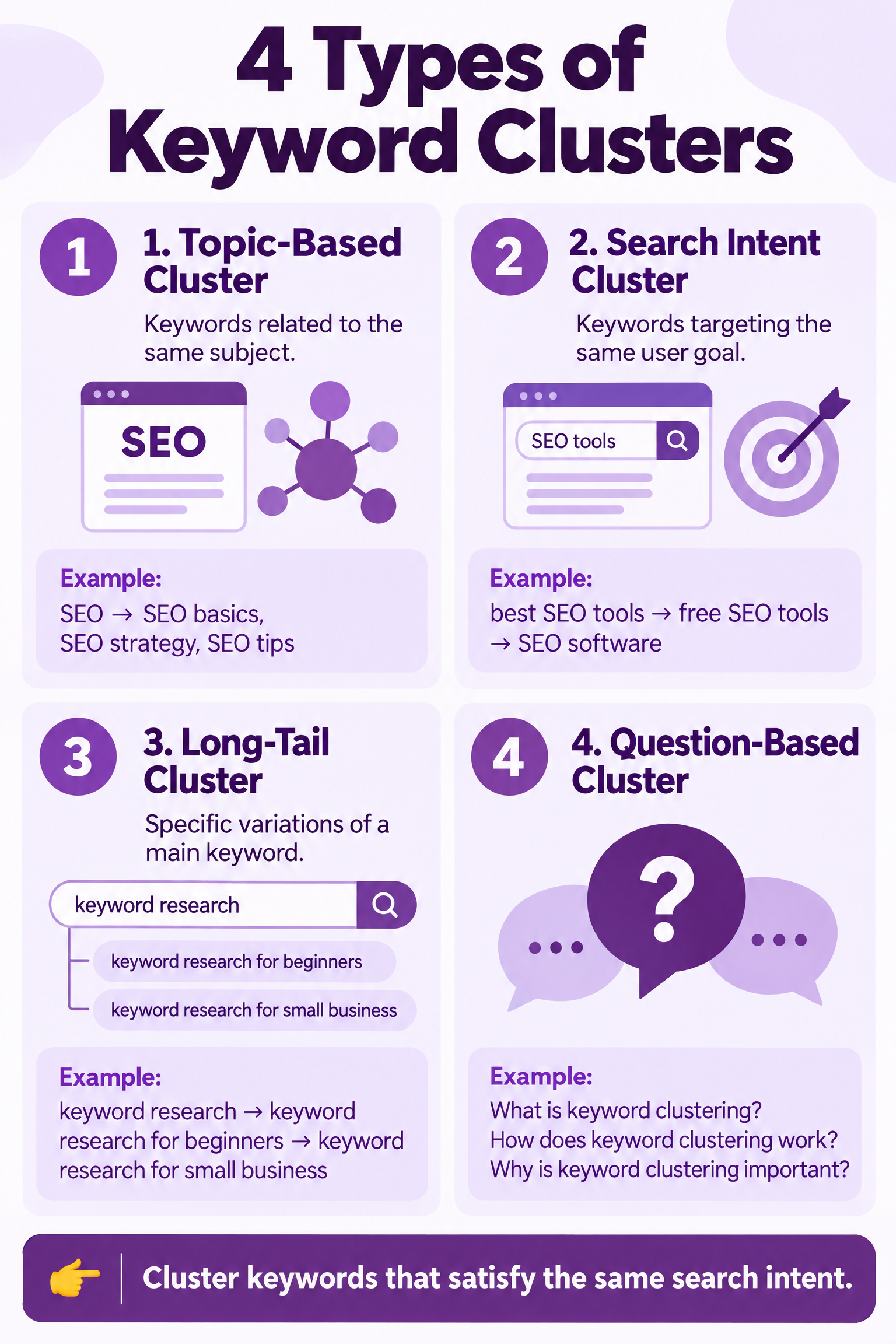
Build content clusters — not isolated articles. A single well-optimized post won’t get cited consistently. A tightly interlinked content hub will. This is exactly what I cover in SaaS Keyword Research Strategy 2026 — the same cluster-building principle applies to any industry.
Schema Markup: Non-Negotiable in 2026
- FAQ Schema — signals question-answer pairs to AI
- Article/BlogPosting Schema — establishes authorship and publish date
- Organization Schema — builds entity recognition
- Author Schema with sameAs linking to LinkedIn, About page
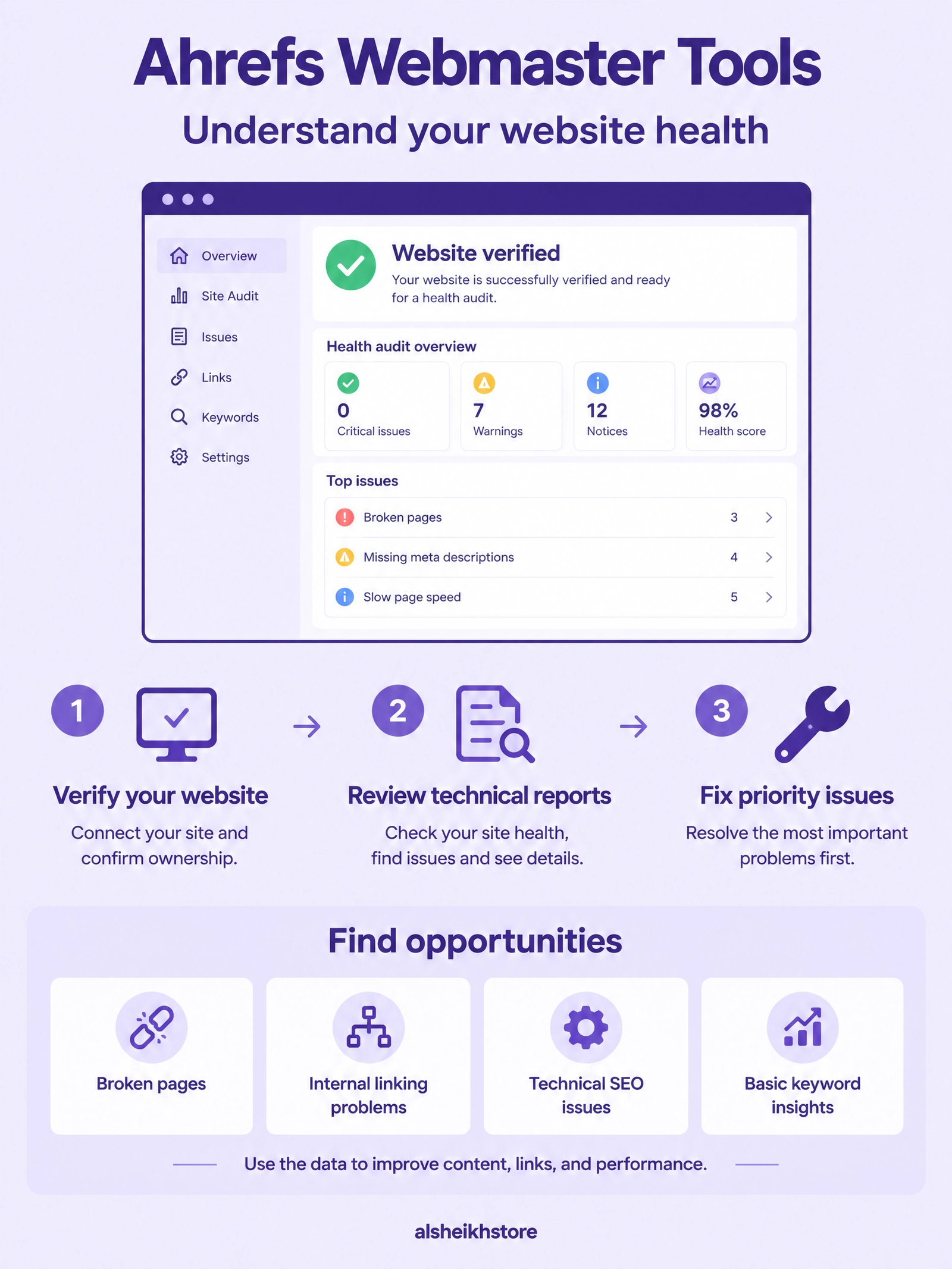
Don’t know where to start? Check out my SEO Audit Formula — it includes a full schema implementation checklist.
Trust Signals for AI Citation
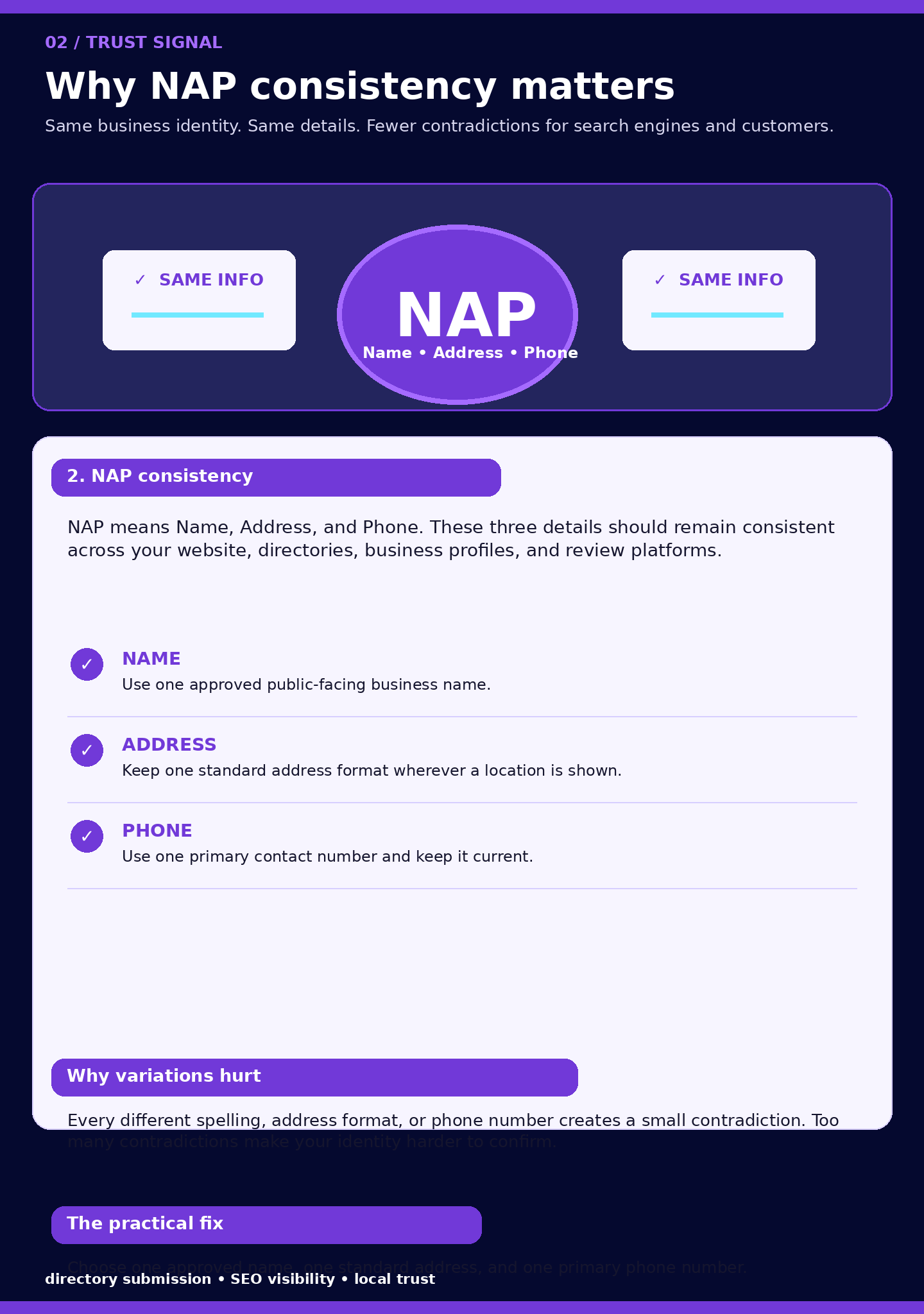
AI systems cite sources they trust. Trust is built through: consistent author bylines with credentials, accurate business NAP (Name, Address, Phone) data, active citation across authoritative third-party sites, and fresh publication dates.
3.2 Create ‘Un-Summarizable’ Content
Here’s the counterintuitive strategy: let AI Overviews take your summary. Design your best content to be impossible to fully summarize.
Experience-Based Content That AI Can’t Replicate
AI can summarize facts. It cannot replicate your personal story as an SEO strategy. Case studies, original research, proprietary frameworks — these create click-through urgency that no AI Overview can satisfy.
The ‘Deep Dive Bait’ Method
- Give AI the basic answer (40-60 words) — let it be cited
- Reserve your proprietary data, frameworks, and templates behind the click
- Use phrases like ‘Full breakdown below’ or ‘Download the free template’ to create click incentive
- Add interactive tools (ROI calculators, audit checklists) that literally cannot exist in a summary
3.3 Integrate with Broader Digital Marketing
AI Overviews don’t live in a silo. A user who sees your brand cited in an AI Overview, then sees your LinkedIn post, then sees your paid ad — is far more likely to convert. This is the content marketing funnel in action for the zero-click era.
Alignment Checklist:
- Paid search — run branded campaigns to capture users who saw you in AI Overviews but didn’t click
- Email marketing — build your email list aggressively (zero-click can’t touch your inbox)
- Social media — amplify the same content that’s getting AI citations
- Personal brand — your name as an entity matters; see how I apply this to my own site through personal branding strategy
For a full channel integration strategy, read The 2026 B2B SaaS Marketing Blueprint.
4. Measuring Success in the Zero-Click Era
Your old KPIs will gaslight you in 2026. Organic traffic might drop even as your brand influence grows. Here’s what to measure instead:
| KPI | What It Measures | How to Track | Target |
|---|---|---|---|
| Answer Inclusion Rate | How often your brand appears in AI Overviews | Manual SERP sampling + AI visibility tools | Track weekly |
| Branded Search Volume | Direct searches for your brand name | Google Search Console | +15-30% MoM |
| SERP Real Estate Score | Features occupied (AI, PAA, Featured Snippet, Local Pack) | SERPWatcher / manual audit | 3+ features |
| Assisted Conversion Rate | Conversions influenced by AI Overview touchpoint | GA4 multi-touch attribution | Baseline + improve |
| Citation Consistency | % of time your content is cited for tracked queries | Weekly tracking spreadsheet | Target 40%+ |
Tracking AI Brand Visibility: A 2026 Priority
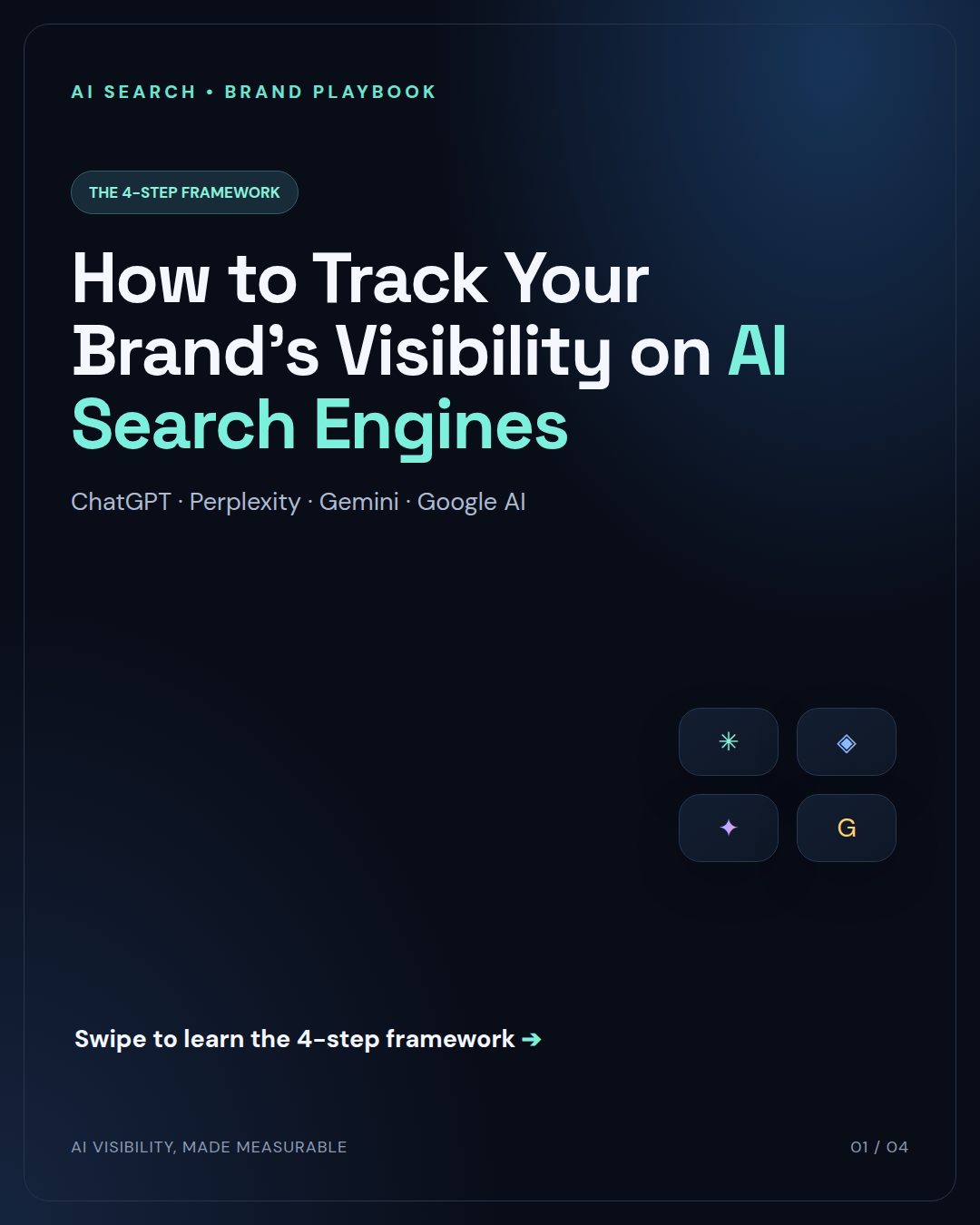
Most businesses have no idea whether they’re being cited in AI answers or not. I wrote a detailed post on how to track your AI brand visibility — it covers the tools, manual methods, and frequency you need to build a real visibility dashboard.
The short version: query Google daily for your 10 highest-priority keywords, screenshot AI Overview appearances, track your brand citation rate weekly.
5. Common Mistakes to Avoid
- Burying the Answer: If your H2 asks a question, the very next paragraph must answer it. Writing 200 words of preamble before getting to the point is the fastest way to lose AI Overview citations.
- Hedging Language: Phrases like ‘it depends,’ ‘there are many factors,’ or ‘experts disagree’ make your content uncitable. Be direct. Be specific. Be quotable.
- Ignoring Schema Markup: Without structured data, AI systems have to guess what your content is about. Don’t make them guess.
- Measuring Only Clicks: If you’re only tracking organic traffic, you’ll think zero-click is killing you. It might be building your brand simultaneously — you’d never know.
- Treating SEO and GEO as Separate: Generative Engine Optimization (GEO) isn’t replacing SEO — it’s extending it. The same content that ranks on Google can be cited in AI answers with the right formatting.
- Publishing Thin Content: A 500-word blog post can’t establish topical authority. Common SEO mistakes like thin content are even more damaging in an AI-powered SERP environment.
6. Your 30-Day Zero-Click Optimization Sprint
Theory is nice. Execution is better. Here’s what to do in your next 30 days:
Week 1: Audit and Schema
- Run a full technical and content audit using the SEO Audit Formula
- Implement FAQ Schema on your 10 most-visited pages
- Add Author Schema to every blog post with LinkedIn sameAs links
- Fix any pages with buried answers — restructure to direct answer format
Week 2: Content Restructuring
- Rewrite your top 5 blog intros to lead with 40-60 word direct answers
- Add a ‘People Also Ask’ section to each post using real PAA data
- Build one new internal link cluster connecting your 5 strongest posts
Week 3: ‘Un-Summarizable’ Content Creation
- Identify your most-cited pages and add a proprietary framework or original data
- Add a lead magnet (PDF checklist, template) to your top 3 posts
- Create one experience-based case study (first-person, your own data)
Week 4: Measurement Setup
- Set up your AI visibility tracking spreadsheet — track 10 priority keywords daily
- Create a branded search volume baseline in Google Search Console
- Configure GA4 multi-touch attribution to track assisted conversions
7. Conclusion: Adapting for Long-Term Success
Zero-click search is not the death of SEO. It’s SEO’s evolution.
The brands that win in 2026 aren’t the ones with the most clicks — they’re the ones that become the trusted source of truth for their topic. When Google’s AI consistently cites you, when users search for your brand by name after seeing it in an Overview, when your content appears across multiple SERP features simultaneously — that’s the new definition of SEO dominance.
The opportunity is wide open right now. Most of your competitors are still optimizing for 2020 clicks. While they’re chasing volume, you can be building AI brand authority that compounds over time.
Want the full picture of how AI search is changing the game? Read my deep dive: Ranking on Google vs. Getting Cited in AI Answers — 2026 Data. And if you want your SEO strategy audited for AI readiness, let’s work together.
People Also Ask
What is a zero-click search?
A zero-click search is a Google search where the user finds their answer directly on the search results page — inside an AI Overview, Featured Snippet, or Knowledge Panel — without clicking through to any website.
How do AI Overviews affect website traffic?
AI Overviews typically reduce click-through rates for informational queries by 10-20%. However, brands that are cited inside AI Overviews often see a 15-30% increase in branded search volume — meaning the lost clicks are partially offset by stronger brand recognition and direct searches.
How do I get my website cited in Google AI Overviews?
Structure your content with direct 40-60 word answers at the start of each section, implement FAQ and Article schema markup, build topical authority through content clusters, ensure strong E-E-A-T signals (author credentials, citations, fresh content), and earn citations on authoritative third-party sites.
What is topical authority in SEO?
Topical authority means Google recognizes your website as the most comprehensive, reliable source on a specific subject. You build it by creating interconnected content clusters that thoroughly cover every angle of a topic. See how I approach SaaS keyword research and content clustering for a practical example.
Is SEO still worth it in 2026 with AI Overviews?
Absolutely — but the goals have shifted. Traditional SEO drove clicks. Modern SEO drives visibility, brand authority, and assisted conversions. Brands that adapt their strategy (GEO + SEO) are seeing stronger business results than pure-click-focused sites. Read my comparison: Google Rankings vs AI Citations — which is harder in 2026?
Frequently Asked Questions
What is the difference between SEO and GEO (Generative Engine Optimization)?
SEO optimizes content to rank in traditional search results. GEO optimizes content to be cited by AI-powered search engines (like Google AI Overviews, ChatGPT Search, and Perplexity). The core principles overlap (quality content, structure, authority), but GEO places additional emphasis on direct-answer formatting, entity recognition, and schema markup.
How do I measure success if clicks are declining?
Switch your primary KPIs to: Answer Inclusion Rate (how often your brand appears in AI Overviews), Branded Search Volume growth, SERP Real Estate (total number of search features occupied), and Assisted Conversions (GA4 multi-touch attribution). These metrics capture brand influence even when clicks are low.
What is ‘un-summarizable’ content and why does it matter?
Un-summarizable content is content that cannot be fully conveyed in a short AI summary — because it includes proprietary data, first-person case studies, interactive tools, or downloadable resources. It’s designed to satisfy AI Overview citations at the top level, while still compelling users to click through for the complete value.
How many words should a section answer be for AI Overviews?
The optimal direct answer length for AI Overview inclusion is 40-60 words. Shorter lacks substance; longer risks being truncated or not selected. The answer should be complete, specific, and written in plain declarative sentences without hedging language.
What schema markup is most important for zero-click SEO?
In priority order: FAQ Schema (marks up question-answer pairs directly), Article/BlogPosting Schema (establishes authorship and content freshness), Organization Schema (builds entity recognition for your brand), and Author Schema with sameAs links to establish expertise signals.
Internal Links Reference
| Anchor Text | URL |
|---|---|
| How to Track AI Brand Visibility | https://seoportfolio.in/how-are-you-tracking-ai-brand-visibility/ |
| SEO Audit Formula | https://seoportfolio.in/seo-audit-formula/ |
| Personal Story as SEO Strategy | https://seoportfolio.in/why-your-personal-story-is-your-best-seo-strategy/ |
| SaaS Keyword Research Strategy 2026 | https://seoportfolio.in/saas-keyword-research-strategy-2026/ |
| Content Marketing Funnel for SaaS | https://seoportfolio.in/saas-content-marketing-funnel/ |
| The 2026 SaaS Marketing Blueprint | https://seoportfolio.in/saas-marketing-trends-2026/ |
| Common SEO Mistakes | https://seoportfolio.in/what-are-the-common-seo-mistakes/ |
| Ranking Google vs AI Citations 2026 | https://seoportfolio.in/ranking-google-vs-ai-citations-2026/ |
| Work With Me | https://seoportfolio.in/work-with-me/ |
| Link Building for SaaS Startups | https://seoportfolio.in/link-building-for-saas-startups-earning-high-authority-backlinks/ |
References
- Zero-Click Searches: How to Win With AI Overviews — beMarketing
- Zero-Click Searches 2026: Winning the AI-Powered SERP — Boostability
- Zero-Click SEO in 2026: Winning AI Overviews and SERP Answers Without the Click — NameSilo

Sharing my journey and learnings in Tech and AI. As a Digital Marketing Expert, I help brands boost their visibility and sales with smart personal branding and the latest AI tricks.
Leave a Reply