|
Getting your Trinity Audio player ready… |
The link-building strategies that work best in 2026 focus on earning high-quality backlinks through value creation rather than manipulation. Whether you’re building links in Pakistan, targeting worldwide audiences, or focusing on specific regional markets, you can build backlinks without paying by creating original research that attracts natural citations, leveraging your personal SEO brand through LinkedIn thought leadership, implementing Backlinko-style skyscraper technique to improve existing content, building a compelling link building portfolio showcasing proven results, using digital PR to earn media coverage, and executing strategic broken link building. Your backlink strategy should prioritise topical relevance over raw domain authority. One link from a niche-relevant DR 40 site outperforms ten links from unrelated DR 70 sites. These free link-building strategies require time and effort investment but deliver sustainable results that paid links or PBN schemes never could. The latest SEO update 2026 made clear: Google’s algorithm can detect unnatural link patterns, making ethical white-hat link building the only viable long-term approach for improving your link profile.
Look, I’m going to be brutally honest. Most link building advice you’ll find is either outdated garbage from 2019 or theoretical nonsense from people who’ve never actually built links in competitive niches. People keep recommending the same tired tactics while real SEO practitioners are out here doing what actually works.
I’ve built links for competitive SaaS companies, local businesses, and personal SEO brands starting from absolute zero across Pakistan and worldwide markets. I’ve seen what moves rankings and what wastes months of effort. Let me show you exactly what works in 2026.
The Real Problem: Why Your Link Building Isn’t Working
Let me guess what you’ve been doing:
You’re following generic “link building course” advice. You took some Udemy link building course that taught directory submissions, blog commenting, and mass guest posting. You implemented everything exactly as taught. Your rankings haven’t moved an inch. That’s because those courses teach outdated link building strategies 2025 that stopped working years ago.
You’re obsessed with building an impressive link-building portfolio, but for the wrong reasons. You think showing clients “500 backlinks built” proves expertise. Reality check: those 500 links from random blogs probably have zero impact on rankings. What matters is having a link-building portfolio that showcases RESULTS: traffic increases, ranking improvements, revenue growth, not just link counts.
You’re trying to figure out how to build backlinks without paying, but you’re doing it wrong. You’re submitting to free directories, leaving blog comments with your URL, and participating in link exchange schemes. These free link building tactics don’t just fail, they actively harm your link profile with low-quality spam signals.
You don’t actually understand what a backlink strategy is. You’re randomly trying different tactics, hoping something works. That’s not a backlink strategy, that’s throwing spaghetti at the wall. A real link-building strategy requires understanding your niche’s link landscape, identifying realistic opportunities, and executing systematically over months.
You’re ignoring Backlinko link building principles. Brian Dean proved years ago that the skyscraper technique, data-driven content, and strategic outreach work. Yet people still chase quantity over quality, build links from irrelevant sites, and wonder why rankings don’t improve.
You’re not thinking about link building in digital marketing holistically. Link building isn’t isolated from content marketing, PR, or brand building. Your entire digital marketing strategy should naturally generate link opportunities, but most people treat links as a separate checkbox to tick.
Why Bad Link Building Destroys Your SEO
Here’s what actually happens when your link building sucks:
You waste 6-12 months building worthless links. You spend an entire year acquiring 300 backlinks from guest posts, directories, and blog comments. Your rankings stay flat. Your organic traffic doesn’t budge. You’ve invested hundreds of hours into links Google completely ignores or worse, penalizes.
Competitors with smarter link profiles outrank you despite having fewer links. Your competitor has 40 backlinks. You have 200. They rank #1 for every valuable keyword while you’re buried on page 3. Why? Their 40 links come from topically relevant industry authorities. Your 200 come from nowhere Google trusts.
Your link building portfolio actually hurts your reputation. You show potential clients or employers your SEO portfolio proudly displaying “300 backlinks acquired.” Anyone with actual SEO knowledge immediately recognises these are low-quality spam links. Your link-building portfolio signals incompetence, not expertise.
You can’t measure what works because you never developed a proper backlink strategy. You track total backlink counts but can’t correlate specific links to ranking improvements. You don’t know if guest posts work better than digital PR. You’re flying completely blind, unable to optimize because you lack any meaningful data.
You’re vulnerable to algorithm updates. Google’s latest SEO update 2026 specifically targeted unnatural link patterns. Sites relying on PBNs, paid guest posts, or link schemes saw ranking drops of 40-70%. Meanwhile, sites with organic, editorially-earned links from the same update barely noticed any change or actually improved.
The Solution: Link Building Strategies That Actually Work in 2026
Stop following outdated link building course material. Start implementing what’s proven to work in today’s SEO landscape.
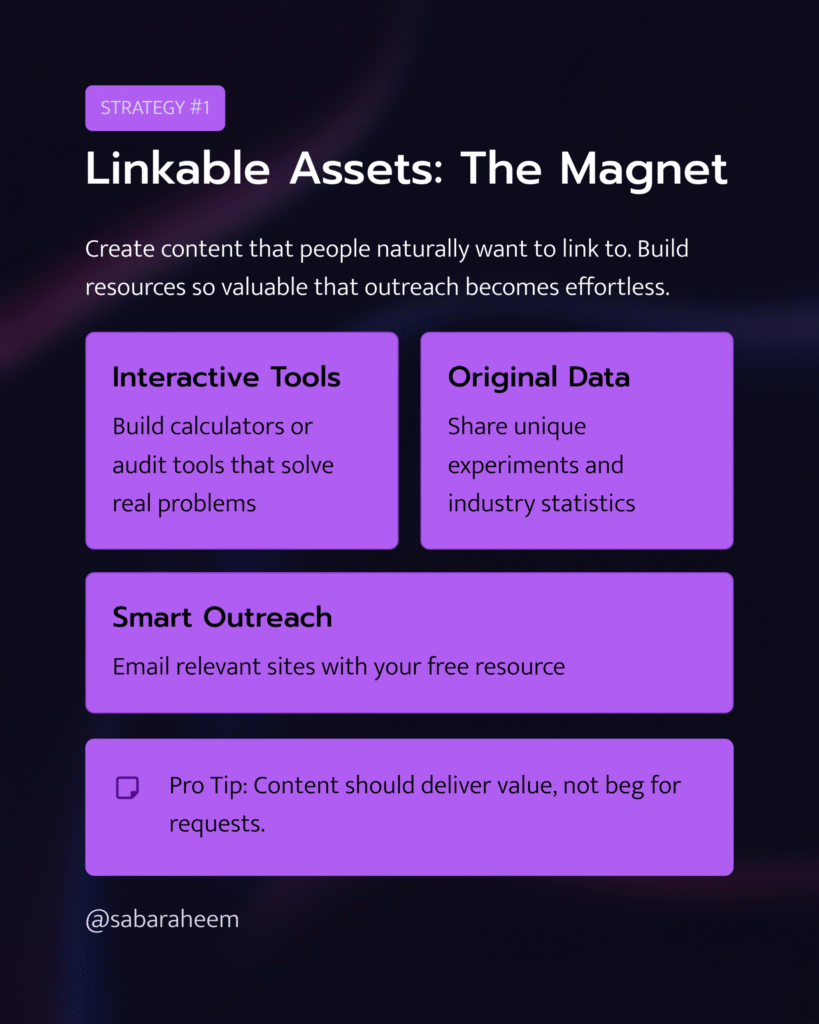
Strategy 1: Build a Personal SEO Brand (The Authority Multiplier)
This is hands-down the most powerful link building strategy nobody talks about. Building personal SEO branding creates an engine that generates links automatically.
Why personal branding drives link building:
When you’re recognized as an expert, opportunities come to you. Media outlets request quotes. Podcasts invite interviews. Blogs reference your insights. Your LinkedIn posts get shared widely. All of this creates natural, authoritative backlinks without any outreach.
How to implement:
Dominate LinkedIn with thought leadership: Post valuable SEO insights 3-5x weekly. Share original data, contrarian opinions, and detailed case studies. Comment meaningfully on other experts’ content. Your LinkedIn presence becomes a citation source people naturally link to.
Document results in your link building portfolio: Create a compelling SEO portfolio website showcasing specific results: “Increased organic traffic 347% in 6 months” with screenshots and methodology. This becomes linkable proof that media, blogs, and industry sites reference. Check our portfolio approach for examples.
Contribute thought leadership everywhere: Write for Search Engine Journal, Moz, Ahrefs blog. Speak at conferences. Host webinars. Each appearance builds authority and typically includes backlinks.
The compound effect: As your personal SEO brand grows, every content piece you create attracts links automatically. Publications actively seek YOU for quotes and contributions all including authoritative backlinks.
Strategy 2: The Backlinko Skyscraper Technique (Improved for 2026)
Brian Dean’s Backlinko link building skyscraper technique still works but the 2026 version requires more sophistication.
The original Backlinko approach:
- Find content in your niche with lots of backlinks
- Create something 10x better
- Reach out to sites linking to the original
The 2026 improvement:
Add original data or research: Don’t just write longer content. Include unique survey data, case studies, or analysis that competitors can’t replicate. Original data makes your content inherently more linkable.
Create visual assets: Include shareable infographics, charts, and data visualizations. Visual content gets linked 3x more than text-only articles.
Use AI for efficiency, not replacement: AI tools can help identify link opportunities and draft outreach templates ,but personalize every message manually. The combination of AI efficiency + human authenticity works better than either alone. Learn how Google AI Overviews changed the game for content strategy.
Target micro-niches first: Instead of competing for massive topics, dominate smaller sub-niches where your improved content can realistically earn links. Build authority incrementally.
Strategy 3: How to Build Backlinks Without Paying (Free Strategies That Work)
You don’t need a budget to build quality backlinks. You need strategy and effort.
HARO and journalist outreach (completely free):
Help A Reporter Out connects journalists with expert sources. Respond to 3-5 relevant queries daily with thoughtful, quotable insights. When featured, you earn authoritative backlinks from news sites and industry publications.
Cost: $0 Time investment: 30 minutes daily Results: 2-5 high-authority links monthly
Broken link building (free but time-intensive):
Use free tools like Check My Links chrome extension to find broken links on relevant sites. Create content addressing the same topic, then reach out suggesting your resource as a replacement.
The 2026 approach: Use AI to scale broken link discovery across hundreds of sites quickly. But personalize every outreach message, and manually explain specifically why your resource benefits their readers.
Resource page link building (free and effective):
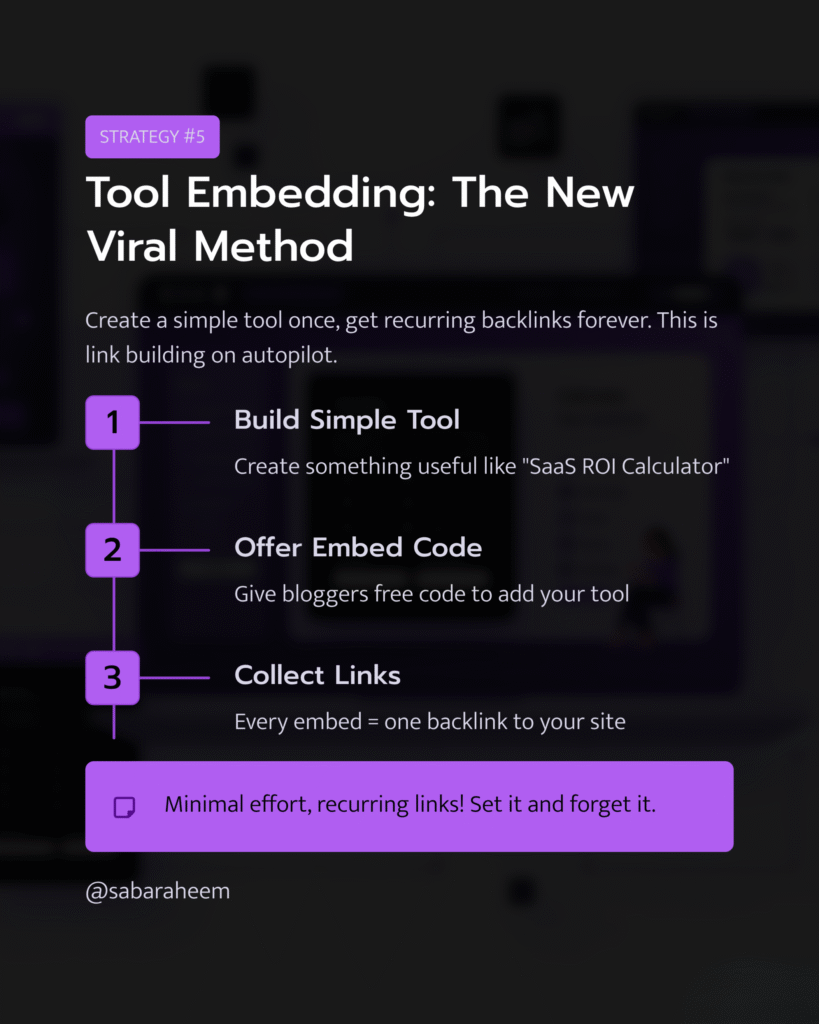
Industry resource pages exist specifically to link out to valuable content. Create genuinely helpful resource guides, templates, calculators, checklists, and then request inclusion on relevant resource pages.
How to find them: Search “[your industry] resources,” “[your topic] tools,” “[your niche] best guides.”
Unlinked brand mentions (free link reclamation):
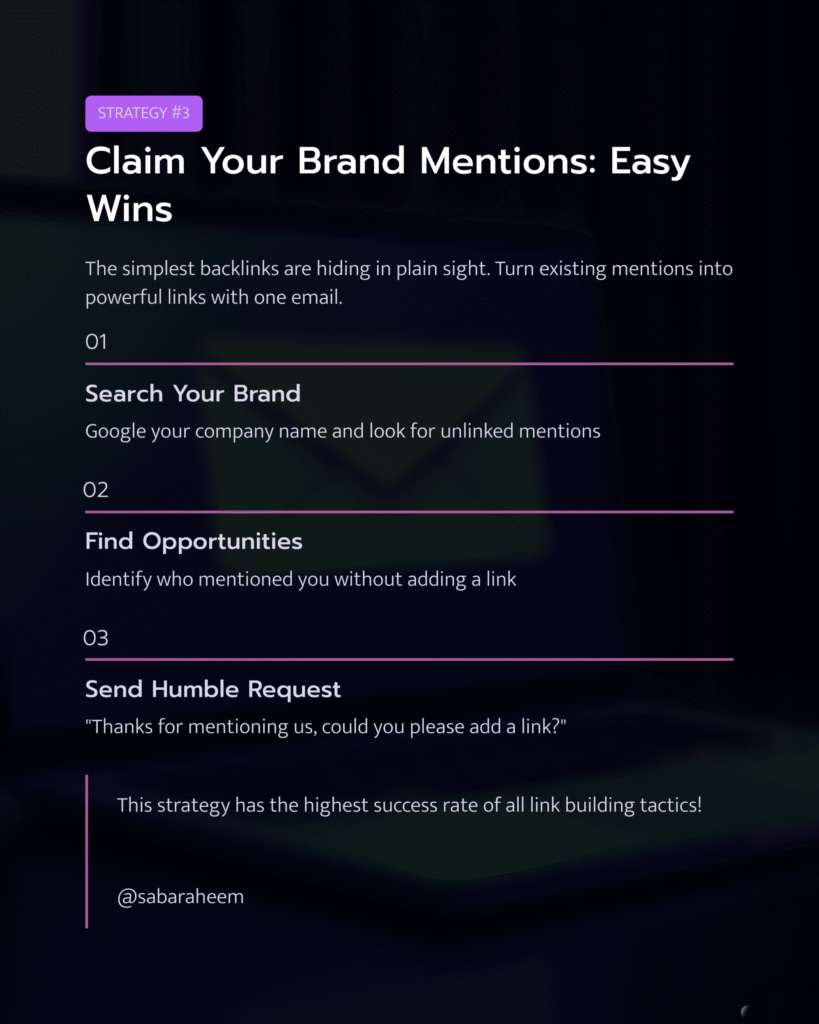
Set up Google Alerts for your brand name, products, or key team members. When someone mentions you without linking, politely request they add a link. This is one of the easiest free backlinks to acquire.
Community participation (free relationship building):
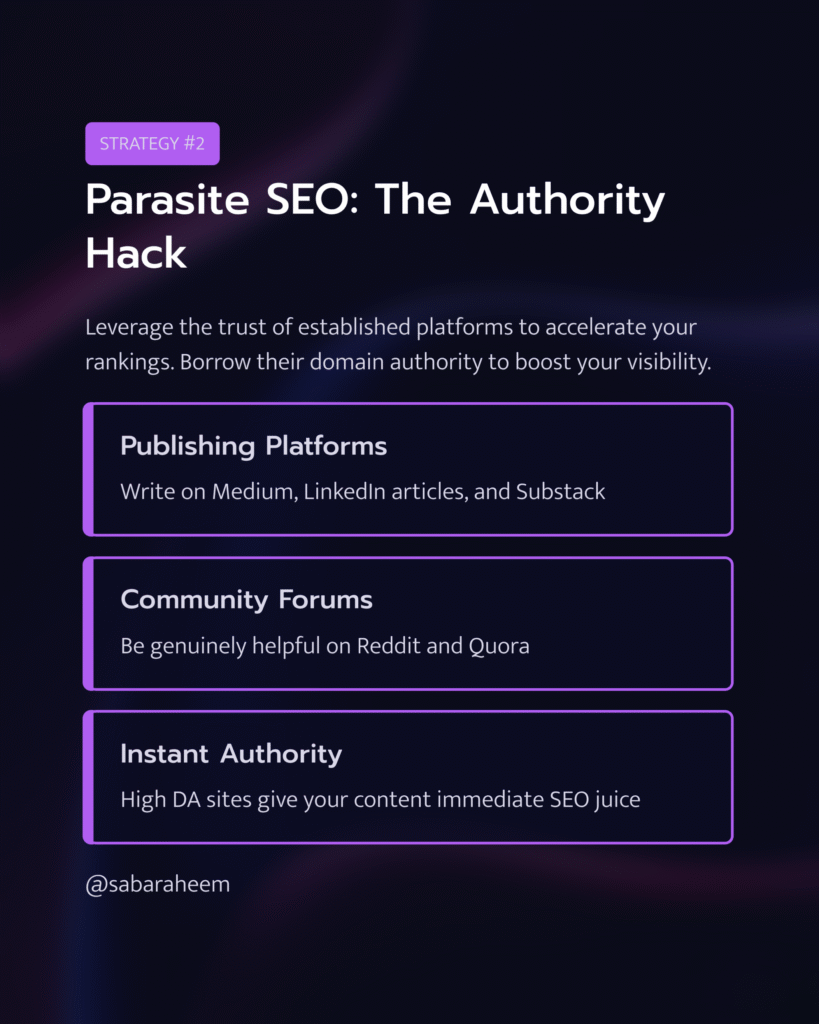
Actively participate in industry communities, Reddit, LinkedIn groups, Slack channels, and Discord servers. Provide genuine value without spamming links. When appropriate, share your resources. Natural mentions turn into backlinks when community members reference your insights elsewhere.
Internal link optimization (free and often overlooked):
Strengthen your link profile by optimizing internal links. Use topical clustering, strategic anchor text, and pass link equity from high-authority pages to newer content. Strong internal linking improves your ability to rank new content, which then attracts external backlinks more easily. Learn more about our SEO optimization approach.
Strategy 4: Digital PR and Data-Driven Content (The Media Magnet)
Digital PR has become the highest-ROI link building tactic in 2026 because it earns links from authoritative mainstream publications.
Why digital PR outperforms traditional outreach:
One link from Forbes, TechCrunch, or Business Insider carries more SEO value than 100 niche blog links. These authoritative domains pass significant link equity while also driving referral traffic and brand visibility.
How to execute:
Create original research: Conduct industry surveys, analyze trends, or compile data into new insights. Example: “SEO Salary Survey 2026” or “Link Building Portfolio Benchmarks Study.”
Newsjack trending topics: Monitor industry news using tools like Google Trends or Twitter trending topics. Create timely commentary or data analysis related to breaking news. Speed matters; respond within hours.
Leverage HARO strategically: Don’t just answer any query. Focus on journalists from major publications covering your niche. Provide genuinely helpful, quotable insights backed by data or experience.
Build journalist relationships: Follow industry journalists on Twitter/X and LinkedIn. Engage with their content thoughtfully. Become a go-to source they contact directly, bypassing HARO entirely for repeated placements.
Strategy 5: Link Building in Digital Marketing (The Integrated Approach)
Stop treating link building as separate from your overall digital marketing strategy. The most effective link building in digital marketing happens when every marketing initiative naturally generates link opportunities.
Content marketing + link building:
Every content piece should be created with link acquisition in mind. Before publishing, ask: “Why would someone link to this?” If you can’t answer, improve the content. Discover proven strategies to increase website traffic that complement your link building efforts.

PR + link building:
Every press release, media mention, or brand feature should include backlinks. Work with PR teams to ensure journalists include links in coverage.
Partnerships + link building:
Strategic partnerships with complementary businesses create mutual linking opportunities. Co-create content, host joint webinars, or launch collaborative research, all generating backlinks for both parties.
Personal SEO branding + link building:
Your personal brand becomes a link acquisition engine. Speaking engagements, podcast interviews, LinkedIn thought leadership all create backlink opportunities. Discover more about personal branding for SEO.
Product/service launches + link building:
Launch new offerings with link-worthy angles: innovative features, industry-first approaches, or unique positioning. Media and blogs cover newsworthy launches, creating natural backlinks.
Strategy 6: Build a Link Building Portfolio That Earns Links
Your link-building portfolio isn’t just for client acquisition; it’s a powerful link magnet when positioned correctly.
What makes a portfolio linkable:
Specific documented results: “Increased client’s backlink profile from 47 to 340 referring domains in 8 months, resulting in 289% organic traffic growth.” Concrete numbers with visual proof (screenshots, graphs) become reference material others cite.
Detailed methodology explanations: Don’t just show results, explain HOW. Your backlink strategy breakdown becomes educational content that other SEO practitioners reference in their own content.
Before/after case studies: Visual demonstrations of link profile improvements, ranking increases, and traffic growth make your portfolio compelling and shareable.
Keep it updated: Add new case studies quarterly. Fresh results maintain relevance and give existing linkers reasons to update references.
Promote strategically: Share portfolio updates on LinkedIn, submit to SEO showcases, mention in guest contributions. Each promotion opportunity potentially earns additional backlinks.
Strategy 7: Strategic Guest Posting (Quality Over Quantity)
Guest posting isn’t dead spam guest posting is dead. Strategic placement on relevant, authoritative sites still works.
The 2026 approach to guest posting:
Target niche-specific authorities only: Ignore generic “write for us” blogs accepting anyone. Find sites your target audience actually reads, industry publications, respected niche blogs, and community platforms where expertise matters.
Provide unique insights: Don’t write generic SEO content. Share original data, case studies from your link building portfolio, or contrarian perspectives readers can’t find elsewhere.
Build relationships first: Comment on their content. Share their articles. Engage on social media. Then pitch contributions. Warm relationships have 60%+ acceptance vs. 5% for cold outreach.
Link naturally: No forced keyword anchors. Link to relevant resources, your portfolio, supporting case studies, or helpful tools where contextually appropriate.
One quality placement beats twenty mediocre ones: Better to publish on one highly relevant DR 50 site than twenty random DR 70 sites in unrelated niches.
Creating Your Backlink Strategy (The Framework)
Stop randomly trying tactics. Build a systematic backlink strategy.
Month 1-2: Foundation
- Audit current backlink profile (identify toxic links, analyze competitors)
- Create or update link building portfolio with documented results
- Set up tracking (Ahrefs, Google Analytics, ranking monitoring)
- Identify 20 realistic link prospects in your niche
Month 3-4: Content Creation
- Publish original research or data study (link magnet)
- Create 2-3 comprehensive guides (linkable assets)
- Optimize internal linking structure
- Begin HARO responses (3-5 daily)
Month 5-6: Outreach
- Execute broken link building campaign
- Pitch guest contributions to target sites
- Reclaim unlinked brand mentions
- Launch first digital PR campaign
Month 7-12: Scale & Optimize
- Analyze what’s working (which tactics earn quality links)
- Double down on successful strategies
- Build journalist relationships for ongoing coverage
- Create quarterly updated content (annual reports, trend analysis)
What is a Backlink Strategy (Beyond the Basics)
Most people think a backlink strategy is just “build links.” Wrong. A real backlink strategy includes:
Link profile analysis: Understanding your current baseline, including how many referring domains, their quality, topical relevance, and anchor text distribution.
Competitive intelligence: Analyzing competitors’ backlink profiles to identify realistic opportunities and understand what works in your niche.
Opportunity prioritization: Not all link opportunities are equal. Prioritize based on: achievability (can you realistically earn this link?), relevance (how closely does their topic match yours?), authority (what’s their domain strength?), and traffic potential (will this drive referral visitors?).
Tactical execution plan: Specific actions with timelines. Not “do guest posting” but “pitch Guest Post #1 to Site A on Topic X by March 15, follow up March 22.”
Measurement framework: How will you track success? Referring domains? Rankings for specific keywords? Organic traffic? Conversion rate from organic traffic?
Continuous optimization: Monthly review of what’s working. Which tactics produce quality links? Which waste time? Adjust strategy based on data.
Link Building Course vs. Real-World Experience
Here’s why most link building courses fail:
They teach tactics, not strategy: Courses show HOW to do guest posting or broken link building but don’t teach WHEN to use which tactic or HOW to prioritize efforts.
They ignore niche differences: What works for SaaS doesn’t work for local businesses. What works for B2B doesn’t work for e-commerce. Generic advice fails in specific contexts.
They’re outdated instantly: By the time a course publishes, tactics may already be less effective. Real practitioners adapt continuously based on what’s currently working.
They lack accountability: Course creators aren’t accountable for your results. If their tactics don’t work, they’ve still made their money from course sales.
Real-world experience teaches:
- Which tactics work in YOUR niche specifically
- How to adapt strategies when circumstances change
- What realistic timelines look like
- How to prioritize when you can’t do everything
Learn principles from courses if you want. But understand: practical experience building links in competitive niches teaches more than any course ever could.
Common Link Building Mistakes to Avoid
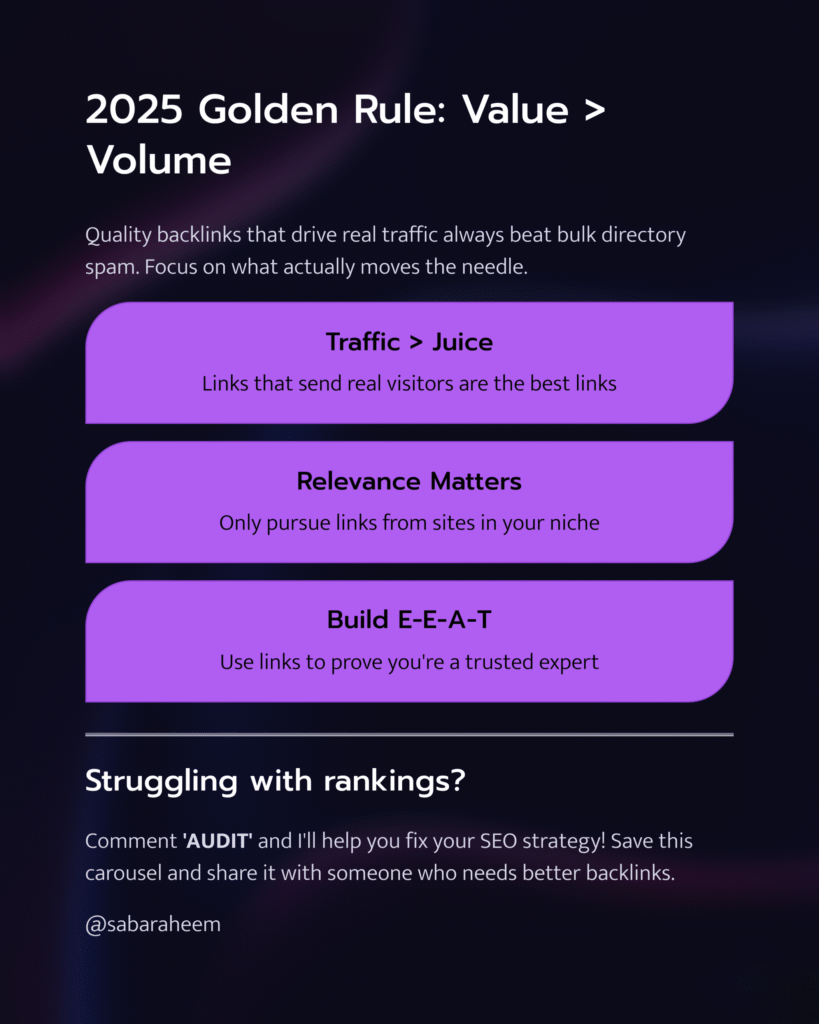
Buying links from marketplaces: Fiverr packages, PBN services, or “guest post” brokers get detected. The temporary rankings aren’t worth the long-term penalty risk.
Ignoring topical relevance: A DR 70 link from an unrelated niche provides less value than a DR 35 link from a topically relevant site. Focus on relevance first, authority second.
Using exact-match anchor text: “Best SEO services Atlanta” as anchor text screams manipulation. Use branded anchors, naked URLs, and natural contextual phrases.
Building links before content: You need quality content worth linking to before pursuing links. Create linkable assets first, then promote them.
Neglecting link velocity: Acquiring 200 links in one month then nothing for six months looks unnatural. Steady, gradual growth appears organic.
Focusing only on homepage links: Distribute links across important pages,and service pages, blog posts, resources. Deep links to specific content often convert better than homepage links.
Ignoring user experience: Your website’s UX directly impacts link retention and natural link acquisition. Poor UX drives visitors away, reducing the likelihood they’ll reference or link to your content. Learn why UX is more important than UI in 2026 for better link building results.
Frequently Asked Questions
What are the best link building strategies that actually work in 2026?
The most effective link building strategies in 2026 focus on earning links through value rather than manipulation: building personal SEO branding through LinkedIn thought leadership and industry presence, creating original data research that naturally attracts citations, implementing the Backlinko skyscraper technique with unique data additions, strategic digital PR targeting authoritative publications, smart guest posting on niche-relevant sites, and building a compelling link building portfolio that showcases measurable results. The key shift: topical relevance now outweighs raw domain authority, and Google’s latest SEO update 2026 made clear that unnatural link patterns get detected and penalized faster than ever.
How can I build backlinks without paying for them?
Build backlinks without paying by responding to HARO journalist queries daily (earns 2-5 monthly links from news sites), implementing broken link building using free tools to find and replace dead links, creating genuinely helpful resources that earn placement on industry resource pages, reclaiming unlinked brand mentions through Google Alerts monitoring, participating authentically in industry communities where natural sharing occurs, optimizing internal linking to strengthen your overall link profile, and leveraging personal branding through LinkedIn and thought leadership that generates organic link opportunities. These free strategies require time investment but deliver sustainable results without financial cost.
What is a backlink strategy and how do I create one?
A backlink strategy is a systematic plan for acquiring links that includes: analyzing your current link profile to understand baseline quality, studying competitor backlinks to identify realistic opportunities, prioritizing prospects based on achievability and relevance, creating linkable assets (original research, comprehensive guides, tools), executing specific tactics with timelines, measuring success through metrics like referring domains and ranking improvements, and continuously optimizing based on what works. It’s not randomly trying tactics, it’s a documented approach specifying which techniques you’ll use, which prospects you’ll target, what timeline you’ll follow, and how you’ll measure ROI.
Are link building courses worth taking in 2026?
Link building courses provide foundational knowledge but have significant limitations: they teach tactics without strategic context, ignore niche-specific differences, become outdated quickly as algorithms evolve, lack real accountability for your results, and can’t replicate the practical experience of building links in actually competitive niches. Courses work best for understanding principles, but expect to learn more from three months of hands-on link building in your specific niche than from any course. The Backlinko blog offers free education that often exceeds paid courses. Invest in courses for fundamentals, but prioritise practical experience for mastery.
How does Backlinko’s link building approach differ from others?
Backlinko link building, developed by Brian Dean, emphasizes quality over quantity through the skyscraper technique (find link-worthy content, create something 10x better, reach out to prospects), data-driven content that naturally attracts citations, strategic outreach focused on personalization rather than mass emails, and focusing on earning links from authoritative, relevant sources rather than chasing any link opportunity. The 2026 evolution adds original research and unique data to skyscraper content, uses AI for efficiency while maintaining human personalization in outreach, and emphasizes building authority in micro-niches before expanding. Backlinko’s core principle remains: earn links through value, not manipulation.
What should I include in my link building portfolio?
A compelling link building portfolio should document specific results with numbers (“Increased referring domains from 47 to 340 in 8 months, resulting in 289% traffic growth”), include before/after screenshots showing backlink profile improvements and ranking increases, explain methodology behind results so readers understand your backlink strategy, present case studies visually with charts and graphs, update quarterly with fresh results to maintain relevance, organize by niche or tactic to help visitors find relevant examples, and include client testimonials validating results. Your portfolio becomes linkable content when it demonstrates proven expertise others reference it when discussing successful link-building strategies.
How do I know if my link profile is healthy?
A healthy link profile shows: steady gradual growth in referring domains (not sudden spikes), diverse anchor text with mostly branded/naked URLs and occasional keyword-rich anchors, high percentage of dofollow links but some nofollow for naturalness, links from topically relevant sites in your industry, variety of link types (guest posts, mentions, resource pages, PR), strong ratio of referring domains to total backlinks (indicates links from diverse sources), minimal toxic links (spam, PBN, unrelated sites), and correlation between link acquisition and ranking/traffic improvements. Use Ahrefs or Semrush monthly to audit your profile, focusing on link quality over quantity.
What’s the difference between link building and earning links?
Link building implies proactive outreach and effort, guest posting pitches, broken link building, and resource page requests. Link earning means creating content so valuable that backlinks occur organically without direct outreach, original research gets cited, comprehensive guides get referenced, and useful tools get shared. The 2026 reality: most successful link profiles combine both approaches. You can’t purely “earn” links without promotion (even great content needs visibility), but you shouldn’t purely “build” links without quality content worth linking to. The best backlink strategy creates link-worthy assets and then strategically promotes them to relevant prospects.
Does link building work differently for Pakistan-based businesses versus worldwide markets?
Link building principles remain consistent whether you’re targeting Pakistan, worldwide audiences, or specific regional markets quality, relevance, and authority matter everywhere. However, execution differs: for Pakistan-focused SEO, prioritize local Pakistani publications, industry blogs, and regional directories for geographic relevance; for worldwide reach, target international publications and global industry authorities. The strategy scales: start with strong local/regional links to establish credibility, then expand to international sources. Geographic diversity in your backlink profile signals broader authority to search engines, benefiting both local and global rankings.
Stop Guessing, Start Building Links That Actually Move Rankings
The difference between SEO professionals who build sustainable visibility and those constantly fighting algorithm updates comes down to link building approach. You can waste years acquiring worthless links, or you can invest time building authority and relationships that generate quality backlinks automatically.
Your link building action plan:
This week: Audit your current backlink profile using Ahrefs or Semrush. Identify toxic links and gaps compared to competitors. Start responding to 3 HARO queries daily.
This month: Create one linkable asset original research, comprehensive guide, or valuable tool. Set up Google Alerts for your brand. Identify 10 broken link opportunities.
This quarter: Build relationships with 5 industry journalists. Launch digital PR campaign around your research. Secure 3 quality guest placements on relevant sites. Document results in your link building portfolio.
This year: Establish recognized expertise through consistent thought leadership. Earn media placements in authoritative publications. Build a link building portfolio that becomes a cited reference. Develop a systematic backlink strategy producing steady quality link growth.
The best link building strategies aren’t about gaming Google they’re about becoming genuinely authoritative in your niche. Build that authority through value creation, proven results, and meaningful relationships. Links follow naturally.
Stop following outdated link building course material from 2019. Start implementing free link building strategies that actually work in competitive 2026 markets, whether you’re serving Pakistan, worldwide audiences, or both.
Need help developing your backlink strategy or building a link-worthy SEO portfolio? Check our proven methodology and work with us.
The links you build today determine your rankings six months from now. Build them right.
Learn More:
- Discover our complete SEO information
- Explore parasite SEO strategies for quick wins
- Read about our approach
- Contact us for consultation
- Learn best strategies to increase website traffic
- Understand how Google AI Overviews changed SEO
- Discover why UX matters more than UI in 2026
Sources
Link Building Research:
- Backlinko – Brian Dean’s proven strategies
- Ahrefs Blog – Data-driven link analysis
- Moz Link Building Guide
SEO Updates: 4. Google Search Central 5. Search Engine Journal

Sharing my journey and learnings in Tech and AI. As a Digital Marketing Expert, I help brands boost their visibility and sales with smart personal branding and the latest AI tricks.

Leave a Reply