|
Getting your Trinity Audio player ready… |
Table of Contents
1. The New Era of SaaS Growth: Why 2026 Is Different
For the better part of a decade, SEO was a keyword game. You found a phrase, stuffed it into a title tag and a handful of paragraphs, built some links, and waited for rankings to follow. That model worked — until it didn’t.
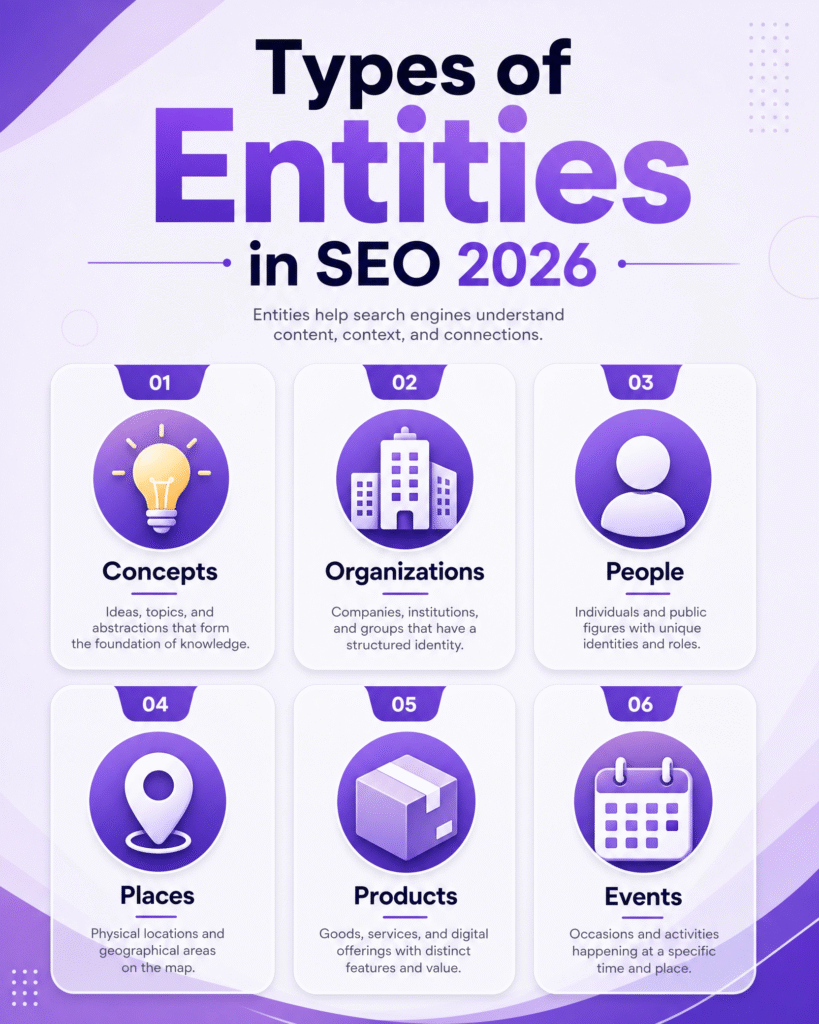
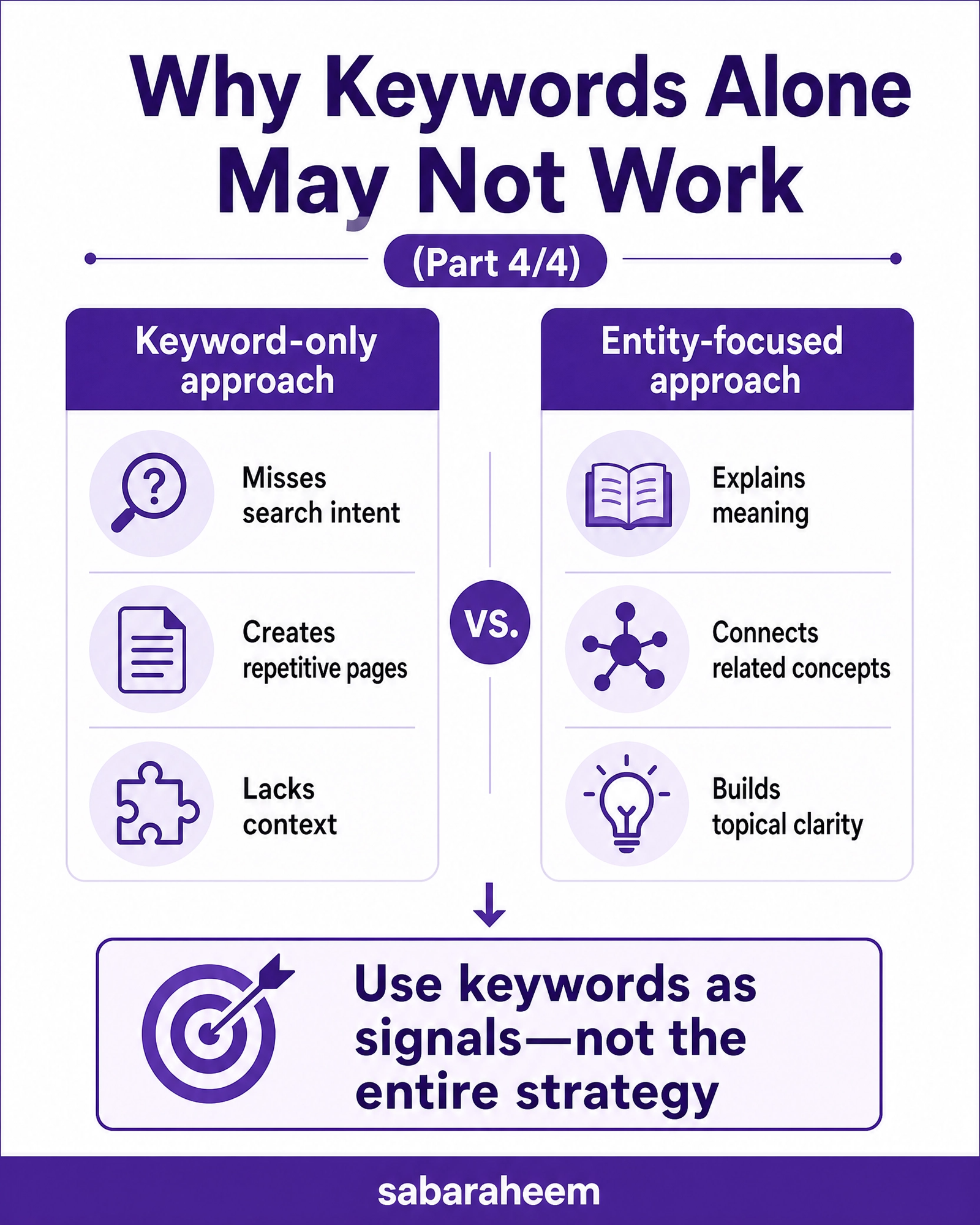
In 2026, Google’s systems don’t start with keywords. They start with entities: the people, brands, products, concepts, and relationships that form the actual fabric of meaning on the web. The algorithm has moved from matching strings of text to understanding what something is and how it connects to everything else.
For SaaS companies and content-driven businesses, this is the most consequential shift in search since RankBrain. It is not an incremental update. It is a different operating system.
Why this matters right now: Over 60% of Google searches in 2025 ended without a click. AI-generated summaries, knowledge panels, and entity-based answers now absorb intent that previously drove traffic. The brands winning visibility are the ones Google recognises as authoritative entities.
🔗 Related: Mastering 2026 SEO Major Changes → https://seoportfolio.in/seo-changes-ai-first-ranking/
2. The AI Pivot: Navigating the 2026 Search Ecosystem
Think about what Google’s Knowledge Graph actually does. It doesn’t store web pages — it stores facts about entities and the relationships between them. When Google knows that ‘Hubspot’ is a SaaS company, that it operates in the CRM and marketing automation space, and that it publishes content consumed by growth marketers and CMOs, it doesn’t need a keyword match to surface Hubspot in AI assistant answers.
That is Entity SEO in action. And it explains why some brands appear in AI-generated answers constantly while others — even with technically optimised pages — remain invisible.
The pivot is not from content to no content. It is from content that targets queries to content that builds entity recognition. These are fundamentally different goals, requiring different execution across technical SEO, content architecture, Schema markup, and off-page authority signals.
🔗 Related: LLM SEO Best Practices 2026 → https://seoportfolio.in/llm-seo-best-practices-2026/
3. GEO & AEO: Winning the ‘Share of Model’ in AI Engines
Generative Engine Optimisation (GEO) and Answer Engine Optimisation (AEO) are not buzzwords. They are the practical response to a measurable reality: users are now getting answers from AI interfaces — Google AI Overviews, ChatGPT Search, Perplexity, Gemini — before they ever reach your website.
The metric that matters in this environment is not click-through rate. It is share of model — how often your brand, content, or named entities appear in AI-generated responses that are shaping purchasing decisions and brand perception at scale.
How to build share of model
Entity-based content architecture is the foundation. This means structuring your site around clearly defined topical clusters where every page establishes, expands, or reinforces a specific entity or concept. It means using structured data — Article, FAQPage, HowTo, Organization Schema — to give AI models machine-readable signals about what you are and what you know.
Factual precision, consistent entity attribution, clear authorship signals, and demonstrable E-E-A-T (Experience, Expertise, Authoritativeness, Trustworthiness) are now competitive differentiators, not just hygiene tasks.
🔗 Related: What Is Schema Markup? → https://seoportfolio.in/what-is-schema-markup-and-how-does-it-help-local-businesses-rank/
4. Zero-Click Dominance: Building Brand Authority Without the Click
Zero-click search used to be described as a threat. Brands would publish content, Google would extract the answer into a featured snippet, and no visit would follow. Traffic analysts called it ‘traffic theft.’
The smarter framing — the one top-performing brands have now adopted — is that zero-click results are brand impressions at massive scale. When your content provides the answer that appears in an AI Overview, you have just received a brand mention in front of the exact audience searching for the problem you solve.
The strategic shift is from optimising purely for clicks to optimising for brand recall and entity association. A user who sees your name consistently associated with a topic in AI-generated answers will remember it at the buying decision stage — even if they never clicked through during the research phase.
🔗 Related: Track Brand Visibility in AI Mode → https://seoportfolio.in/how-to-track-brand-visibility-in-ai-mode/
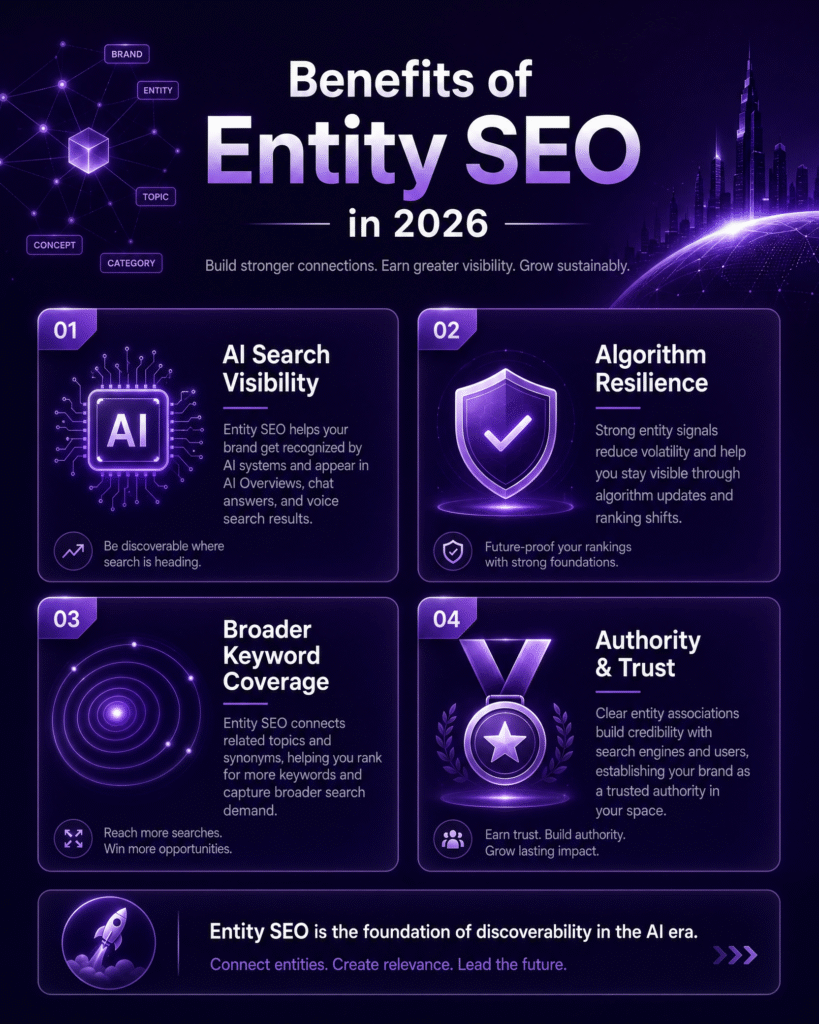
5. PageRank 2.0: Why Trust Is the New Ranking Factor
PageRank measured authority through link equity — a website linked to by high-authority sources was assumed to be credible. That signal still matters, but it has been layered with something more nuanced: entity trustworthiness.
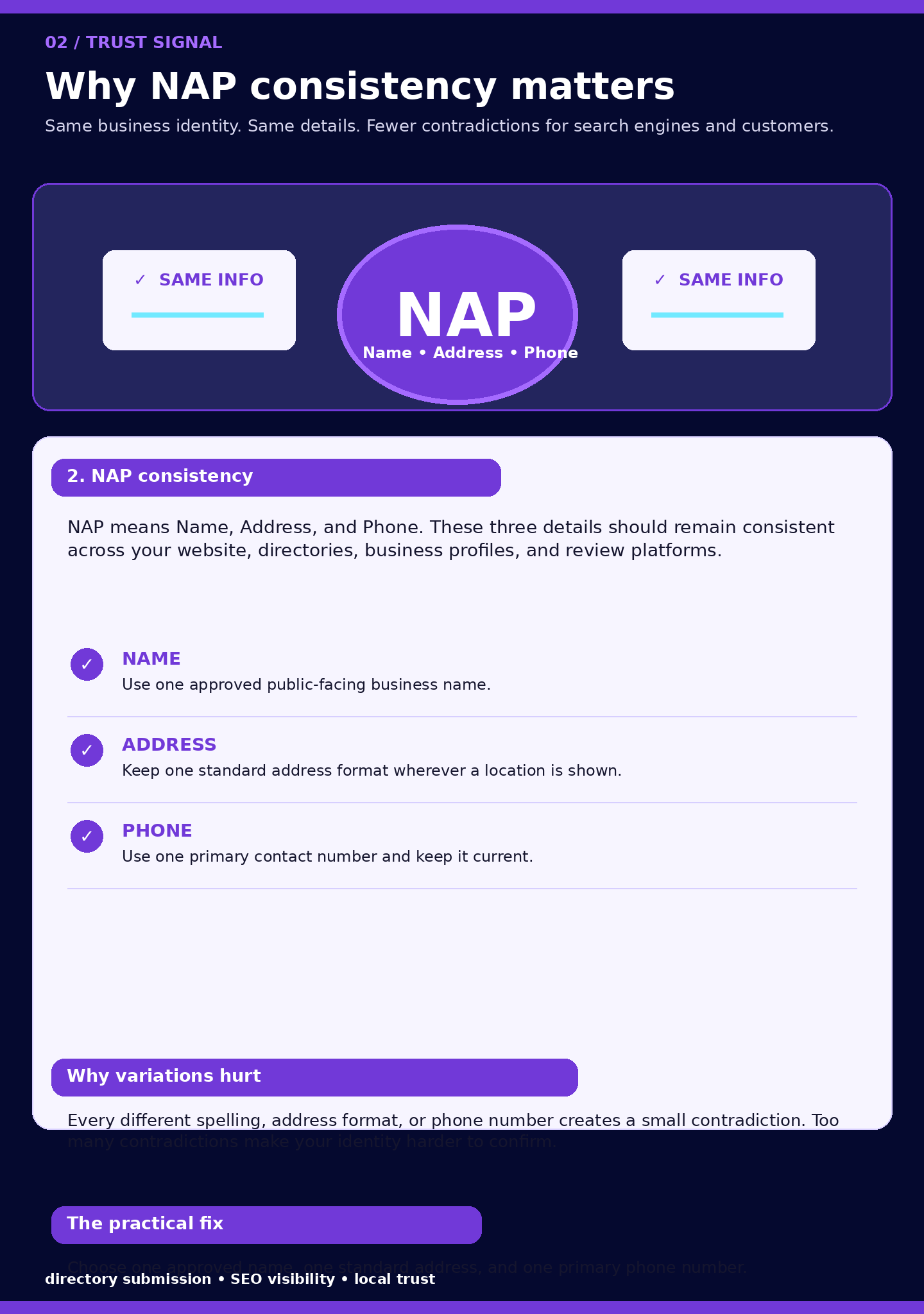
Google’s systems now evaluate not just whether a site has links, but whether the entity behind the site has a coherent, consistent identity across the web. Does your brand appear with the same name, description, and attributes across your website, your Google Business Profile, your Wikipedia entry, your Wikidata record, your social profiles, and third-party mentions?
Inconsistency in entity representation — different names, different descriptions, conflicting facts — is a trust signal problem. It tells AI systems this entity is ambiguous, and ambiguous entities don’t get cited in AI answers.
Building entity trust in practice
Start with your Knowledge Panel — claim it, verify it, and keep information consistent with your website. Build mentions on authoritative entity sources: industry directories, academic references, journalistic coverage. Use structured data to declare your entity attributes explicitly. Audit the consistency of your brand information across every touchpoint at least quarterly.
🔗 Related: Why You’re Not Ranking on Google Maps → https://seoportfolio.in/why-is-my-business-not-ranking-on-google-maps/
6. The Media-First SaaS: Leveraging Creator-Led B2B Content
The B2B SaaS companies growing fastest in search in 2026 have stopped thinking of themselves as software vendors. They now operate as media organisations that also sell software.
Google’s entity graph rewards brands that produce original, citable, authoritative content at volume — and the most credible version of that content comes from real people with real opinions. Creator-led content — whether an expert practitioner writing under their own name, a founder with a personal brand, or a structured contributor programme — carries entity signals that AI models weight heavily.
Named authors with verifiable credentials and a consistent publishing history are far more likely to be cited by AI engines than anonymous corporate content. This is now measurable in AI Overview appearance rates.
🔗 Related: Personal Branding Services → https://seoportfolio.in/personal-branding/
7. Product-Led SEO: Turning Your Product Into a Search Engine Magnet
The most durable form of entity SEO is when your product itself becomes an entity that people search for by name. Not ‘best CRM tool’ — but ‘Notion,’ ‘Airtable,’ or whatever specific product has earned its own named search demand.
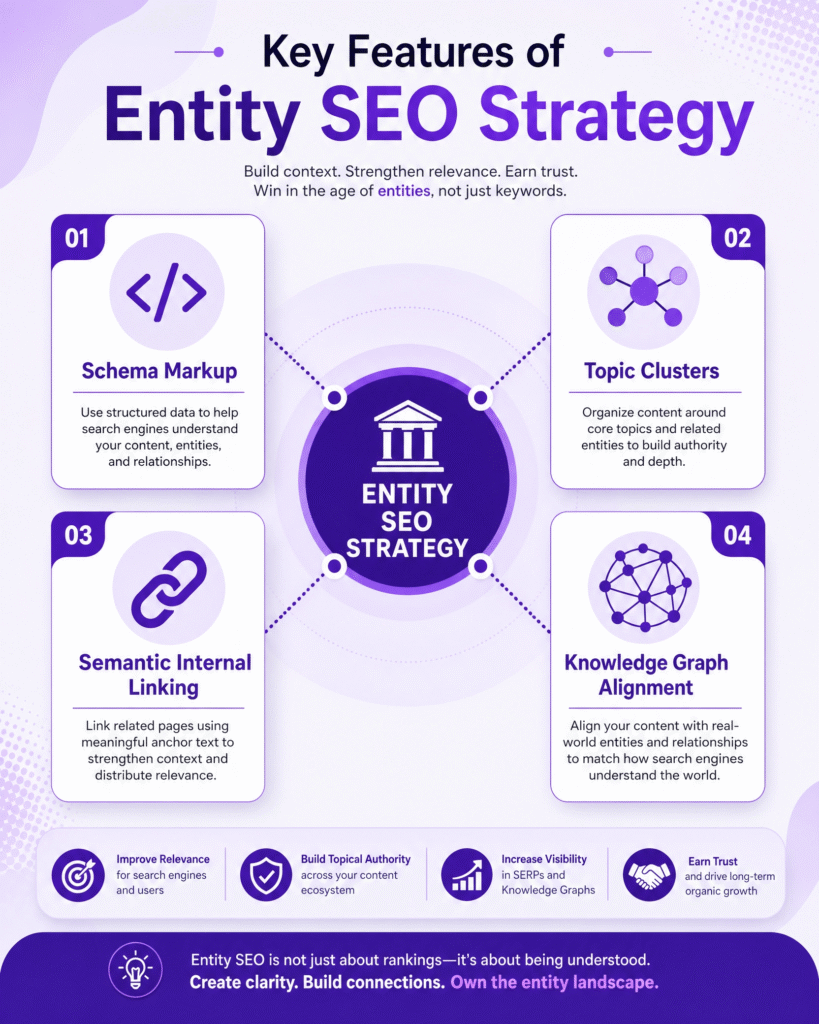
Product-led SEO is the strategy of accelerating that process: using your product’s own data, user-generated content, templates, public-facing tools, and use-case pages to build a network of indexed assets that collectively reinforce your product as a distinct, authoritative entity in Google’s Knowledge Graph.
This is why Canva ranks for thousands of design-related queries without writing a traditional blog post for each one. Their templates are entities. Their design categories are entities. Their tool pages are entities. The entire product architecture functions as a distributed, interconnected entity cluster that pulls search intent toward the brand.
For SaaS companies at any scale, the question is no longer ‘what keywords should we target?’ It is ‘what entities are we establishing, what attributes are we claiming, and what relationships are we building between them?’ Answer those questions with your content architecture and technical SEO, and keyword rankings become a natural consequence — not the goal itself.
🔗 Related: Content Marketing Services → https://seoportfolio.in/content-marketing/
Entity NLP Extraction Tables
Core entities, semantically related terms, and NLP signals extracted from each section. Use for Schema markup, topical cluster planning, and internal linking.
1-Word Entities
| Entity | Type | Section |
| Entities | Concept | All |
| Keywords | Concept | Intro |
| GEO | Acronym / Practice | Trend 1 |
| AEO | Acronym / Practice | Trend 1 |
| Trustworthiness | Attribute | Trend 3 |
| Authoritativeness | Attribute | Trend 3 |
| Schema | Technology | Trend 1 |
| Perplexity | Brand / Platform | Trend 1 |
| Gemini | Brand / Platform | Trend 1 |
| PageRank | Algorithm / Concept | Trend 3 |
| Wikidata | Platform / Database | Trend 3 |
| Wikipedia | Platform / Database | Trend 3 |
| Canva | Brand / Product | Trend 5 |
| RankBrain | Algorithm | Intro |
| Notion | Brand / Product | Trend 5 |
| Airtable | Brand / Product | Trend 5 |
2-Word Entities
| Entity | Type | Section |
| Entity SEO | Practice | All |
| Semantic SEO | Practice | Context |
| Knowledge Graph | Technology | Context, Trend 5 |
| Knowledge Panel | SERP Feature | Trend 3 |
| Featured Snippet | SERP Feature | Trend 2 |
| Zero-Click | Behaviour / Strategy | Trend 2 |
| Topical Authority | SEO Signal | Context |
| Topical Cluster | Content Strategy | Entities |
| Structured Data | Technology | Trend 1 |
| Link Equity | SEO Signal | Trend 3 |
| Brand Authority | Attribute | Trend 2 |
| Brand Impressions | Metric | Trend 2 |
| Content Architecture | Practice | Trend 1, 5 |
| Named Authorship | E-E-A-T Signal | Trend 4 |
| SaaS Growth | Goal / Vertical | Intro |
| Personal Brand | Concept | Trend 4 |
3-Word Entities
| Entity | Type | Section |
| AI Overview Optimisation | Practice | Trend 1 |
| Share of Model | Metric / Concept | Trend 1 |
| Product-Led SEO | Strategy | Trend 5 |
| Creator-Led Content | Content Format | Trend 4 |
| E-E-A-T Signals | Quality Framework | Trend 1 |
| AI Search Engines | Tech Category | Trend 1 |
| Entity Trust Score | SEO Signal | Trend 3 |
| Media-First SaaS | Brand Positioning | Trend 4 |
| B2B Content Strategy | Practice | Trend 4 |
| Google Business Profile | Platform / Asset | Trend 3 |
| Generative Engine Optimisation | Practice | Trend 1 |
| Answer Engine Optimisation | Practice | Trend 1 |
Total extracted entities (1–3 word): 44 | Total semantically related NLP tags: 25
Ready to Build Your Entity Authority?
Get a free SEO audit and see exactly where your entity signals are leaking visibility — and how to fix it.
Free Audit: https://seoportfolio.in/seo-audit-formula/
Frequently Asked Questions (FAQs)
1. What exactly is an “entity” in SEO, and how does it differ from a traditional keyword?
A traditional keyword is just a literal string of text characters. For example, “organic moisturizer” is a keyword phrase. An entity, however, is a distinct, unique, and well-defined concept or thing that is independent of the language or the specific words used to describe it.
- The Difference: If you search for “the actor from Iron Man,” a traditional keyword engine might look for articles containing that exact phrase. An entity-based engine recognizes that you are referring to the entity Robert Downey Jr. Search engines use a Knowledge Graph to map out how entities connect to one another through relationships (predicates), allowing them to understand context, synonyms, and intent without needing exact keyword matches.
2. Why has Entity SEO become more important than keywords in 2026?
The rise of Generative Engine Optimization (GEO) and AI-driven search models (like Google’s AI Overviews) has fundamentally changed how search engines process information. AI models do not rank content simply by counting how many times a keyword appears on a page. Instead, they synthesize answers by extracting facts, concepts, and relationships from authoritative sources.
If your content only focuses on a single keyword but fails to cover the related entities, attributes, and subtopics that complete the conceptual map, AI engines will view your content as shallow or incomplete. To be cited by generative AI models, your content must clearly demonstrate a comprehensive understanding of the entity space.
3. How do search engines identify and understand entities on a website?
Search engines identify entities through a combination of advanced Natural Language Processing (NLP), semantic site architecture, and explicit data markings. The three primary ways they do this are:
- Structured Data (Schema Markup): Using explicit code (like JSON-LD) to tell search engine bots exactly what an object is (e.g., a
Product,Organization, orPerson) and how it connects to other known entities using properties likesameAslinks to Wikipedia or Wikidata. - Context and Co-occurrence: Analyzing which terms consistently appear together within your content. If your page talks about “Apple,” the engine looks for surrounding entities like “iPhone,” “Tim Cook,” or “iOS” to confirm you are discussing the tech giant, not the fruit.
- Internal and External Linking: Links act as the connective tissue between entities, signaling to search engines how different concepts and pages relate to one another structurally.
4. What are the best practical ways to optimize my content for Entity SEO?
Shift your strategy from “keyword optimization” to topical authority and conceptual mapping. You can implement this through several highly effective practices:
- Build out Semantic Hubs: Instead of writing isolated blog posts for individual keywords, create comprehensive pillar pages supported by a cluster of subtopics that cover an entire entity deep or wide.
- Implement Advanced Schema: Do not settle for basic schema. Use specialized properties to explicitly define your brand, authors, and primary subject matter, linking them back to trusted external knowledge bases.
- Answer the “Entity Attributes”: When writing about a subject, ensure you explicitly address its core attributes (e.g., if the entity is a digital service, clearly define its features, pricing, target audience, and integration capabilities).
- Optimize for Natural NLP Flow: Write clear, authoritative sentences that utilize unambiguous subject-predicate-object structures, making it incredibly easy for AI web scrapers to extract facts and relationships from your text.

Sharing my journey and learnings in Tech and AI. As a Digital Marketing Expert, I help brands boost their visibility and sales with smart personal branding and the latest AI tricks.

Leave a Reply