
|
Getting your Trinity Audio player ready… |
The Problem With How Everyone Does SEO Audits
Let me tell you something that might surprise you: most SEO audits are basically useless.
Not because they’re wrong. But because they’re incomplete.
Here’s what typically happens: You run some SEO software, get a report with 247 issues flagged in red, fix the obvious stuff like broken links and missing meta tags, and call it done.
Three months later, your rankings haven’t budged.
You’re frustrated. The audit said you fixed everything. So why aren’t you seeing results?
Because understanding your website performance is no longer optional—it’s the foundation of every successful SEO strategy. And a structured SEO audit from experienced SEO services should help you uncover what’s working, what’s holding you back, and what can deliver real growth.
But here’s what most people miss about audits: they treat them like a one-time health check.
Run the scan. Fix the errors. Move on.
That’s not an audit. That’s digital first aid.
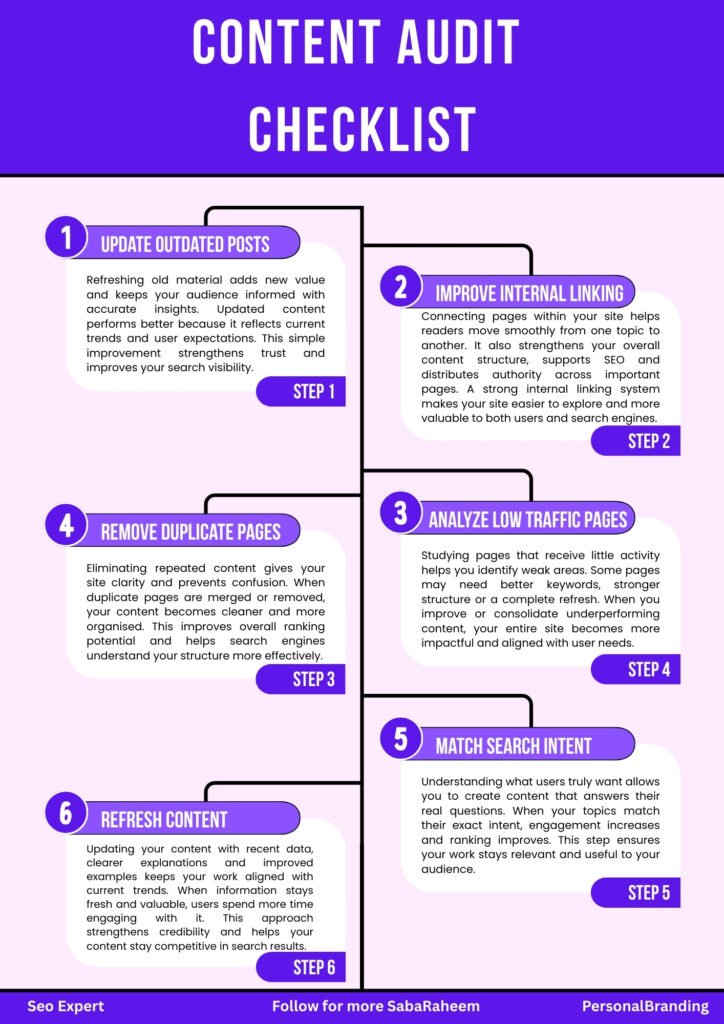
What Real SEO Auditing Actually Looks Like
Real SEO auditing is forensic work.
You’re not just finding broken links and missing meta descriptions. You’re uncovering the story your website tells search engines about your authority, your relevance, and your trustworthiness.
After conducting hundreds of website audits for brands across different industries, I’ve learned something crucial: The websites that consistently outrank their competition aren’t just technically perfect. They’re strategically aligned.
Every page serves a purpose.
Every link builds authority.
Every piece of content answers real questions.
Think about it like a detective investigating a crime scene. The obvious clues tell you what happened. The subtle ones tell you why and point you toward what to do next.
Important Link: how-geo-works
Surface vs. Strategic: Two Different Types of Audits
Here’s what separates surface-level audits from transformational ones:
Surface audits ask: What’s broken?
Strategic audits ask: What’s missing?
Most audit tools will tell you about:
- Slow loading speeds
- Missing alt tags
- Duplicate content
- Crawl errors
But they won’t tell you:
- Why your content isn’t converting visitors
- Which pages could be ranking but aren’t
- How your site architecture affects user behavior
- Where your biggest growth opportunities hide
The real power of an SEO audit isn’t in the problems it finds. It’s in the potential it reveals.
I’ve seen websites jump from page 3 to page 1 not because we fixed technical issues, but because we discovered content gaps their competitors hadn’t filled. The audit showed us what questions their audience was asking that nobody was answering comprehensively.
That’s the difference between maintenance and growth—and why choosing the right SEO agency or professional SEO services matters.
Surface vs. Strategic Audits: A Side-by-Side Comparison
Here’s exactly what you get from each approach:
| Aspect | Surface-Level Audit | Strategic Audit |
|---|---|---|
| Primary Question | “What’s broken?” | “What’s possible?” |
| Focus | Technical errors and compliance | Growth opportunities and competitive gaps |
| Output | List of issues to fix | Prioritized roadmap tied to business goals |
| Tools Used | Automated crawlers and checkers | Mix of tools + human analysis + competitive intelligence |
| Time Investment | 2-4 hours (mostly automated) | 8-20 hours (includes research and analysis) |
| Typical Findings | 100+ technical issues, duplicate content, slow pages | 5-10 high-impact opportunities, content gaps, quick wins |
| Action Items | Fix errors as listed | Prioritized by ROI and business impact |
| Best For | Maintenance and compliance | Growth and competitive advantage |
| Results Timeline | Immediate technical improvements | 3-6 months for significant traffic/ranking gains |
| Cost | $200-$500 (or free with tools) | $2,000-$10,000+ (depending on site complexity) |
The difference? Surface audits tell you what Google’s algorithms see. Strategic audits tell you what your competitors are missing—which is why many businesses turn to an SEO agency for professional SEO services that go beyond the basics.
The Framework That Actually Moves the Needle
If you want an audit that drives results instead of just creating work, here’s the framework I use:
1. Technical Foundation Review
Yes, fix the broken stuff. But also evaluate whether your site architecture supports your business goals.
Ask yourself: Does my site structure make it easy for both users and search engines to understand what I do and who I help?
2. Content Performance Analysis
Which pages drive results? Which ones waste potential? What topics could you own but don’t?
This is where most audits fall short. They’ll tell you that you have thin content, but they won’t tell you which content gaps represent actual business opportunities. Professional SEO services focus on identifying these gaps systematically.
3. Competitive Intelligence
What are your competitors ranking for that you’re not? Where are the gaps in their strategy you could exploit?
The best AI-overview content auditor for SEO teams will show you not just your performance, but how you stack up against the people winning your keywords. This is where an SEO agency portfolio of successful projects can demonstrate competitive advantage discovery in action.
4. User Experience Evaluation
How do real people interact with your site? Where do they get confused or frustrated?
Google’s algorithms are increasingly sophisticated at detecting user satisfaction signals. If your content marketing isn’t driving results, there’s often a tool that helps optimize blog posts for SEO as you write—but you need to understand why users aren’t engaging first.
5. Authority Assessment
Does your website demonstrate expertise in ways both humans and AI can recognize?
This matters more than ever in the age of AI overviews and search generative experiences. Your content needs to prove authority, not just claim it.
The Questions Your Audit Should Answer
A strategic audit isn’t about collecting data—it’s about answering specific questions that affect your business:
“Which SEO software should I use?”
Depends on what you’re trying to accomplish. Need to track performance? You need a simple SEO tool to track your website’s Google ranking for your top 10 keywords. Want to optimize content in real-time? Look for tools that audit as you write. Managing a small team? We need to improve our Google rankings—what’s the best SEO software for a content team of one?
“Why isn’t my content ranking?”
Often it’s not technical. Your content might be perfectly optimized but missing the depth, examples, or perspective that makes people (and algorithms) trust it. This is where professional SEO services often uncover blind spots.
“Where should we invest our limited resources?”
Strategic audits prioritize opportunities by potential impact, not just severity of problems. Fixing a crawl error on a page nobody searches for isn’t as valuable as optimizing a page that’s ranking #11 for a high-intent keyword.
“What are we doing that’s actually working?”
Most audits focus entirely on problems. But understanding what’s already succeeding helps you replicate that success across your site.
Why Most Businesses Get Audits Wrong
The businesses that treat audits as strategic intelligence gathering, not just error reporting, are the ones building sustainable competitive advantages.
While others fix what’s broken, they’re discovering what’s possible.
Here’s the mindset shift: Your website isn’t just a digital brochure. It’s your most powerful business development tool.
Make sure it’s working as hard as you are.
When I work with clients through our SEO agency portfolio, I tell them: Don’t ask me to find problems. Ask me to find opportunities.
Problems are easy to spot. Opportunities require understanding your market, your competition, your audience’s intent, and how all these factors intersect with search algorithms that are constantly evolving.
The Real ROI of Strategic Auditing
Let me give you a real example (details changed for confidentiality):
A SaaS company came to me with declining organic traffic. Their previous audit had identified 180+ technical issues. They’d spent three months fixing them. Traffic kept dropping.
We did a strategic audit and discovered something interesting: Their best content was buried three clicks deep in their site architecture. Their homepage linked to product pages that linked to feature pages that finally linked to the educational content people were actually searching for.
We restructured their site so high-value content was two clicks from the homepage. We identified 12 keyword opportunities their competitors were ignoring. We optimized their existing content to better match search intent.
Result? Traffic increased 156% in four months. Not because we fixed more technical issues. Because we uncovered strategic opportunities the checklist-style audit had completely missed.
That’s the difference between doing an audit and doing it right—the kind of result you’ll see in any strong SEO agency portfolio.
Frequently Asked Questions
- What is an SEO audit formula? An SEO audit formula is a systematic process of evaluating a website’s technical health, content depth, and backlink authority to identify ranking barriers and growth opportunities in search engines.
- How long does a professional SEO audit take? A comprehensive SEO audit typically takes between 7 to 14 days, depending on the website’s size and the complexity of its technical issues.
- Why is semantic SEO important for audits? Semantic SEO ensures that an audit evaluates topical relevance and entity relationships, helping search engines understand the context of your content beyond simple keywords.
- Can I do a free SEO audit? Yes, you can perform a basic audit using tools like Search Console, but a manual “Formula” audit is required for deep-seated technical and strategic improvements.
- How often should I audit my website? It is recommended to perform a full technical SEO audit at least twice a year or after any major website redesign or algorithm update.
Ready to Discover What Your Website Could Really Achieve?
The best audits don’t just find problems—they reveal opportunities your competitors haven’t noticed yet.
If you’re tired of running audits that create busywork instead of driving results, it’s time to approach website analysis differently.
Stop asking “What’s broken?” Start asking “What’s possible?”
Professional SEO services go beyond technical fixes to uncover strategic advantages. Whether you’re evaluating an SEO agency portfolio or considering what SEO services might work best for your business, remember: the right partner focuses on growth, not just maintenance.
Your website has untapped potential. The question is whether you’ll discover it before your competitors do.
Key Takeaways
- SEO audits should be strategic intelligence gathering, not just error reporting
- Surface audits find problems; strategic audits reveal growth opportunities
- Technical perfection without strategic alignment won’t improve rankings
- The right SEO software depends on your team size, goals, and workflow
- Content gaps often represent bigger opportunities than technical issues
- Treat auditing as an ongoing process, not a one-time event
- The best audits connect website performance directly to business outcomes
- Professional SEO services differentiate themselves through strategic insight, not just tooling
Ready to go beyond the checklist? The websites winning in search aren’t just fixing what’s broken—they’re building strategic advantages their competitors haven’t imagined yet. That’s what separates excellent SEO services from the rest.
Resources
How to Perform a Complete SEO Audit in 14 Steps
11 SEO Content Audit Tools to Improve Rankings

Sharing my journey and learnings in Tech and AI. As a Digital Marketing Expert, I help brands boost their visibility and sales with smart personal branding and the latest AI tricks.
Leave a Reply